Gynecomastia Compression Garments: Why They Matter After Surgery
Gynecomastia surgery is one of the most effective procedures for creating a flatter, firmer, and more masculine chest contour. However, many patients focus only on the surgery itself and underestimate the importance of post-operative care.
One of the most important parts of recovery is wearing a compression garment for gynecomastia.
A common question patients ask during consultation is:
“Is the compression vest really necessary after gynecomastia surgery?”
The short answer is yes.
In fact, the quality of your recovery can be significantly influenced by how consistently you wear your compression garment during the healing period.
In this article, we explain why compression garments matter, how they support recovery, common mistakes patients make, and what patients can expect during the healing journey.
Table of Contents
- Quick Answer
- Understanding What Happens After Gynecomastia Surgery
- What Is a Gynecomastia Compression Garment?
- Why Compression Garments Matter After Gynecomastia Surgery
- What I Tell My Patients During Consultation
- Recovery Protocol Followed at Our Centre
- Common Mistakes Patients Make
- Before-and-After Recovery Example
- Safety Checklist for Patients
- Who May Not Be an Ideal Candidate for Gynecomastia Surgery?
- How Long Do You Need to Wear a Compression Garment?
- Final Thoughts
- References
- Related Procedures
Quick Answer
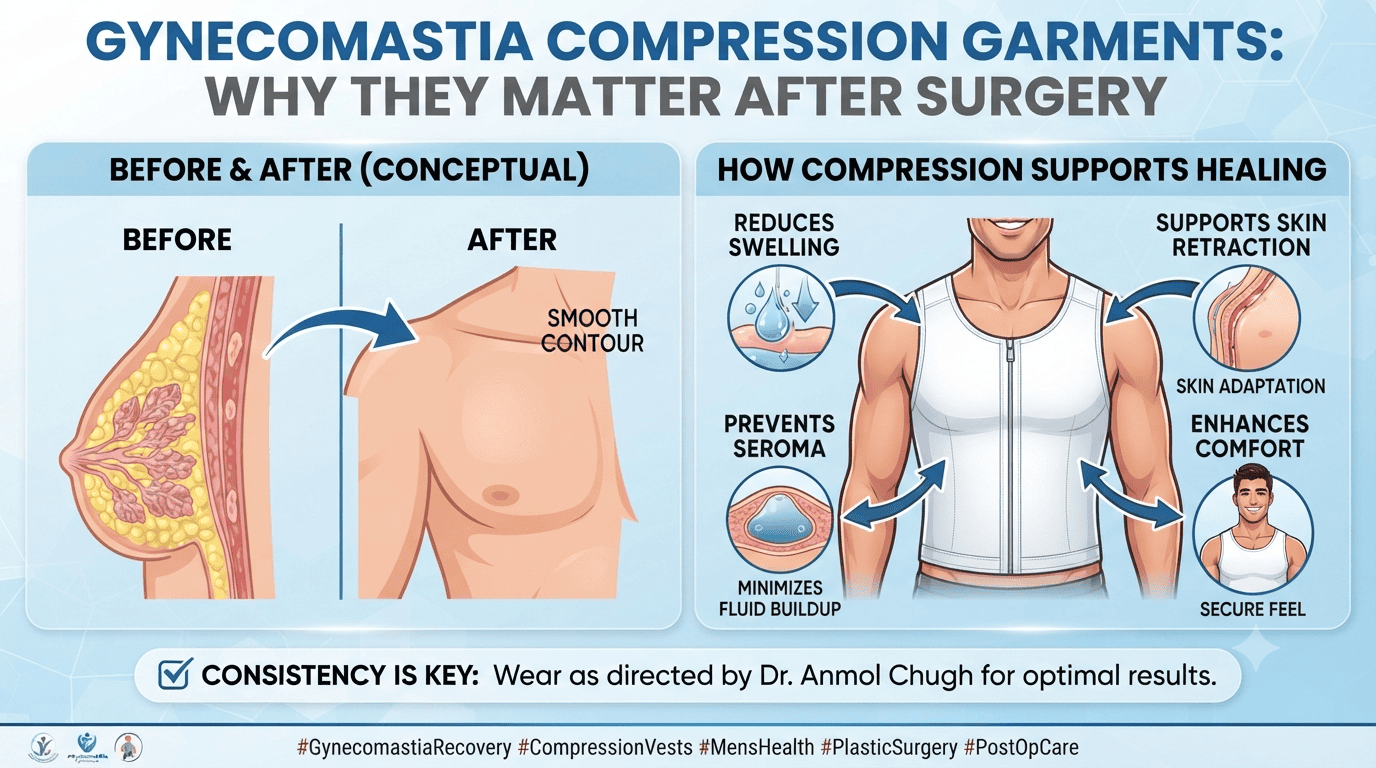
A gynecomastia compression garment helps reduce swelling, supports healing tissues, improves skin retraction, minimizes fluid accumulation, and helps create a smoother chest contour after surgery.
Patients who follow their surgeon’s compression protocol generally experience a more comfortable recovery and more predictable results.
Understanding What Happens After Gynecomastia Surgery
To understand why compression garments are important, it helps to understand what happens during recovery.
During gynecomastia surgery, excess glandular tissue, fat, or both are removed from the chest.
Once the tissue is removed:
- Empty spaces remain beneath the skin
- Swelling naturally develops
- The skin begins adapting to the new chest contour
- Internal tissues start healing and reattaching
Without proper support, swelling and fluid accumulation can interfere with the healing process.
This is where compression garments play a crucial role.
What Is a Gynecomastia Compression Garment?
A gynecomastia compression garment is a specially designed medical vest worn around the chest after surgery.
It provides controlled pressure across the treated area while allowing patients to move comfortably during recovery.
The garment is designed to:
- Support healing tissues
- Reduce swelling
- Improve skin contraction
- Enhance comfort
- Help maintain the new chest contour
Unlike ordinary tight clothing, post-surgical compression garments are specifically designed to deliver the correct amount of pressure without compromising circulation.
Why Compression Garments Matter After Gynecomastia Surgery
Helps Reduce Swelling
Swelling is a normal part of recovery after any surgery.
Following gynecomastia surgery, the body sends fluid to the treated area as part of the healing process.
Compression helps:
- Control swelling
- Reduce fluid buildup
- Improve comfort
- Accelerate recovery
Patients who wear their garment consistently often notice that swelling settles more efficiently compared to those who wear it irregularly.
Supports Skin Retraction
After gland and fat removal, the skin must adapt to the newly contoured chest.
One of the biggest concerns patients have is:
“Will my skin tighten properly after surgery?”
While skin quality depends on age, elasticity, and surgical technique, compression garments help support the skin during this adaptation phase.
They encourage the skin to:
- Settle smoothly
- Conform to the new chest shape
- Minimize irregularities
In Dr. Anmol Chugh’s clinical experience, proper compression can significantly contribute to achieving a smoother and more natural-looking chest contour.
Reduces the Risk of Seroma Formation
A seroma is a collection of fluid that can develop in the space where tissue has been removed.
Although modern gynecomastia techniques minimize this risk, fluid accumulation can still occur.
Compression helps by:
- Reducing dead space
- Encouraging tissue adherence
- Limiting fluid collection
This is one of the key reasons surgeons recommend wearing the garment continuously during the initial recovery period.
Improves Comfort During Recovery
Many patients assume compression garments will feel restrictive.
Interestingly, most patients report the opposite.
The garment provides:
- Chest support
- Reduced tissue movement
- Less pulling sensation
- Greater confidence during daily activities
Patients often describe feeling more comfortable while moving, walking, or sleeping when wearing their compression vest.
Helps Shape the Final Result
Gynecomastia surgery is not just about removing tissue.
It is also about creating a smooth, masculine chest contour.
Compression helps guide the healing process by:
- Supporting tissue positioning
- Maintaining contour
- Encouraging uniform healing
While surgery creates the foundation, post-operative care helps optimize the final result.
What I Tell My Patients During Consultation
One of the most important discussions during consultation is setting realistic recovery expectations.
Many patients focus heavily on the surgery day itself.
However, I often explain that successful gynecomastia treatment involves two stages:
- The surgical procedure.
- The recovery process.
Even the most technically successful surgery requires proper healing support.
This is why wearing the compression garment exactly as advised is one of the most important responsibilities patients have after surgery.
Recovery Protocol Followed at Our Centre
At our centre, patients receive detailed guidance regarding compression garment use after gynecomastia surgery.
While every case is individualized, the typical protocol includes:
- Continuous garment use during the early healing phase
- Removal only for bathing and garment cleaning
- Gradual reduction in usage based on healing progress
- Regular follow-up assessments to monitor recovery
The exact duration depends on:
- Grade of gynecomastia
- Amount of tissue removed
- Skin quality
- Individual healing response
Patients receive personalized recommendations rather than a one-size-fits-all approach.
Common Mistakes Patients Make
Removing the Garment Too Early
Many patients start feeling better within a few days and assume compression is no longer necessary.
Unfortunately, swelling can persist internally for several weeks.
Stopping compression too early may affect healing quality.
Wearing the Wrong Size
Some patients purchase alternative garments online that are either:
- Too loose
- Too tight
A loose garment provides inadequate support.
An excessively tight garment may cause discomfort and unnecessary pressure.
Always use the garment recommended by your surgeon.
Wearing It Inconsistently
Another common mistake is wearing the vest only during the day or only when convenient.
Compression works best when used consistently according to the prescribed protocol.
Resuming Heavy Exercise Too Soon
Some patients feel confident enough to return to the gym before their tissues have fully healed.
Compression garments support recovery, but they do not replace activity restrictions.
Always follow your surgeon’s recommendations regarding exercise and physical activity.
Before-and-After Recovery Example
A common example involves two patients who undergo similar gynecomastia procedures.
Both patients receive excellent surgical treatment.
However:
- One follows all post-operative instructions, including compression garment use.
- The other removes the garment frequently and does not wear it consistently.
The first patient often experiences:
- Better swelling control
- Smoother contour development
- More comfortable recovery
The second patient may experience prolonged swelling and slower contour refinement.
While individual healing varies, compliance with recovery instructions often makes a noticeable difference.
Real Patient Result After Gynecomastia Surgery
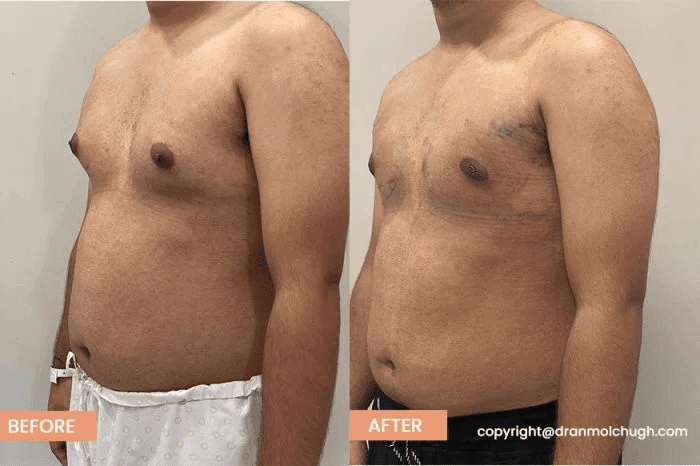
See More Real Gynecomastia Surgery Patient Results in Our Before & After Gallery.
Safety Checklist for Patients
Before surgery, ensure that you:
✔ Obtain the recommended compression garment
✔ Understand how long it needs to be worn
✔ Know how to clean and maintain it
✔ Attend all follow-up appointments
✔ Report unusual swelling, pain, or discomfort promptly
✔ Follow all activity restrictions advised by your surgeon
Who May Not Be an Ideal Candidate for Gynecomastia Surgery?
Although gynecomastia surgery is highly effective, not every patient is an ideal candidate.
Additional evaluation may be required for patients who:
- Have uncontrolled medical conditions
- Have untreated hormonal disorders
- Have significant obesity requiring weight management first
- Use medications known to cause gynecomastia
- Have unrealistic expectations regarding results
A thorough consultation helps determine whether surgery is appropriate and what results can realistically be achieved.
How Long Do You Need to Wear a Compression Garment?
The answer varies depending on the individual case.
Factors that influence the duration include:
- Extent of surgery
- Skin elasticity
- Grade of gynecomastia
- Healing speed
Some patients may require compression for only a few weeks, while others may benefit from wearing the garment for a longer period.
The most important rule is simple:
Follow your surgeon’s specific recommendations rather than comparing your recovery timeline with someone else’s.
Every patient’s healing process is different, and your surgeon will advise you based on your progress during follow-up visits.
Frequently Asked Questions
1. Why do I need to wear a compression garment after gynecomastia surgery?
A compression garment helps reduce swelling, supports healing tissues, minimizes fluid accumulation, encourages skin retraction, and helps create a smoother chest contour during recovery.
2. How long should I wear my compression vest?
The duration varies depending on the extent of surgery and your individual healing process. Your plastic surgeon will recommend the most appropriate timeline for your recovery.
3. Can I remove the garment while sleeping?
During the initial recovery period, patients are generally advised to wear the garment continuously and remove it only for bathing or cleaning, unless instructed otherwise by their surgeon.
4. Will wearing the compression garment reduce pain?
Although it is not a pain treatment, many patients report feeling more comfortable because the garment supports the chest and reduces tissue movement during daily activities.
5. What happens if I stop wearing it too early?
Removing the garment before your surgeon recommends may increase swelling, delay healing, and affect the final chest contour.
6. Can I buy a compression vest online?
It is always best to use the compression garment recommended by your surgeon. Medical-grade garments provide the appropriate amount of pressure while maintaining comfort and proper circulation.
7. Can I exercise while wearing the compression garment?
Compression garments support recovery, but they do not replace activity restrictions. Always resume exercise only after receiving clearance from your surgeon.
8. Does everyone need to wear a compression garment after gynecomastia surgery?
Most patients benefit from wearing one, although the exact duration and protocol may vary depending on the surgical technique, amount of tissue removed, and individual healing progress.
Final Thoughts
Gynecomastia compression garments are not simply an optional accessory after surgery.
They are an important part of the recovery process that helps:
- Reduce swelling
- Improve comfort
- Support skin retraction
- Minimize fluid accumulation
- Enhance chest contour development
In many cases, the difference between a good recovery and an excellent recovery comes down to how carefully post-operative instructions are followed.
From Dr. Anmol Chugh’s clinical perspective, patients who understand the importance of compression and remain consistent with their recovery protocol often achieve smoother healing and more predictable long-term results.
If you are considering gynecomastia surgery or have questions about recovery, a personalized consultation can help you understand the procedure, expected outcomes, and the post-operative care required to achieve the best possible result.
References
- American Society of Plastic Surgeons. Gynecomastia Surgery.
https://www.plasticsurgery.org/cosmetic-procedures/gynecomastia-surgery - Rohrich RJ, Ha RY, Kenkel JM, Adams WP Jr. Classification and management of gynecomastia: defining the role of ultrasound-assisted liposuction. Plastic and Reconstructive Surgery. 2003;111(2):909–923.
https://doi.org/10.1097/01.PRS.0000042146.40379.25 - Fruhstorfer BH, Malata CM. A systematic approach to the surgical treatment of gynecomastia. British Journal of Plastic Surgery. 2003;56(3):237–246.
https://doi.org/10.1016/S0007-1226(03)00037-1 - Johnson RE, Murad MH. Gynecomastia: pathophysiology, evaluation, and management. Mayo Clinic Proceedings. 2009;84(11):1010–1015.
https://doi.org/10.1016/S0025-6196(11)60671-X - American Society of Plastic Surgeons. Gynecomastia Treatment Overview.
https://www.plasticsurgery.org/reconstructive-procedures/gynecomastia-surgery - Braunstein GD. Clinical practice. Gynecomastia. New England Journal of Medicine. 2007;357(12):1229–1237.
https://doi.org/10.1056/NEJMcp070677 - National Health Service (NHS). Gynecomastia (Male Breast Enlargement).
https://www.nhs.uk/conditions/gynaecomastia/
Related Procedures
- Gynecomastia Surgery
- Liposuction Treatment
- High Definition Liposuction
- Body Contouring Surgery
- Male Breast Reduction Surgery
- Chest Contouring Surgery
About Dr. Anmol Chugh
Dr. Anmol Chugh is a board-certified Plastic and Cosmetic Surgeon with extensive experience in gynecomastia surgery and male chest contouring. He specializes in advanced surgical techniques that aim to create a flatter, natural-looking masculine chest while prioritizing patient safety, minimal scarring, and smooth recovery.
Every treatment plan is personalized according to the patient’s anatomy, grade of gynecomastia, skin quality, and aesthetic goals. From the initial consultation to post-operative care, Dr. Chugh focuses on achieving predictable, long-lasting results through meticulous surgical planning and evidence-based recovery protocols.
Medically Reviewed By
Dr. Anmol ChughQualifications: MBBS, MS, MCh (Plastic Surgery)
Experience: 16+ Years in Plastic & Aesthetic Surgery
Review Date: 30 Jun 2026
This article has been medically reviewed for accuracy and patient safety.