
What Is Female Genital Rejuvenation and Who Is It For?
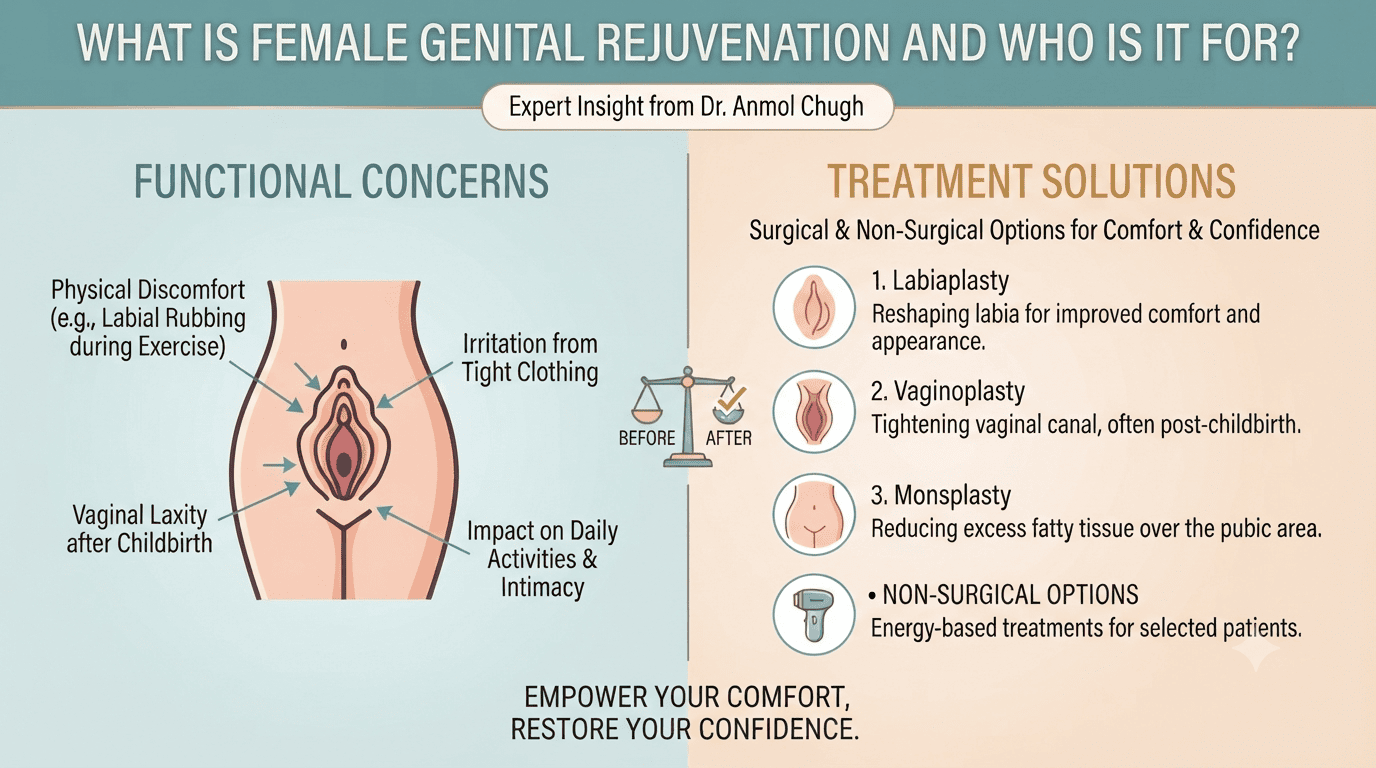
Female genital rejuvenation is becoming an increasingly discussed topic as more women seek solutions for concerns that affect their comfort, confidence, and intimate health. Pregnancy, childbirth, ageing, hormonal changes, and significant weight loss can all change the appearance and function of the intimate area. While some women experience physical discomfort, others simply want to feel more confident in their bodies.
One of the most common questions women ask during consultation is:
“Is female genital rejuvenation only for cosmetic reasons?”
The answer is no.
Depending on the individual’s concerns, female genital rejuvenation can improve both appearance and function. The key is understanding which treatment is appropriate and whether it is the right choice for you.
In this guide, Dr. Anmol Chugh explains what female genital rejuvenation involves, who may benefit from it, and what patients should know before considering treatment.
Table of Contents
- Quick Answer
- What Is Female Genital Rejuvenation?
- Why Do Women Consider Female Genital Rejuvenation?
- Who Is a Good Candidate?
- Who May Need Functional Treatment Rather Than Cosmetic Treatment?
- What Procedures Are Commonly Performed?
- Dr. Anmol Chugh’s Clinical Perspective
- Common Mistakes Patients Make
- Recovery Protocol Followed at Our Centre
- Safety Checklist
- Who Should Not Do This Procedure?
- What I Tell My Patients During Consultation
- Frequently Asked Questions
- Final Thoughts
Quick Answer
Female genital rejuvenation refers to a group of surgical and non-surgical procedures designed to improve the appearance, comfort, and function of the female intimate area.
It may be suitable for women who experience:
- Enlarged or asymmetrical labia
- Vaginal laxity after childbirth
- Physical discomfort during daily activities
- Reduced confidence related to intimate appearance
- Mild urinary leakage in selected cases (depending on treatment)
The most appropriate treatment depends on your symptoms, anatomy, lifestyle, and personal goals.
What Is Female Genital Rejuvenation?
Female genital rejuvenation is not a single procedure. Instead, it includes several treatments that address different concerns involving the external and internal genital tissues.
Common procedures include:
- Labiaplasty – reshaping or reducing enlarged labia minora or labia majora
- Vaginoplasty – tightening the vaginal canal
- Monsplasty – reducing excess fatty tissue over the pubic area
- Clitoral hood reduction – reducing excess tissue around the clitoris when appropriate
- Non-surgical energy-based treatments for selected patients
Each procedure serves a different purpose, so treatment should always be individualized after a detailed examination.
Why Do Women Consider Female Genital Rejuvenation?
Every patient’s reasons are different.
Some women seek treatment because of physical discomfort, while others wish to restore changes that occurred after pregnancy or ageing.
Common concerns include:
- Discomfort while walking
- Pain during cycling or exercise
- Irritation while wearing tight clothing
- Difficulty during sexual activity
- Changes after childbirth
- Reduced confidence in intimate relationships
- Dissatisfaction with appearance
Wanting to improve intimate health or appearance is a personal decision and should never be a source of embarrassment.
Female Genital Rejuvenation Before & After
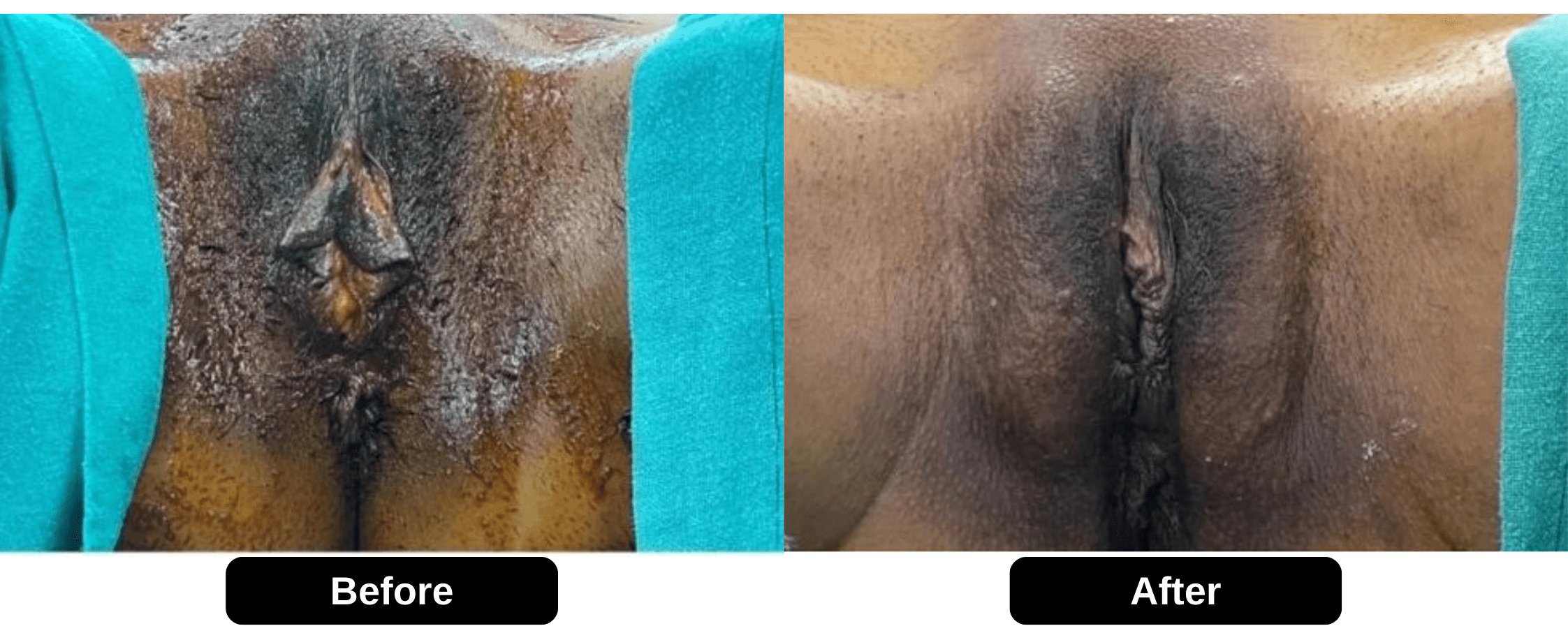
As shown in this picture, she required both Labia Majora (Fat transfer) and Labia Minora reduction
Who Is a Good Candidate?
You may be a suitable candidate if you:
- Are in good overall health
- Have completed puberty
- Experience physical discomfort due to enlarged labial tissue
- Notice vaginal laxity after childbirth
- Have realistic expectations
- Understand both the benefits and limitations of treatment
A consultation with an experienced plastic surgeon helps determine whether surgery or a non-surgical option is more appropriate.
Who May Need Functional Treatment Rather Than Cosmetic Treatment?
Not every patient seeks genital rejuvenation for cosmetic reasons.
Many women experience genuine functional problems such as:
- Labial tissue rubbing during exercise
- Recurrent irritation
- Difficulty maintaining hygiene
- Discomfort during intimacy
- Vaginal looseness affecting quality of life
In these situations, treatment focuses on improving comfort and function rather than appearance alone.
What Procedures Are Commonly Performed?
Labiaplasty
This procedure reduces or reshapes enlarged inner labia.
It may improve:
- Comfort
- Hygiene
- Symmetry
- Confidence
Vaginoplasty
Vaginoplasty tightens the vaginal canal, particularly when childbirth has caused muscle stretching.
Some women report improved support and confidence after appropriate treatment.
Monsplasty
Some women develop excess fatty tissue over the mons pubis following pregnancy or weight changes.
Monsplasty helps create a smoother contour by reducing excess tissue.
Combination Procedures
Depending on the patient’s concerns, more than one procedure may be performed during the same operation after careful evaluation.
Dr. Anmol Chugh’s Clinical Perspective
One of the biggest misconceptions is that female genital rejuvenation is only about appearance.
In reality, many women visit my clinic because they experience genuine discomfort while exercising, wearing fitted clothing, or after childbirth.
The most satisfying outcomes occur when treatment addresses both function and confidence.
Every patient has unique anatomy, which is why no two treatment plans are exactly the same. A personalized approach is essential for achieving natural-looking, comfortable results.
Common Mistakes Patients Make
Feeling Embarrassed to Discuss Their Concerns
Many women live with discomfort for years because they hesitate to seek medical advice.
Open discussion during consultation allows appropriate treatment planning.
Choosing Treatment Based Only on Social Media
Online images and trends should never determine your treatment.
Every woman’s anatomy is different.
Expecting Perfection
The goal is improvement, comfort, and natural-looking results—not unrealistic perfection.
Ignoring Functional Symptoms
Pain, irritation, or difficulty during daily activities should not be dismissed as “normal.”
Professional evaluation may identify treatable causes.
Recovery Protocol Followed at Our Centre
Recovery recommendations vary depending on the procedure performed.
Our recovery protocol generally includes:
- Detailed pre-operative counselling
- Appropriate pain management
- Gentle wound care instructions
- Wearing loose clothing
- Avoiding strenuous activity during early healing
- Maintaining good hygiene
- Scheduled follow-up appointments to monitor recovery
Each recovery plan is individualized based on the patient’s procedure and overall health.
Safety Checklist
Before considering female genital rejuvenation:
✔ Choose a qualified plastic surgeon
✔ Undergo a complete medical evaluation
✔ Discuss your expectations honestly
✔ Understand both benefits and limitations
✔ Stop smoking before surgery if advised
✔ Follow all pre-operative instructions
✔ Attend every follow-up visit
Who Should Not Do This Procedure?
Female genital rejuvenation may not be suitable for women who:
- Have active genital infections
- Have uncontrolled diabetes
- Have untreated bleeding disorders
- Are pregnant
- Have unrealistic expectations
- Are not medically fit for surgery
Your surgeon will determine whether treatment is appropriate after a comprehensive evaluation.
What I Tell My Patients During Consultation
I always remind my patients that female genital rejuvenation is a deeply personal decision.
The goal is not to meet someone else’s definition of beauty.
Instead, treatment should help you feel comfortable, healthy, and confident in your own body.
During consultation, we discuss your concerns openly, explain every available option, and recommend only those treatments that are appropriate for your individual needs.
Frequently Asked Questions
Is female genital rejuvenation painful?
The procedure is performed under appropriate anaesthesia, so you should not feel pain during surgery. Mild soreness and swelling during recovery are expected and gradually improve.
Can I return home the same day?
Many genital rejuvenation procedures are performed as day-care surgeries, allowing patients to return home on the same day, depending on the extent of treatment.
Will there be visible scars?
Incisions are usually placed in natural tissue folds, and scars generally become less noticeable as healing progresses.
How long is recovery?
Most patients return to routine daily activities within one to two weeks, although complete healing may take several weeks depending on the procedure performed.
Can the procedure affect future pregnancy?
Many women can have healthy pregnancies after genital rejuvenation. However, if you are planning pregnancy in the near future, discuss this with your surgeon during consultation.
Final Thoughts
Female genital rejuvenation is about much more than cosmetic enhancement. For many women, it can improve physical comfort, restore confidence after childbirth, and address functional concerns that affect daily life.
The right treatment depends on your individual anatomy, symptoms, and expectations. A thorough consultation with an experienced plastic surgeon ensures that you receive honest advice and a personalized treatment plan.
If you are considering female genital rejuvenation, Dr. Anmol Chugh can help you understand your options, answer your questions, and recommend the most appropriate approach for your goals.
Related Procedures
References
- American Society of Plastic Surgeons. Labiaplasty.
https://www.plasticsurgery.org/cosmetic-procedures/labiaplasty - American College of Obstetricians and Gynecologists. Elective Female Genital Cosmetic Surgery. Committee Opinion No. 795. 2020.
https://www.acog.org/clinical/clinical-guidance/committee-opinion/articles/2020/01/elective-female-genital-cosmetic-surgery - Goodman MP, Placik OJ, Benson RH III, et al. A large multicenter outcome study of female genital plastic surgery. Journal of Sexual Medicine. 2010;7(4 Pt 1):1565–1577.
https://doi.org/10.1111/j.1743-6109.2009.01673.x - Hamori CA. Postoperative clitoral hood deformity after labiaplasty. Aesthetic Surgery Journal. 2013;33(7):1030–1036.
https://doi.org/10.1177/1090820X13504679 - International Society of Aesthetic Plastic Surgery (ISAPS). Patient Safety Resources.
https://www.isaps.org - American Board of Cosmetic Surgery. Labiaplasty Guide.
https://www.americanboardcosmeticsurgery.org/procedure-learning-center/body/labiaplasty/
Medically Reviewed By
Dr. Anmol ChughQualifications: MBBS, MS, MCh (Plastic Surgery)
Experience: 16+ Years in Plastic & Aesthetic Surgery
Review Date: 24 Jul 2026
This article has been medically reviewed for accuracy and patient safety.

