Lipedema vs Obesity: 7 Signs Most Women Ignore
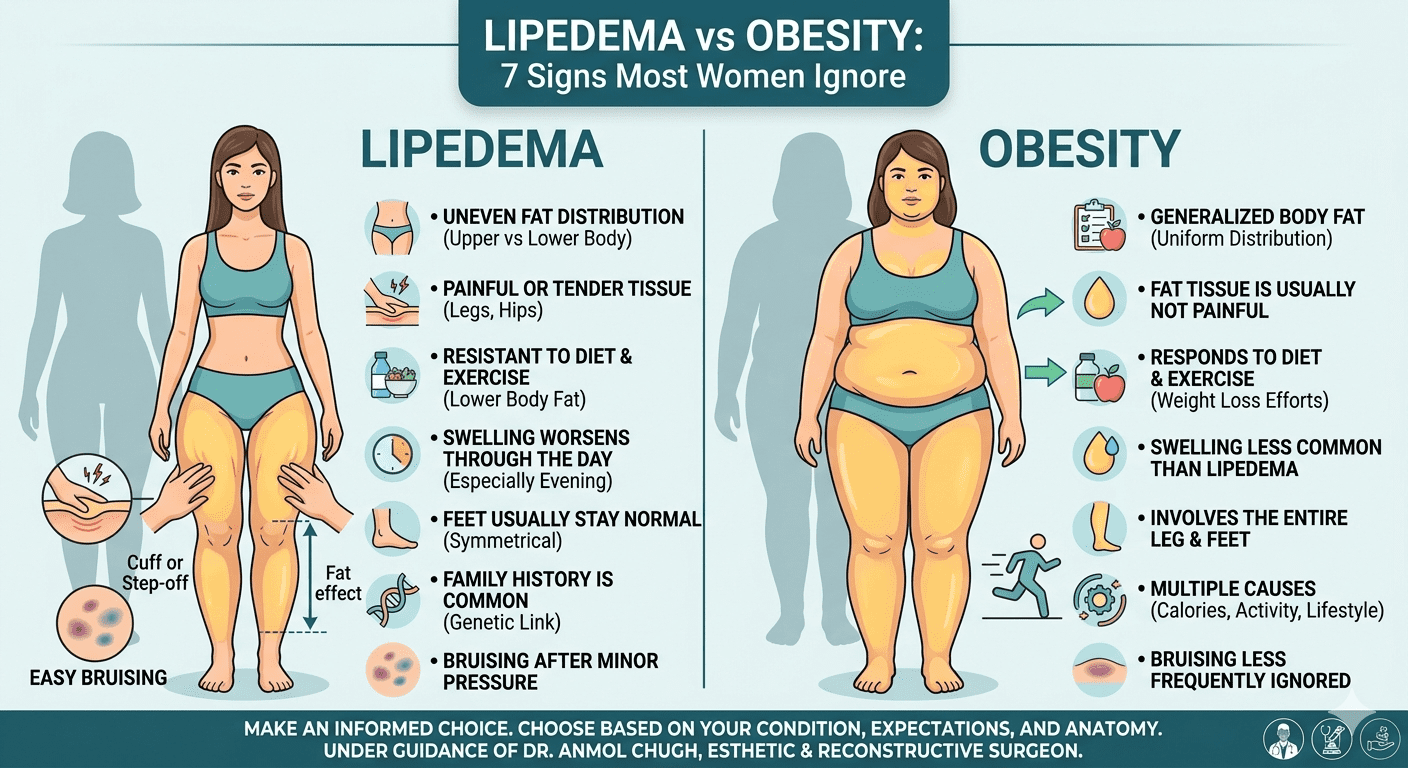
For many women, the fat that persists in their legs, hips, or arms is considered weight gain or obesity. In fact, some of these women may be suffering from a medical condition known as lipedema, a long-term condition that affects fat, is often confused and misdiagnosed.
Lipedema is often confused with weight gain in the early stages, leading to many patients to attempt extreme diets, strenuous exercise, and weight loss programs over a number of years, only to notice no further change in their body in certain areas. Not only does it impact on the appearance, but it can also cause pain, frustration, and emotional stress.
During Dr. Anmol Chugh’s consultation, one of the most frequently heard remarks is:
“Doctor, I lose weight everywhere except my legs.”
This pattern is frequently a key finding in the clinical setting, that the problem may not be just obesity.
It’s crucial to know the difference between lipedema and obesity because they demand significantly different treatment plans. In this guide, you’ll learn about the primary indicators that many women overlook and when a professional evaluation should be considered.
Table of Contents
- Lipedema vs Obesity (Quick Answer)
- What Is Lipedema?
- What Is Obesity?
- 7 Signs Most Women Ignore
- Why Lipedema Is Commonly Misdiagnosed
- Can Lipedema and Obesity Exist Together?
- How Is Lipedema Diagnosed?
- Treatment Options for Lipedema
- Emotional Impact Many Women Ignore
- Common Myths About Lipedema
- When Should You See a Specialist?
- Final Thoughts
- Book a Consultation
Lipedema vs Obesity (Quick Answer)
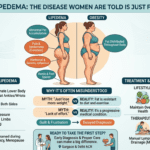
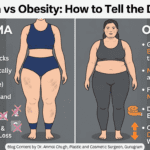
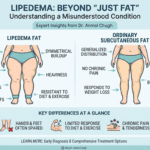
Obesity includes body-wide fat deposits, primarily due to excessive calorie storage in the body, and Lipedema is a chronic condition of abnormal accumulation of fat, typically in the legs and sometimes in the arms.
Unlike obesity, lipedema fat is often painful, diet and exercise-resistant, and it is often distributed symmetrically.
What Is Lipedema?
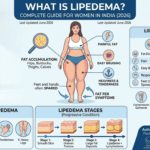
Lipedema is a persistent problem of fat buildup under the skin, most frequently occurring in:
- Legs
- Thighs
- Hips
- Buttocks
- Sometimes the arms
Mostly in women, and tends to worsen or occur at the following times:
- Puberty
- Pregnancy
- Menopause
Being overweight is not the only part of the condition. Fat in the skin of lipedema is different from normal body fat and can still continue to build up despite losing body weight.
You can also read:
👉 Lipedema Treatment: Complete Guide
What Is Obesity?
Obesity is a condition involving excessive body fat accumulation throughout the body.
It is commonly associated with:
- Excess calorie intake
- Low physical activity
- Metabolic factors
- Genetics
- Lifestyle habits
Unlike lipedema, obesity usually affects the body more uniformly and often responds to:
- Diet changes
- Exercise
- Weight loss strategies
7 Signs Most Women Ignore
- Fat Distribution Looks Uneven
The first and least noticeable symptom of lipedema is the fatty unevenness.
Women with lipedema often notice:
- Slim upper body
- Bigger hip and thigh bones
- Weight loss, but still feeling fat around the legs.
The distribution of fat is usually broader in the abdomen, chest, back, and limbs in obesity.
One of the most significant signs that the upper and lower body are not in harmony is that it could be a sign of needing further evaluation, Dr. Anmol Chugh said.
- Legs Feel Painful or Tender
Fat tissue is not normally painful unless obesity is the underlying cause.
But lipedema often brings about:
- Tenderness
- Heaviness
- Pain when touching the legs
- Pressure sensitivity
Many patients report it feels like:
“My legs feel sore even without exercise.”
This symptom is often not taken seriously by women since they think it is due to fatigue or bad circulation.
- Diet and Exercise Don’t Reduce Lower Body Fat
This is one of the biggest warning signs.
Women suffering from lipedema are likely to lose weight from:
- Face
- Waist
- Upper body
However, tight fat in the legs is hardly affected.
The irony is that many people that Dr. Anmol Chugh sees in his consultations have done years of hard exercise regimes with no change in the contour of their thighs or legs, and this is because the problem is not fat accumulation but lipedema.
Related reading:
👉 Thigh Liposuction Before and After: How to Get Slimmer Legs Naturally
- Easy Bruising
Lipedema fat tissue tends to bruise more easily because of fragile blood vessels beneath the skin.
Many women notice:
- Frequent unexplained bruises
- Bruising after minor pressure
- Persistent discoloration
This feature is much less common in standard obesity.
- Swelling Gets Worse Throughout the Day
Women suffering from lipedema may experience:
- Heaviness in the evening
- Tightness after prolonged standing
- Increased swelling during hot weather
By the night, the legs may seem a lot bigger than they are in the morning.
Sometimes this condition is mistaken for lymphatic symptoms due to the similarity in symptoms and therefore diagnosis is important.
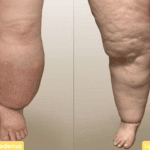
- Feet Usually Stay Normal
A very important difference:
👉Feet are usually spared from lipedema.
The fat tends to accumulate around the ankles, which gives the appearance of a “step-off”.
In obesity, fat will build up on the whole leg, including the feet.
This clinical feature is one of the easiest ways specialists differentiate lipedema from generalized obesity.
- Family History Is Common
A lot of women who suffer from lipedema find that they also experience the same body patterns with respect to:
- Mothers
- Sisters
- Grandmothers
It indicates that there is a considerable genetic factor.
Most patients discover afterwards that others in their family were also experiencing the same symptoms and were just told that they were “naturally heavy.”
Why Lipedema Is Commonly Misdiagnosed
Lipedema is underdiagnosed because:
- There is still a lack of awareness
- Symptoms resemble obesity
- So many women are embarrassed to talk about it
- The normal diet and weight loss tips cover up the problem for a while.
Because of this, patients may go years on end feeling frustrated without ever being correctly diagnosed.
Can Lipedema and Obesity Exist Together?
Yes — this is very typical.
A patient can have:
- Lipedema AND
- General obesity simultaneously
This also complicates diagnosis as the overall weight gain may mask this characteristic lipedema pattern.
The correct clinical assessment aids in establishing what proportion of the concern is due to:
- Fat accumulation
- Hormonal factors
- Lipedema progression
- Skin laxity
How Is Lipedema Diagnosed?
There is no single blood test for lipedema.
Diagnosis is mainly based on:
- Clinical examination
- Fat distribution pattern
- Symptoms
- Medical history
A specialist evaluates:
- Tenderness
- Symmetry
- Skin texture
- Swelling pattern
- Response to weight loss efforts
Treatment Options for Lipedema
Treatment depends on the severity and symptoms.
Conservative Management
Mild cases may improve with:
- Compression garments
- Anti-inflammatory lifestyle changes
- Controlled exercise
- Lymphatic drainage therapy
- Weight management
These methods help reduce discomfort and swelling but usually do not eliminate abnormal fat tissue completely.
Lipedema Liposuction
However, advanced liposuction can help in more severe instances:
- Reduce painful fat deposits
- Improve contour
- Enhance mobility
- Reduce heaviness
Lipedema treatment must be performed with a safe technique that improves function, unlike traditional cosmetic liposuction.
Related reading:
👉 The Cost of Liposuction
Emotional Impact Many Women Ignore
Lipedema affects more than appearance.
Many women experience:
- Low confidence
- Frustration after failed diets
- Social embarrassment
- Emotional exhaustion
A very large consolation to patients after diagnosis is that the disease was not due to a lack of effort.
Common Myths About Lipedema
Myth 1: It’s Just Obesity
Reality:
Lipedema is a recognized medical condition involving abnormal fat distribution.
Myth 2: Weight Loss Completely Fixes It
Reality:
Weight loss may reduce overall body fat, but lipedema fat often persists.
Myth 3: Exercise Alone Can Cure Lipedema
Reality:
Exercise helps overall health, but it usually cannot fully eliminate lipedema tissue.
When Should You See a Specialist?
You should consider a professional evaluation if:
- Your legs remain disproportionately large despite weight loss
- Fat feels painful or tender
- Swelling worsens through the day
- You bruise easily
- Your lower body shape feels abnormal compared to the upper body
Early diagnosis helps slow progression and improves long-term management.
Final Thoughts
Obesity and lipedema can seem like the same thing, but they’re not.
The most frequent issue is many women don’t pay attention to the indicators for years, mistaking it for weight gain. Knowing the difference can help the patient prevent frustration, select the correct therapy, and become more confident.
Properly diagnosed and guided, patients can discuss treatments that will not only improve the appearance but also the comfort, mobility, and quality of life.
Book a Consultation
When fat in the lower part of the body is difficult to get rid of, and you think that it may be more than obesity, it can be helpful to seek professional advice for clarity.
You will be able to:
- Know if your symptoms correspond with lipedema or not
- Discuss options for treatment
- Develop an individual Management Plan
👉 Schedule an appointment with Dr. Anmol Chugh today to get the right diagnosis of your condition.
Medically Reviewed By
Dr. Anmol ChughQualifications: MBBS, MS, MCh (Plastic Surgery)
Experience: 16+ Years in Plastic & Aesthetic Surgery
Review Date: 10 May 2026
This article has been medically reviewed for accuracy and patient safety.