When Is It Too Late for Non-Surgical Treatments?
Non-surgical aesthetic treatments have transformed the way we approach skin concerns today. From skin tightening to contour improvement, technologies like radiofrequency, ultrasound, and advanced devices such as Morpheus8 have made it possible to achieve visible improvements without surgery.
But one question that often comes up in consultation is:
“Have I crossed the stage where non-surgical treatments will no longer work?”
This is a very important question, and one that deserves a clear, honest answer.
Because the truth is, timing matters. There is a window where non-surgical treatments are highly effective, and beyond that point, their ability to deliver meaningful results becomes limited.
“In my clinical practice, I often see patients who have done everything right but are still unhappy with their results. For example, a 38-year-old mother came to my OPD after significant weight loss and said, ‘Doctor, I’ve worked so hard to lose weight, but this loose skin is still bothering me.’ On evaluation, the issue was not just skin laxity, but excess skin, which required a surgical approach for a meaningful result.”
Understanding What Non-Surgical Treatments Actually Do
Before we talk about “too late,” it’s important to understand what these treatments are designed to do.
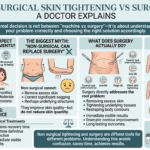
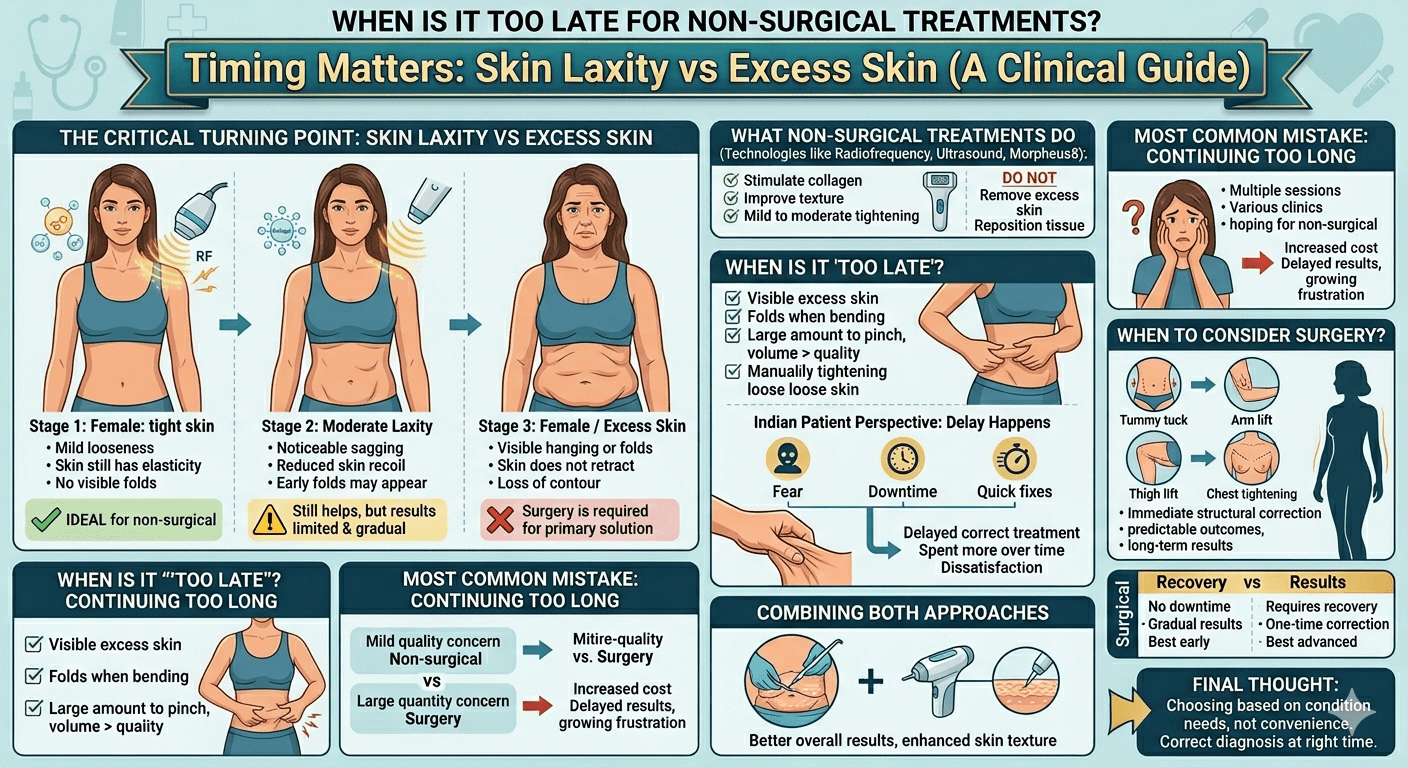
Non-surgical technologies primarily:
- Stimulate collagen production
- Improve skin texture
- Provide mild to moderate tightening
They work by enhancing the skin’s natural ability to repair and tighten itself over time.
However, they do not:
- Remove excess skin
- Reposition underlying tissues
- Create dramatic contour changes
This limitation is the key to understanding when they work, and when they don’t.
Also Read: Fast weight loss trends: Are surgical requests on the rise?
The Critical Turning Point: Skin Laxity vs Excess Skin
In clinical practice, the most important factor is not age, but the type and severity of the problem.
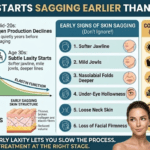
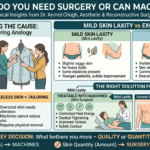
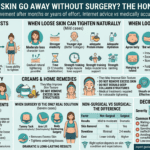
Stage 1: Early Skin Laxity
- Mild looseness
- Skin still has elasticity
- No visible folds
👉 This is the ideal stage for non-surgical treatments.
Stage 2: Moderate Laxity
- Noticeable sagging
- Reduced skin recoil
- Early folds may appear
👉 Non-surgical treatments can still help, but results will be limited and gradual.
Stage 3: Advanced Laxity / Excess Skin
- Visible hanging or folds
- Skin does not retract
- Loss of contour
👉 This is the stage where non-surgical treatments are no longer effective as a primary solution.
So, When Is It “Too Late”?
It becomes “too late” for non-surgical treatments when:
- There is visible excess skin
- Skin forms folds when you sit or bend
- You can pinch a large amount of loose skin
- The concern is more about the volume of skin than the quality
In such cases, non-surgical treatments may still improve skin texture slightly, but they will not address the main concern.
In my clinical experience, patients at this stage often feel disappointed after trying multiple treatments because their expectations do not match what these technologies can realistically deliver.
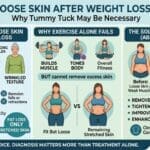
Also read: Loose Skin After Weight Loss: Why It Happens & What Actually Works
Why Do Non-Surgical Treatments Stop Working?
There are two main reasons:
- Loss of Skin Elasticity
When collagen and elastin are significantly depleted, the skin loses its ability to contract, even when stimulated.
- Excess Skin Volume
If there is simply too much skin, tightening it slightly will not create a visible change. The extra tissue needs to be physically removed.
This is why results plateau despite repeated sessions.
The Most Common Mistake Patients Make
A pattern I frequently see:
Patients continue trying:
- Multiple sessions of different machines
- Various clinics and technologies
- Treatments over months or years
…hoping for a non-surgical solution.
While understandable, this often leads to:
- Increased cost
- Delayed results
- Growing frustration
The problem is not the treatment, it’s that the condition has already crossed the stage where non-surgical methods are effective.
Real Clinical Insight: A Practical Way to Self-Assess
I often give patients a simple way to evaluate their condition:
Ask yourself:
“Is my concern about loose skin quality, or excess hanging skin?”
- If it’s quality (mild looseness) → non-surgical treatments can help
- If it’s quantity (visible excess skin) → surgery is required
Another quick indicator:
- If tightening your skin manually (pulling it) significantly improves appearance → surgery may be needed
- If the issue is subtle → non-surgical may still work
Indian Patient Perspective: Why Delay Happens
In India, many patients prefer non-surgical treatments first because:
- Fear of surgery
- Social downtime concerns
- Desire for “quick fixes”
While this approach works in early stages, it can become counterproductive in advanced cases.
Delaying the correct treatment often means:
- Spending more over time
- Not achieving desired results
- Emotional dissatisfaction
What Happens If You Continue Non-Surgical Treatments Too Long?
- Minimal visible improvement
- Temporary or short-lived results
- Treatment fatigue
- Loss of trust in procedures
In my practice, I always emphasize early and accurate diagnosis to avoid this cycle.
When Should You Consider Surgery?
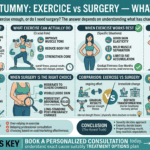
Surgery becomes the right option when:
- There is clear excess skin
- Skin does not retract
- Contour is significantly affected
Procedures such as:
are designed to remove excess tissue and restore shape.
Unlike non-surgical treatments, surgery provides:
- Immediate structural correction
- Predictable outcomes
- Long-term results
Can You Combine Both Approaches?
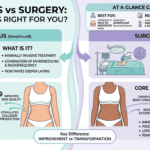
Yes, and this is often the most effective strategy.
- Surgery corrects the structural issue
- Non-surgical treatments (like Morpheus8) improve skin quality afterward
This combination provides:
- Better overall results
- Enhanced skin texture
- Long-term maintenance
Recovery vs Results: Making a Practical Decision
Non-Surgical Treatments
- No downtime
- Gradual results
- Best for early stages
Surgical Treatments
- Requires recovery
- One-time correction
- Best for advanced cases
Choosing based only on convenience can lead to poor outcomes. The decision should always be based on what your condition actually needs.
Frequently Asked Questions
Can I still try non-surgical treatments in advanced cases?
Yes, but results will be limited and may not meet expectations.
Is there an age limit for non-surgical treatments?
No, but effectiveness depends more on skin condition than age.
How do I know I’ve waited too long?
If there is visible excess or hanging skin, non-surgical options alone are unlikely to help.
Are non-surgical treatments a waste in later stages?
Not entirely, but they should not be expected to replace surgery.
Can early treatment prevent surgery later?
In some cases, yes. Early intervention can delay progression.
About Dr. Anmol Chugh
Dr. Anmol Chugh is an aesthetic and reconstructive surgeon based in India, specializing in body contouring procedures, including gynecomastia surgery, liposuction, and advanced skin tightening treatments such as Morpheus8.
With:
- 16,000+ patients cared for
- 15,000+ aesthetic surgeries performed
- 8,000+ cases focused on precision and care
His approach emphasizes:
- Correct diagnosis at the right time
- Honest and realistic guidance
- Choosing the most effective treatment, not just the easiest one
“I’ve also noticed that patients who come early, when the skin laxity is mild, respond much better to non-surgical treatments. But those who delay and reach the stage of excess skin often require surgery for a visible and satisfying outcome.”
Final Thought
Non-surgical treatments are powerful tools, but only within the right window.
The key is not to ask:
“Can I avoid surgery?”
But rather:
“What is the right solution for my condition right now?”
Understanding this can save you time, money, and unnecessary treatments, and help you achieve results that truly meet your expectations.
If you’re unsure whether non-surgical treatments will still work for you, a proper evaluation can give you clarity.
Visit: https://dranmolchugh.com/
Understand:
- Your current stage of skin laxity
- Realistic treatment options
- The most effective path forward
Making the right decision at the right time is the key to achieving the best possible outcome.
Medically Reviewed By
Dr. Anmol ChughQualifications: MBBS, MS, MCh (Plastic Surgery)
Experience: 16+ Years in Plastic & Aesthetic Surgery
Review Date: 17 Apr 2026
This article has been medically reviewed for accuracy and patient safety.