Do Tummy Tuck Scars Fade? What Surgeons Don’t Tell You
A tummy tuck, medically known as abdominoplasty, is one of the most effective procedures for achieving a flat, firm abdomen after pregnancy or significant weight loss. While the results can be transformative, one concern consistently holds patients back from taking the next step, scarring.
It is natural to ask, “Will the scar be permanent?” or “How visible will it look after surgery?” In many cases, patients are given simplified answers, but the reality is more nuanced.
The truth is that tummy tuck scars do not disappear completely, but they do fade significantly over time when managed properly. This article is based on clinical insights and experience from Dr. Anmol Chugh, who specializes in body contouring procedures and post-weight loss transformations.
Do Tummy Tuck Scars Fade? (Short Answer)
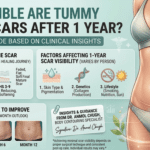
Tummy tuck scars do fade over time, typically becoming lighter, flatter, and less noticeable within 6 to 12 months. However, they do not vanish completely. The final appearance depends on multiple factors, including surgical technique, skin type, and post-operative care.
Why Scars Are an Essential Part of a Tummy Tuck
To understand scarring, it is important to recognize that a tummy tuck is not a superficial procedure. It involves the removal of excess skin and tightening of underlying tissues, which requires a surgical incision, usually placed low on the abdomen.
From a medical perspective, a scar is not a complication but a natural and necessary part of the healing process. When the skin is cut, the body repairs itself by producing collagen fibers that close the wound. This repair process results in a scar.
What matters is not whether a scar forms, but how well it heals and how visible it becomes over time.
The Science of Scar Healing
Scar healing is a gradual and multi-phase process that occurs over several months.
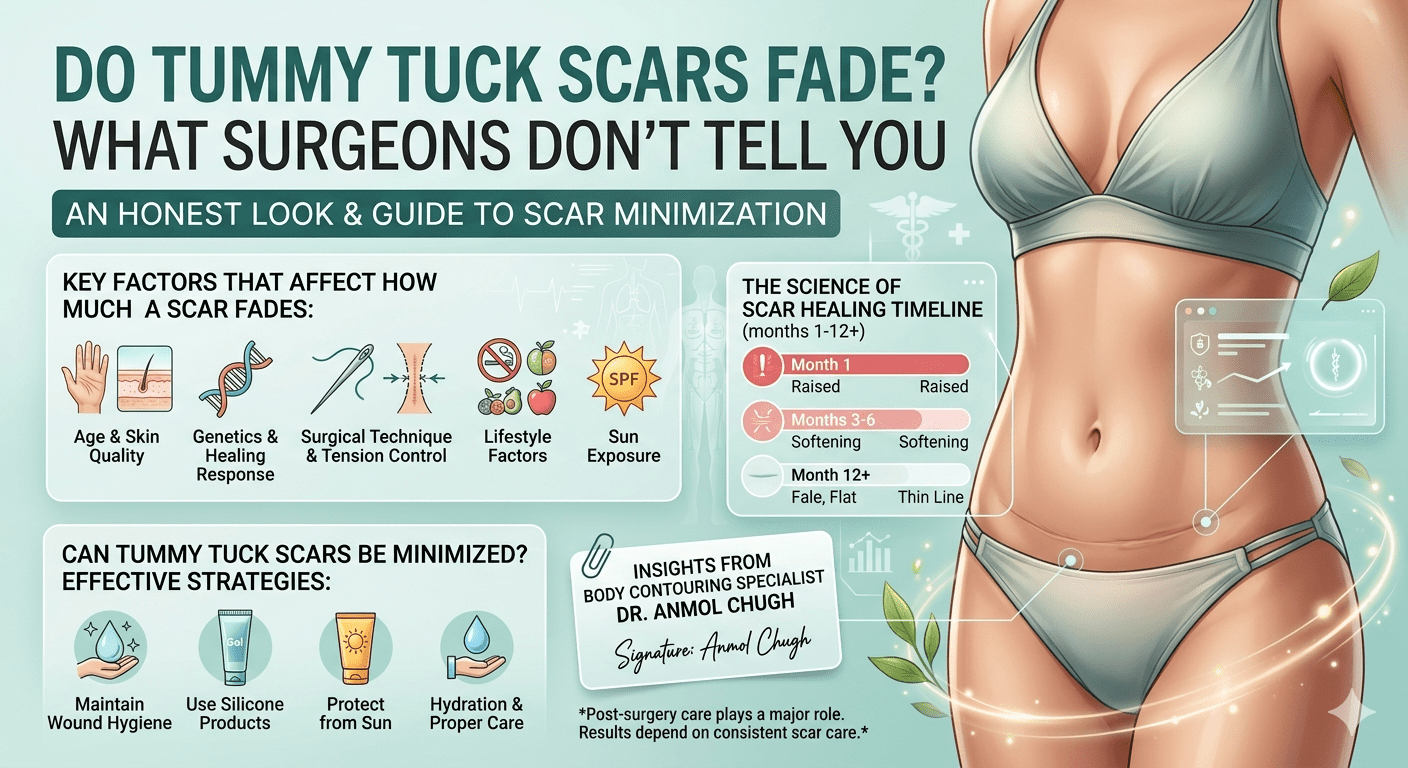
Initially, the scar may appear red, raised, or firm as part of the inflammatory phase. Over time, it enters the remodeling phase, during which collagen fibers reorganize, and the scar becomes softer, flatter, and lighter in color.
In clinical practice, Dr. Anmol Chugh emphasizes that patients who follow proper aftercare protocols often achieve significantly better scar outcomes compared to those who neglect post-operative care.
What Surgeons Don’t Always Tell You
While most surgeons explain that scars fade, certain important details are often not discussed in depth.
One key factor is that scar quality varies significantly from person to person. Even with the best surgical technique, individual healing responses differ based on genetics, skin type, and lifestyle.
Another critical point is that post-surgery care plays a major role. Many patients assume that results depend only on surgery, but in reality, consistent scar care determines long-term appearance.
Additionally, scars are strategically placed low on the abdomen, allowing them to remain hidden under underwear or swimwear in most cases.
Factors That Affect How Much a Scar Fades
Several important factors influence scar healing and final appearance:
- Age and skin quality
- Genetics and healing response
- Surgical technique and tension control
- Lifestyle factors such as smoking and nutrition
- Sun exposure during healing
Choosing an experienced surgeon, such as Dr. Anmol Chugh, plays a significant role in optimizing scar placement and minimizing visibility.
Can Tummy Tuck Scars Be Minimized?
While scars cannot be completely eliminated, they can be significantly improved with proper care.
Effective strategies include maintaining good wound hygiene, using silicone-based products, protecting the area from sun exposure, and considering advanced treatments like laser therapy if required.
Consistency in aftercare is essential, as scar improvement is a gradual process that continues over several months.
What Does a Healed Tummy Tuck Scar Look Like?
In most cases, a well-healed tummy tuck scar appears as a thin, flat line that blends with the natural skin tone over time. It is typically positioned low enough to remain hidden under clothing.
While it may still be visible on close inspection, it is rarely noticeable in everyday situations, especially when healing is optimal.
Are There Cases Where Scars Don’t Heal Well?
Although uncommon, some individuals may develop thicker or raised scars due to excessive collagen production.
Factors such as poor aftercare, infection, or excessive tension on the incision can also affect healing outcomes. This highlights the importance of following medical guidance carefully throughout the recovery process.
Balancing Scars vs Results
A key perspective to consider is the balance between scars and overall results.
A tummy tuck addresses excess skin that cannot be corrected through exercise or non-surgical treatments. For many patients, the improvement in body contour and confidence far outweighs the presence of a subtle scar.
With proper planning and expert execution, scars become a minor concern compared to the overall transformation.
Conclusion
Tummy tuck scars are a natural part of the healing process. While they do not disappear completely, they typically fade significantly and become much less noticeable over time.
With proper surgical technique, guided aftercare, and realistic expectations, most patients achieve excellent aesthetic outcomes. Under the care of an experienced specialist like Dr. Anmol Chugh, scar visibility can be minimized effectively.
Book a Consultation
If you are considering a tummy tuck but are concerned about scars, a personalized consultation can provide clarity and reassurance.
You will gain insights into:
- Expected scar placement
- Healing timeline
- Scar minimization techniques
👉 Book your consultation with Dr. Anmol Chugh today and make a confident, informed decision.
Medically Reviewed By
Dr. Anmol ChughQualifications: MBBS, MS, MCh (Plastic Surgery)
Experience: 16+ Years in Plastic & Aesthetic Surgery
Review Date: 11 Apr 2026
This article has been medically reviewed for accuracy and patient safety.