Non-Surgical Skin Tightening vs Surgery: A Doctor Explains
Loose or sagging skin is one of the most common concerns patients bring to an aesthetic clinic. Whether it appears after weight loss, pregnancy, or as part of natural aging, the question that almost always follows is:
“Can this be fixed without surgery?”
With the growing popularity of treatments like radiofrequency, ultrasound devices, and technologies such as Morpheus8, many patients hope for a non-surgical solution that delivers surgical-level results.
However, in clinical practice, the answer is not that simple.
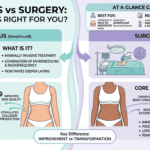
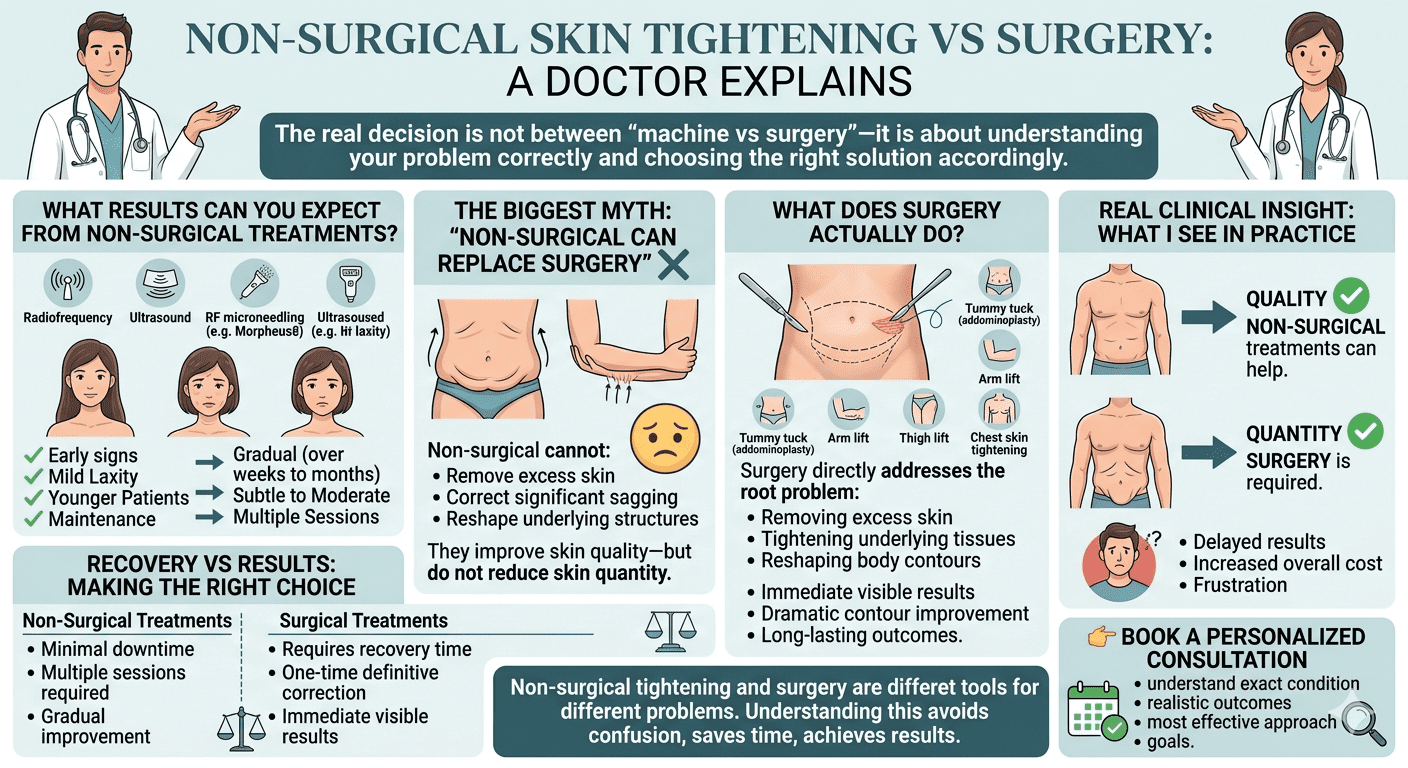
The real decision is not between “machine vs surgery,” it is about understanding your problem correctly and choosing the right solution accordingly.
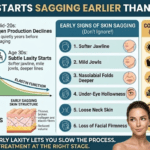
Why Skin Starts to Sag in the First Place
To understand treatment, we first need to understand the cause.
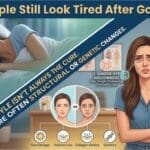
Skin firmness depends on collagen and elastin, proteins responsible for strength and elasticity. Over time, these reduce due to:
- Aging
- Weight fluctuations
- Pregnancy
- Genetics
- Sun exposure and lifestyle
When the skin is stretched for a long time, especially in cases of obesity or pregnancy, it may lose its ability to retract fully. This leads to loose, sagging, or folded skin.
In my clinical experience, patients often underestimate how much this loss of elasticity affects treatment outcomes.
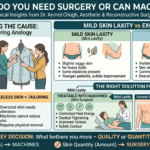
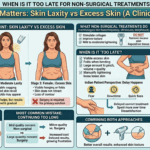
The Most Important Distinction: Skin Laxity vs Excess Skin
Before choosing any treatment, it is critical to differentiate between:
Mild to Moderate Skin Laxity
- Slight looseness
- Skin still has some recoil
- No heavy folds
Excess Skin
- Visible sagging or hanging tissue
- Skin does not shrink back
- Common after major weight loss
👉 This distinction alone determines whether non-surgical treatments will work or fail.
What Is Non-Surgical Skin Tightening?
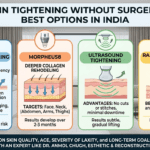
Non-surgical treatments include technologies that stimulate collagen production using heat or energy.
Common options include:
- Radiofrequency-based devices
- Ultrasound-based tightening
- Laser treatments
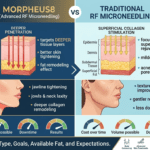
- RF microneedling, like Morpheus8
These treatments work by delivering controlled energy into deeper layers of the skin, triggering a healing response that gradually tightens the tissue.
What Results Can You Expect from Non-Surgical Treatments?
Non-surgical skin tightening can be very effective, but only in the right cases.
Best suited for:
- Early signs of aging
- Mild to moderate skin laxity
- Younger patients with better skin quality
- Maintenance after procedures
Results are typically:
- Gradual (over weeks to months)
- Subtle to moderate
- Dependent on multiple sessions
In my practice, patients who are properly selected and counseled tend to be satisfied with these treatments. However, unrealistic expectations are the biggest reason for dissatisfaction.
The Biggest Myth: “Non-Surgical Can Replace Surgery” ❌
This is one of the most common misconceptions.
Many patients believe:
“If technology is advanced, why do we still need surgery?”
The reality is:
Non-surgical treatments cannot:
- Remove excess skin
- Correct significant sagging
- Reshape underlying structures
They improve skin quality, but they do not reduce skin quantity.
For example:
These conditions require surgical correction for meaningful results.
What Does Surgery Actually Do?
Surgery directly addresses the root problem by:
- Removing excess skin
- Tightening underlying tissues
- Reshaping body contours
Common procedures include:
Unlike machines, surgery provides:
- Immediate visible results
- Dramatic contour improvement
- Long-lasting outcomes
Real Clinical Insight: What I See in Practice
A very common pattern I observe is patients trying multiple non-surgical treatments before considering surgery.
While this is understandable, especially due to fear of downtime, it often leads to:
- Delayed results
- Increased overall cost
- Frustration due to minimal improvement
I often simplify the decision-making process with one key question:
What bothers you more, the looseness of the skin or the excess amount of skin?
- If it’s about quality → non-surgical treatments can help
- If it’s about quantity → surgery is required
This clarity helps patients make confident and informed decisions.
Indian Patient Perspective: A Practical Observation
In India, many patients initially prefer non-surgical treatments due to:
- Fear of surgery
- Social commitments
- Concern about downtime
While this approach works well for early cases, it is important to understand its limitations.
Delaying the right treatment can sometimes make the journey longer and more expensive than necessary.
Can You Combine Both Approaches?
Yes, and in many cases, this provides the best outcome.
For example:
- Surgery removes excess skin
- Non-surgical treatments improve skin quality afterward
This combined approach allows:
- Structural correction
- Surface refinement
- Better long-term results
Recovery vs Results: Making the Right Choice
Non-Surgical Treatments
- Minimal downtime
- Multiple sessions required
- Gradual improvement
Surgical Treatments
- Requires recovery time
- One-time definitive correction
- Immediate visible results
Choosing based only on convenience can lead to the wrong decision. The focus should always be on effectiveness for your condition.
Real Case Insight
A patient in his mid-30s visited after significant weight loss, concerned about loose abdominal skin. He had already tried multiple sessions of non-surgical tightening with minimal improvement.
On evaluation, it was clear that the issue was excess skin, not just laxity.
After proper counseling, he underwent a tummy tuck procedure and achieved a transformation that matched his expectations.
👉 The key takeaway: Correct diagnosis matters more than the treatment itself.
Frequently Asked Questions
Can loose skin tighten naturally?
Mild laxity may improve slightly, but significant loose skin rarely resolves completely on its own.
Are non-surgical treatments permanent?
No. Results require maintenance and depend on lifestyle.
How do I know if I need surgery?
If there is visible hanging or excess skin, surgery is usually the effective option.
Is surgery the only way to remove excess skin?
Yes. Currently, only surgery can physically remove excess skin.
Can I try non-surgical treatments first?
Yes, but expectations should be realistic, they will not replace surgery in advanced cases.
About Dr. Anmol Chugh
Dr. Anmol Chugh is an aesthetic and reconstructive surgeon based in India, specializing in body contouring procedures such as gynecomastia surgery, Rhinoplasty, liposuction, and advanced skin tightening treatments, including Morpheus8.
With:
- 16,000+ patients cared for
- 15,000+ aesthetic surgeries performed
- 8,000+ cases focused on precision, care, and outcomes
His approach focuses on:
- Accurate diagnosis
- Honest, patient-focused guidance
- Delivering natural and proportionate results
He believes in recommending what is right for the patient, not just what is popular.
Final Thought
Non-surgical skin tightening and surgery are not competing options, they are different tools for different problems.
Non-surgical treatments are excellent for improving skin quality and early laxity. Surgery is the definitive solution for excess skin and structural concerns.
Understanding this difference is the key to avoiding confusion, saving time, and achieving the results you truly want.
If you’re unsure which option is right for you, a proper evaluation can give you clarity.
Visit: https://dranmolchugh.com/
Understand:
- Your exact condition
- Realistic treatment outcomes
- The most effective approach for your goals
Making the right decision early can save you time, cost, and unnecessary treatments, and help you achieve results that truly match your expectations.
Medically Reviewed By
Dr. Anmol ChughQualifications: MBBS, MS, MCh (Plastic Surgery)
Experience: 16+ Years in Plastic & Aesthetic Surgery
Review Date: 18 Apr 2026
This article has been medically reviewed for accuracy and patient safety.