
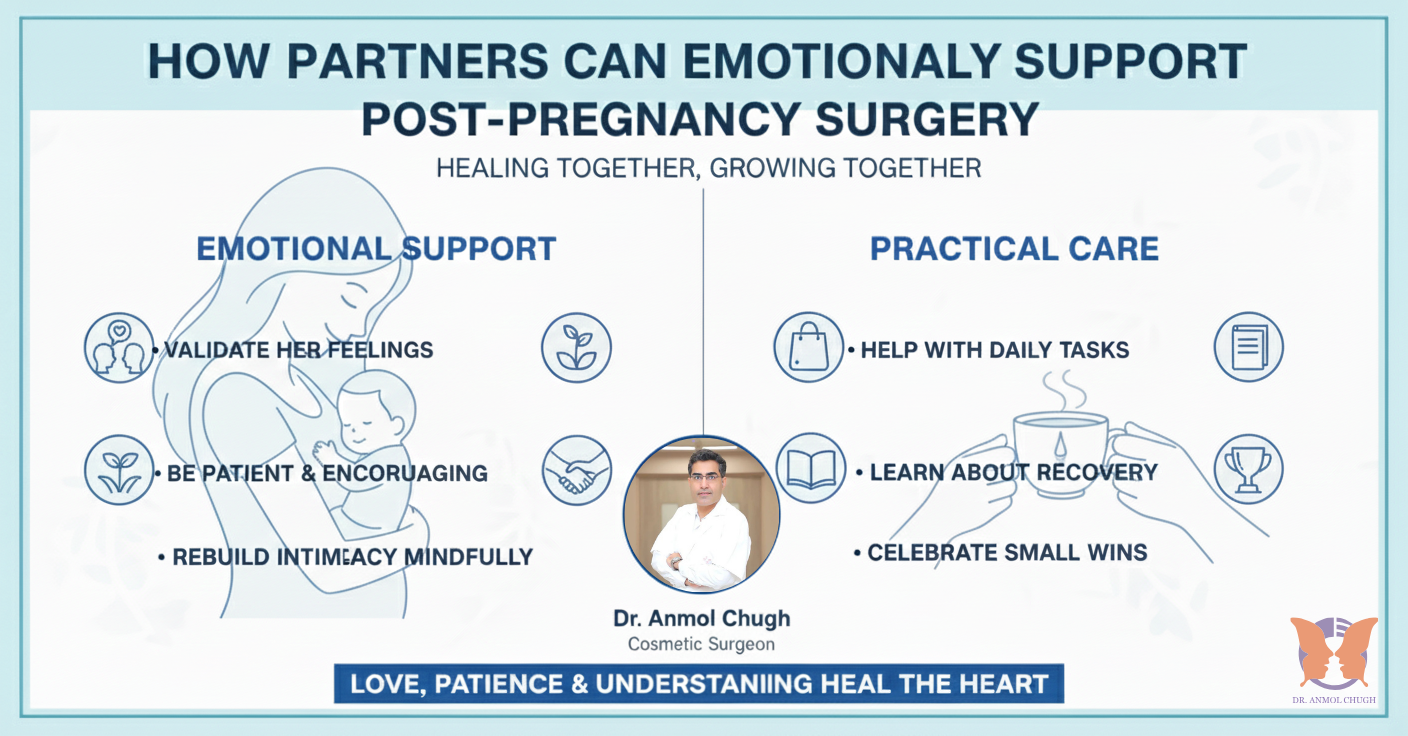
How Partners Can Emotionally Support Post-Pregnancy Surgery
Motherhood is a beautiful transformation, but it also comes with physical and emotional changes that can be overwhelming.
For many women, surgeries like a tummy tuck, breast lift, or a mommy makeover are not about chasing perfection; they’re about healing, comfort, and confidence after pregnancy.
Yet, while the surgery restores the body, the heart heals best with emotional support.
As Dr. Anmol Chugh, leading plastic and reconstructive surgeon at CK Birla Hospital, Gurugram, says:
“Recovery after post-pregnancy surgery isn’t just about rest, it’s about feeling understood, loved, and emotionally supported.”
Partners play a powerful role in helping women navigate this journey, turning recovery into a time of deeper connection and shared healing.
Understanding What She’s Going Through
Before you can support her, it’s important to understand what post-pregnancy surgery really involves.
Procedures like abdominoplasty (tummy tuck) or breast lift repair muscles, remove stretched skin, and restore comfort after childbirth. But along with physical healing, there’s often an emotional journey too.
She may experience:
- Body sensitivity after surgery
- Self-consciousness about scars or swelling
- Temporary limitations in movement
- Mood changes from physical discomfort or recovery hormones
It’s not just surgery, it’s a process of rebuilding strength and self-image.
Your empathy and patience make all the difference.
Don’t Minimize Her Feelings
Even if you think she looks perfect just the way she is, understand that her feelings are deeply personal.
When a woman chooses a mommy makeover or breast lift, it’s rarely about appearance alone; it’s about wanting to feel like herself again.
Instead of saying:
“You didn’t need surgery.”
Try saying:
“I understand why you wanted this. I’m proud of you for taking care of yourself.”
As Dr. Anmol Chugh shares,
“Validation from a loved one reassures her that her decision was not about vanity, but about health, comfort, and emotional healing.”
Your acknowledgment helps her feel seen and supported, not judged.
Learn About Her Procedure Together
One of the best ways to show support is to learn about the surgery together.
Read about the procedure from trusted sources or attend consultations with her if she wants you there.
Ask questions like:
- “How long will your recovery take?”
- “What can I do to help with your rest or comfort?”
- “What should I know about your post-surgery care?”
When you take an interest in her recovery process, it shows you care, not just about the outcome, but about her well-being.
At CK Birla Hospital, Dr. Anmol Chugh encourages partners to be part of this education process because it helps families prepare emotionally and practically for recovery.
Be Patient With the Healing Process
Recovery after post-pregnancy surgery takes time, physically and emotionally.
She may not feel or look like herself for a few weeks. Swelling, tiredness, or soreness are normal parts of the journey.
What she needs most is patience, reassurance, and gentle support.
Here’s how you can help:
- Don’t rush her recovery or compare progress.
- Offer help with daily tasks like cooking or childcare.
- Remind her that healing is not a race, it’s a process.
As Dr. Chugh explains,
“When partners give women time and space to heal at their own pace, they recover with less stress and more emotional balance.”
Offer Practical Help Without Being Asked
Sometimes, love looks like simple actions.
After a tummy tuck or breast surgery, your partner might need help with:
- Reaching overhead or bending down
- Carrying the baby or lifting heavy items
- Dressing, bathing, or walking comfortably in the first few days
Offer help before she asks; it makes her feel cared for, not dependent.
Even small gestures like preparing meals, adjusting her pillows, or reminding her to take medication can make recovery smoother and less stressful.
Encourage Self-Compassion
After pregnancy and surgery, many women battle self-criticism. They may look in the mirror and focus on swelling, scars, or healing bruises, forgetting that these are signs of progress, not flaws.
Your words can help rewrite that inner dialogue.
Say things like:
- “You’re healing beautifully.”
- “I’m proud of how strong you are.”
- “You deserve to feel good about yourself.”
These affirmations help her embrace self-compassion, the most powerful medicine for emotional healing.
As Dr. Anmol Chugh says,
“Healing begins in the heart. When partners replace silence with reassurance, women rebuild confidence faster.”
Respect Her Need for Rest and Space
While your care matters, sometimes she may need quiet time to rest, reflect, or simply be with her thoughts.
Respect that space without taking it personally.
Avoid overwhelming her with constant check-ins or questions about her looks or pain. Instead, remind her:
“Take your time. I’m right here when you need me.”
Rest is not just physical; it’s emotional recovery, too. Giving her space shows respect and trust.
Celebrate the Small Wins
Healing happens in stages.
The first shower after surgery.
The first time she stands straight.
The first day she feels truly like herself again.
Celebrate these moments together, they’re milestones of resilience.
You might say:
“You’re getting stronger every day.”
“I can see how far you’ve come.”
Small celebrations build her motivation and emotional strength, helping her focus on progress, not perfection.
Keep Communication Gentle and Honest
Open, caring communication strengthens emotional connection during recovery.
If she feels emotional or anxious, listen, don’t try to “fix” everything.
You can ask:
- “Do you want to talk or just rest?”
- “What’s been the hardest part for you lately?”
- “What makes you feel better, a hug, a chat, or quiet time?”
By asking instead of assuming, you create emotional safety, and that’s the foundation of strong healing support.
Dr. Anmol Chugh notes,
“Partners who listen without judgment become an essential part of emotional recovery. Healing is always faster when it’s shared.”
Rebuild Intimacy Mindfully
After post-pregnancy surgery, intimacy can be sensitive, physically and emotionally.
She may feel unsure about her body or worry about scars and appearance.
Approach this stage with tenderness and patience.
Focus on emotional intimacy first, affection, words, and presence, before physical closeness.
Let her guide the pace and reassure her that your attraction goes beyond appearance.
“Confidence grows when a woman feels loved for who she is, not just how she looks,” says Dr. Chugh.
Mindful intimacy rebuilds trust, connection, and confidence.
Support Healthy Routines Together
As recovery progresses, help her gradually return to a healthy lifestyle, without pressure.
Encourage walks, nutritious meals, hydration, and enough sleep. Join her in simple routines like light yoga or meditation (after her doctor’s approval).
Doing it together transforms recovery into shared wellness, not isolation.
Dr. Anmol Chugh often advises couples:
“Healing together builds stronger emotional bonds. When partners share healthy habits, they both grow stronger, physically and emotionally.”
Avoid Comparison or Pressure
Every woman’s recovery journey is unique.
Avoid comparing her pace, results, or scars with others, especially what’s seen online.
Social media often shows edited “after” photos without revealing the real recovery journey behind them.
Instead, focus on her comfort, confidence, and emotional balance, not speed or appearance.
Healing is not about matching an image; it’s about feeling free in her body again.
Include Her Feelings in Family Conversations
If you have children, friends, or family around during recovery, be her emotional voice when she’s tired or quiet.
Gently explain to others:
“She’s resting right now.”
“Her body is healing; she needs time.”
Protecting her peace from unwanted opinions or questions helps her heal without added emotional strain.
As Dr. Chugh emphasizes,
“Recovery is a family experience. When loved ones understand, healing becomes easier and more positive.”
Remind Her: This Is Self-Care, Not Vanity
Sometimes, guilt can resurface even after surgery, “Did I do the right thing?”
Be her reminder that this was an act of self-care, not vanity.
Say things like:
- “You did this to feel better, not to please anyone.”
- “You deserve comfort and confidence.”
- “I’m proud that you took charge of your well-being.”
Your emotional reassurance replaces guilt with gratitude, helping her own her decision with pride.
The Power of Presence
At the end of the day, the most powerful thing you can give her is your presence.
Not just during consultations or recovery days, but in quiet moments when she needs reassurance, laughter, or a gentle hand to hold.
Dr. Anmol Chugh says it beautifully:
“A supportive partner becomes the medicine no prescription can provide: calm, empathy, and unconditional love.”
Because while stitches heal the body, connection heals the heart.
Conclusion: Healing Together, Growing Together
Post-pregnancy surgery isn’t just a physical journey; it’s an emotional rebirth.
And when partners offer love, patience, and understanding, recovery becomes something more, a shared chapter of growth and closeness.
So if your loved one is recovering from a mommy makeover, tummy tuck, or breast lift, remember, your words, care, and presence are the strongest support she could ask for.
With Dr. Anmol Chugh’s expert care and your emotional support, she doesn’t just heal, she blooms.