Lipedema vs Obesity: How to Tell the Difference
Lipedema vs Obesity: Understanding the Key Differences
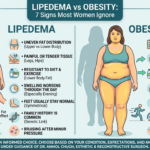
Lipedema and obesity are often confused, but they are not the same condition.
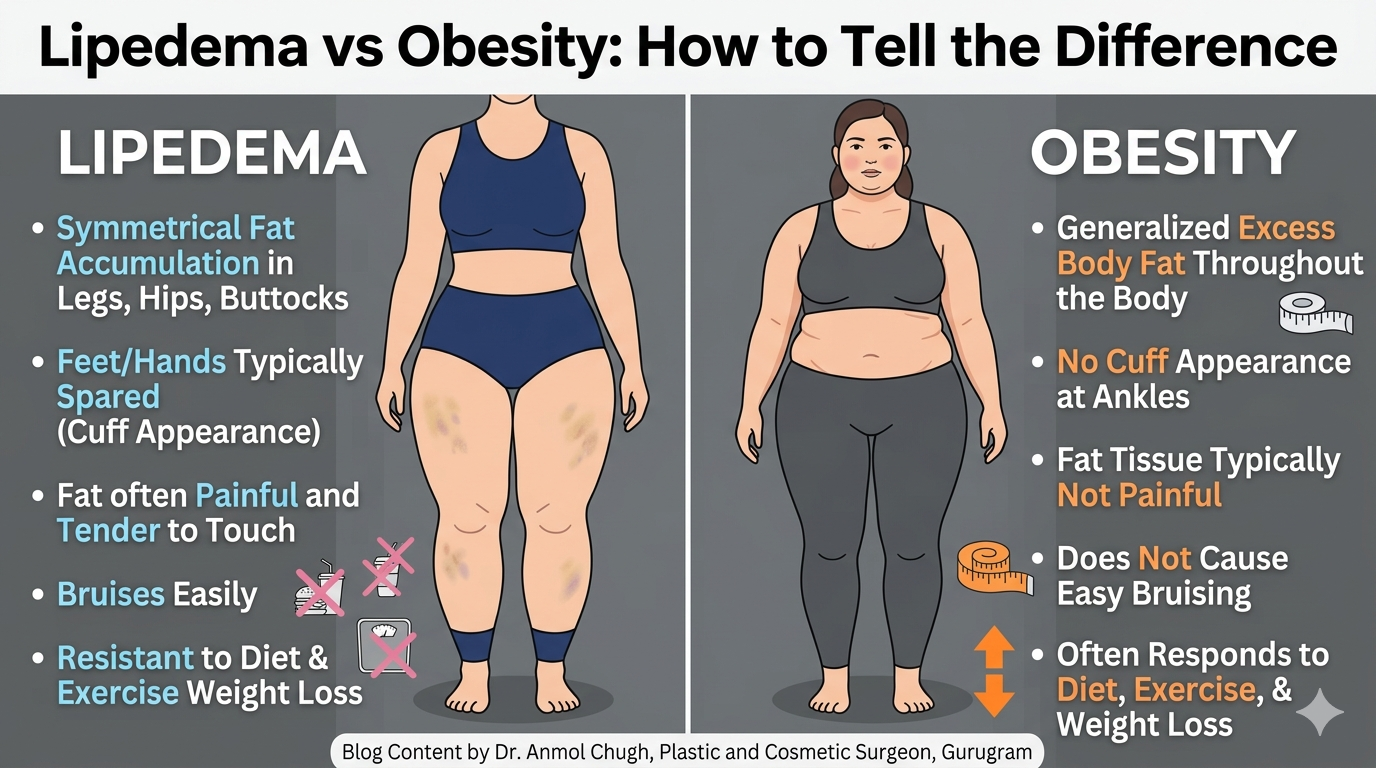
Obesity is a medical condition characterized by excess body fat throughout the body and typically responds to diet, exercise, and weight-loss interventions. Lipedema is a chronic fat-distribution disorder that causes abnormal fat accumulation, most commonly in the legs, hips, buttocks, and sometimes the arms. Unlike obesity, lipedema fat is often painful, bruises easily, and may remain resistant to traditional weight-loss methods.
Many women with lipedema spend years believing they simply need to lose more weight, only to discover that their symptoms are caused by an underlying medical condition.
If your legs remain disproportionately large despite weight loss, or if you experience tenderness, heaviness, and easy bruising, understanding the difference between lipedema and obesity is essential.
Table of Contents
- Why This Difference Matters
- Why So Many Women Search for This Question
- What Is Lipedema?
- What Makes Lipedema Different?
- Who Gets Lipedema?
- Common Symptoms of Lipedema
- What Is Obesity?
- How Is Obesity Diagnosed?
- How Does Obesity Affect Fat Distribution?
- Why Lipedema Is Often Mistaken for Obesity
- The Weight-Loss Frustration Many Women Experience
- Early Warning Signs Women Often Ignore
- Can You Be Thin and Still Have Lipedema?
- Key Takeaways So Far
- 7 Key Differences Between Lipedema and Obesity
- Lipedema vs Obesity: Side-by-Side Comparison
- Can You Have Both Lipedema and Obesity?
- Why Weight Loss Alone May Not Solve the Problem
- Real Patient Example #1
- Real Patient Example #2
- Real Patient Example #3
- Common Misconceptions About Lipedema and Obesity
- Why Early Recognition Matters
- Key Takeaways From This Comparison
- How Do Doctors Diagnose Lipedema?
- Medical History
- Physical Examination
- Lipedema vs Lymphedema: What’s the Difference?
- Treatment Options for Lipedema
- Compression Garments
- Exercise and Physical Activity
- Healthy Nutrition
- Manual Lymphatic Drainage
- Lipedema Liposuction
- Who May Be a Candidate for Lipedema Surgery?
- What Happens if Lipedema Is Left Untreated?
- When Should You See a Specialist?
- Frequently Asked Questions
- Conclusion
- References
Lipedema vs Obesity (Quick Answer)
Lipedema and obesity are different conditions.
Obesity involves excess body fat throughout the body and usually improves with diet, exercise, and weight loss.
Lipedema is a chronic fat-distribution disorder that primarily affects the legs, hips, buttocks, and sometimes the arms. Lipedema fat is often painful, bruises easily, and may remain resistant to traditional weight-loss methods.
Many women have both conditions at the same time, which can make diagnosis more challenging.
Why This Difference Matters
One of the biggest challenges women with lipedema face is misdiagnosis.
Many patients visit multiple doctors, try numerous diets, join fitness programs, and lose significant amounts of weight, yet continue to struggle with disproportionately large legs and persistent discomfort.
Because lipedema is still underrecognized in many parts of the world, including India, symptoms are frequently attributed solely to obesity.
This misunderstanding can lead to:
- Years of frustration
- Delayed diagnosis
- Unnecessary self-blame
- Emotional distress
- Progression of symptoms
Recognizing the differences between lipedema and obesity is often the first step toward getting appropriate treatment and support.
Why So Many Women Search for This Question
Women commonly ask:
- Why are my legs bigger than the rest of my body?
- Why can’t I lose fat from my thighs?
- Why do my legs stay large even after losing weight?
- Why do my legs hurt when touched?
- Why do I bruise so easily?
These questions often arise because lipedema symptoms do not behave like ordinary body fat.
A woman may successfully lose weight from:
- Her face
- Her waist
- Her chest
- Her upper body
Yet her legs may remain disproportionately large.
This pattern is one of the most important clues that lipedema may be present.
What Is Lipedema?
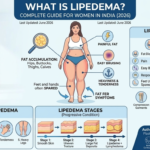
Lipedema is a chronic disorder of fat distribution that primarily affects women.
The condition causes abnormal fat accumulation beneath the skin, most commonly in:
- Hips
- Buttocks
- Thighs
- Knees
- Calves
- Lower legs
- Upper arms
Unlike ordinary fat, lipedema fat often has unique characteristics.
Women frequently report:
- Pain or tenderness
- Easy bruising
- Heaviness in the legs
- Swelling
- Progressive enlargement of affected areas
One of the most distinctive signs is that the feet are often spared, creating a noticeable “cuff” appearance around the ankles.
Also Read:
👉 What Is Lipedema? Complete Guide for Women
What Makes Lipedema Different?
The abnormal fat associated with lipedema behaves differently from ordinary body fat.
Many women discover that:
- Dieting reduces their waist size
- Exercise improves fitness
- Weight loss changes their upper body
Yet the fat in their legs changes very little.
This can create a significant imbalance between the upper and lower body.
As the condition progresses, symptoms may become increasingly noticeable and may affect daily activities, mobility, and quality of life.
Who Gets Lipedema?
Lipedema overwhelmingly affects women.
The condition commonly appears during periods of hormonal change, such as:
Puberty
Many women recall noticing body changes during adolescence.
Pregnancy
Symptoms may appear for the first time or worsen during pregnancy.
Menopause
Hormonal changes associated with menopause may contribute to disease progression.
These observations suggest that female hormones may play an important role in lipedema development.
Common Symptoms of Lipedema
Although symptoms vary from person to person, the most common signs include:
Disproportionately Large Legs
The lower body appears significantly larger than the upper body.
Painful Fat Tissue
Affected areas may feel tender or painful.
Easy Bruising
Bruises may develop after minimal trauma.
Leg Heaviness
Many women describe a sensation of heaviness or pressure.
Symmetrical Enlargement
Both legs are typically affected equally.
Difficulty Losing Fat
Weight loss often has little effect on affected areas.
Progressive Enlargement
Symptoms may gradually worsen over time.
What Is Obesity?
Obesity is a chronic medical condition characterized by excessive body fat accumulation.
It develops when calorie intake consistently exceeds the body’s energy requirements over time.
However, obesity is influenced by many factors, including:
- Genetics
- Lifestyle
- Hormones
- Medications
- Metabolic conditions
- Environmental influences
Unlike lipedema, obesity typically affects the body more generally.
Fat accumulation may occur in:
- Abdomen
- Face
- Back
- Chest
- Arms
- Legs
The pattern varies between individuals.
How Is Obesity Diagnosed?
Healthcare providers commonly use Body Mass Index (BMI) as a screening tool.
Additional factors may include:
- Waist circumference
- Body composition
- Medical history
- Metabolic health
Obesity is associated with increased risks of:
- Type 2 diabetes
- High blood pressure
- Heart disease
- Sleep apnea
- Joint problems
Proper management often includes:
- Dietary changes
- Exercise
- Behavioral modification
- Medical therapy when appropriate
How Does Obesity Affect Fat Distribution?
Unlike lipedema, obesity generally causes fat accumulation throughout the body.
Some individuals gain more weight around:
The Abdomen
Often referred to as central obesity.
The Hips and Thighs
A common pattern in women.
The Entire Body
Many individuals experience generalized fat accumulation.
Importantly, obesity-related fat usually decreases when significant weight loss occurs.
This is one of the key differences between obesity and lipedema.
Why Lipedema Is Often Mistaken for Obesity
Many women with lipedema are initially told they simply need to lose weight.
This happens because both conditions may involve:
- Larger body size
- Enlarged legs
- Mobility challenges
- Progressive body changes
At first glance, the conditions can appear similar.
However, closer evaluation often reveals important differences.
Women with lipedema frequently report:
“I’ve lost weight everywhere except my legs.”
This statement is one of the most common clues that a fat-distribution disorder may be present.
The Weight-Loss Frustration Many Women Experience
Consider a woman who loses 15 kilograms through disciplined dieting and regular exercise.
She notices:
- A smaller waist
- A slimmer face
- Reduced abdominal fat
Yet her thighs and calves remain disproportionately large.
Friends and family may praise her weight loss while she continues to struggle with:
- Leg heaviness
- Pain
- Difficulty finding clothing that fits
This experience is extremely common among women with lipedema.
Because lipedema fat responds differently than ordinary body fat, traditional weight-loss strategies often fail to achieve the results patients expect.
Early Warning Signs Women Often Ignore
Recognizing early symptoms can help women seek evaluation sooner.
Unfortunately, many signs are dismissed as normal weight gain.
Sign #1: Your Legs Stay Large Despite Weight Loss
This is one of the most important warning signs.
You may notice that:
- Your waist becomes smaller.
- Your face becomes slimmer.
- Your overall weight decreases.
But your legs remain disproportionately large.
Sign #2: Your Legs Feel Painful or Tender
Ordinary body fat is usually not painful.
Lipedema fat often is.
Many women notice discomfort when:
- Touching the affected area
- Crossing their legs
- Exercising
- Standing for long periods
Sign #3: You Bruise Easily
Frequent bruising without significant injury is common.
Women may find bruises on their legs and struggle to remember what caused them.
Sign #4: Both Legs Look Almost Identical
Lipedema usually affects both sides equally.
This symmetrical pattern is a hallmark feature of the condition.
Sign #5: Your Feet Remain Relatively Small
In many cases, fat accumulation stops at the ankles.
This creates a visible transition between the legs and feet.
Sign #6: Family Members Have Similar Symptoms
Many women discover that:
- Their mother had similar legs.
- Their grandmother experienced similar symptoms.
- A sister has comparable body changes.
This family pattern may indicate a genetic influence.
Sign #7: Symptoms Worsen During Hormonal Changes
Puberty, pregnancy, and menopause frequently coincide with symptom progression.
Women often report noticeable body changes during these life stages.
Also Read:
👉 Lipedema vs Obesity: 7 Signs Most Women Ignore
Can You Be Thin and Still Have Lipedema?
Yes.
One of the biggest misconceptions is that lipedema only affects women who are overweight.
In reality, some women with lipedema have:
- Normal BMI
- Healthy lifestyles
- Active exercise routines
Despite this, they continue to develop abnormal fat accumulation in the legs or arms.
This is another reason why lipedema should not be confused with obesity.
Key Takeaways So Far
While obesity and lipedema can appear similar, they are fundamentally different conditions.
Lipedema is characterized by:
- Abnormal fat distribution
- Pain and tenderness
- Easy bruising
- Symmetrical enlargement
- Resistance to weight loss
Obesity is characterized by:
- Excess body fat
- More generalized fat distribution
- Better response to diet and exercise
- Different health implications
Understanding these distinctions is the foundation for accurate diagnosis and appropriate treatment.
7 Key Differences Between Lipedema and Obesity
Although lipedema and obesity can coexist, they are distinct conditions with different characteristics.
Understanding these differences can help patients recognize potential symptoms and seek appropriate medical evaluation.
Difference #1: Fat Distribution Pattern
One of the most noticeable differences between lipedema and obesity is where fat accumulates.
Lipedema
Fat tends to accumulate disproportionately in:
- Hips
- Buttocks
- Thighs
- Knees
- Calves
- Lower legs
- Upper arms
The hands and feet are often unaffected.
This creates a characteristic appearance where the lower body is significantly larger than the upper body.
Obesity
Fat accumulation is generally more widespread and may affect:
- Abdomen
- Face
- Neck
- Chest
- Back
- Arms
- Legs
The distribution pattern varies among individuals.
Why This Matters
A woman with lipedema may have a relatively small waist and upper body but significantly enlarged legs.
This disproportion is less typical of obesity alone.
Difference #2: Pain and Tenderness
Pain is one of the hallmark symptoms that separates lipedema from ordinary body fat.
Lipedema
Women frequently describe:
- Aching legs
- Tenderness
- Sensitivity to touch
- Pain when pressure is applied
Even gentle contact may cause discomfort in some cases.
Obesity
While obesity may contribute to joint pain or mobility limitations, fat tissue itself is generally not painful.
Why This Matters
Painful fat deposits should never be ignored and may warrant further evaluation.
Difference #3: Easy Bruising
Many women with lipedema notice bruises appearing with little or no obvious injury.
Lipedema
Common observations include:
- Frequent bruising
- Bruises after minor bumps
- Bruises that seem disproportionate to the injury
Obesity
Easy bruising is not considered a typical feature of obesity.
Why This Matters
The presence of unexplained bruising alongside enlarged legs may point toward lipedema rather than obesity.
Difference #4: Response to Diet and Exercise
This is often the most frustrating aspect of lipedema for patients.
Lipedema
Many women report:
- Successful weight loss
- Improved fitness
- Better eating habits
Yet their legs remain disproportionately large.
Weight loss often occurs from:
- Face
- Waist
- Chest
- Upper body
While affected areas change very little.
Obesity
Fat stores generally decrease throughout the body when significant weight loss occurs.
Why This Matters
If your legs remain enlarged despite consistent efforts and meaningful weight loss, lipedema should be considered.
Difference #5: Symmetry of Fat Deposits
Lipedema
The condition usually affects both sides of the body equally.
Examples include:
- Both thighs enlarge similarly
- Both calves enlarge similarly
- Both arms may be affected
Obesity
Fat distribution can vary significantly and is not necessarily symmetrical.
Why This Matters
Symmetrical enlargement is one of the classic signs physicians look for during evaluation.
Difference #6: Swelling and Heaviness
Many women with lipedema describe a sensation that goes beyond simple weight gain.
Lipedema
Common complaints include:
- Heavy legs
- Tightness
- Swelling after standing
- Increased symptoms later in the day
Symptoms may worsen in:
- Warm weather
- Long workdays
- Extended travel
Obesity
Swelling is not a defining feature of obesity.
Why This Matters
Leg heaviness and swelling may indicate a fat-distribution disorder rather than generalized weight gain.
Difference #7: Hormonal and Family History Patterns
Lipedema
Symptoms often begin or worsen during:
- Puberty
- Pregnancy
- Menopause
Many patients also report a family history of similar symptoms.
Obesity
Family history can contribute to obesity risk, but the pattern is different and influenced by many environmental and lifestyle factors.
Why This Matters
A strong family history combined with typical symptoms may support a diagnosis of lipedema.
Lipedema vs Obesity: Side-by-Side Comparison
| Feature | Lipedema | Obesity |
| Fat Distribution | Legs, hips, buttocks, arms | Generalized throughout the body |
| Pain | Common | Usually absent in fat tissue |
| Easy Bruising | Common | Uncommon |
| Response to Weight Loss | Often limited | Usually improves |
| Symmetry | Typically symmetrical | Variable |
| Feet Involvement | Usually spared | May be affected |
| Hormonal Triggers | Common | Not characteristic |
| Family History Pattern | Frequently present | Variable |
Can You Have Both Lipedema and Obesity?
Yes.
This is actually quite common.
Having lipedema does not prevent a person from gaining additional body fat.
Many women experience:
- Lipedema in the legs
- Lipedema in the arms
- Generalized obesity
at the same time.
This overlap can make diagnosis more challenging because symptoms from both conditions may be present.
Why This Combination Is Common
Reduced mobility caused by:
- Leg pain
- Heaviness
- Discomfort during exercise
may make maintaining a healthy weight more difficult.
As a result, some women develop obesity in addition to their underlying lipedema.
This does not mean obesity caused the lipedema.
Rather, both conditions may coexist.
Why Weight Loss Alone May Not Solve the Problem
Women with lipedema are often advised to:
- Eat less
- Exercise more
- Lose weight
While these recommendations may improve overall health, they may not address the abnormal fat deposits associated with lipedema.
Many patients describe the experience as:
“Everything got smaller except my legs.”
This statement is frequently heard during lipedema consultations.
Understanding this distinction can help reduce frustration and guide patients toward more appropriate evaluation and treatment.
Also Read:
👉 Lipedema Before and After Weight Loss: What to Expect in Your Journey
Real Patient Example #1
“I Lost 20 Kilograms, but My Legs Stayed the Same”
A 40-year-old woman adopts a structured diet and exercise program.
After a year, she loses 20 kilograms.
Positive changes include:
- Smaller waist
- Reduced abdominal fat
- Improved blood pressure
- Better fitness
However, her thighs and calves remain disproportionately large.
She continues to experience:
- Leg heaviness
- Tenderness
- Easy bruising
This pattern is often seen in women with lipedema.
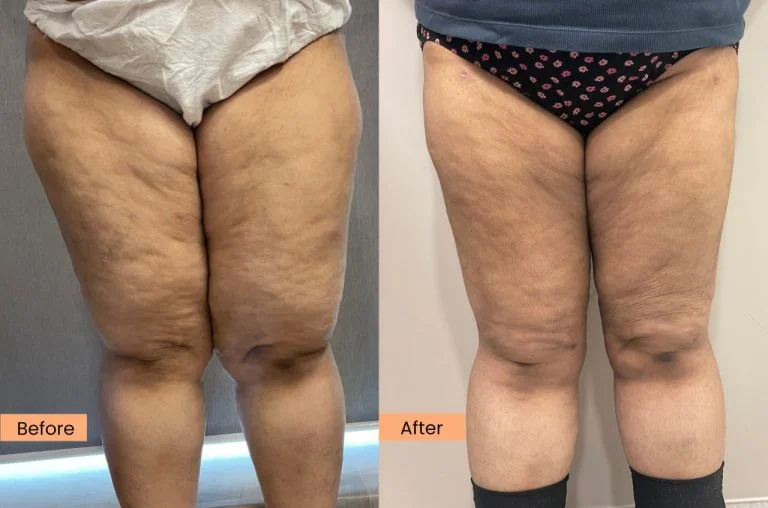
Lipedema 6 weeks post op 40-year-old female
Real Patient Example #2
“Everyone Thought I Was Just Overweight”
A woman begins developing larger legs during puberty.
Over the years, she has been repeatedly told that weight loss is the solution.
Despite multiple diets and exercise programs:
- Her upper body changes significantly.
- Her legs remain enlarged.
- Pain gradually develops.
Eventually, she receives a diagnosis of lipedema.
For many women, receiving an explanation for their symptoms brings significant relief after years of confusion.
Real Patient Example #3
“My Mother Had the Same Legs”
A patient notices that her:
- Mother
- Grandmother
- Older sister
all have similar body proportions.
The pattern includes:
- Large legs
- Smaller feet
- Easy bruising
This type of family history is frequently reported among women with lipedema.
Common Misconceptions About Lipedema and Obesity
Myth #1: Lipedema Is Just Obesity
This is incorrect.
Although the conditions can appear similar, lipedema is a distinct medical disorder with unique symptoms and characteristics.
Myth #2: Weight Loss Always Fixes Lipedema
Weight loss can improve overall health but often does not eliminate lipedema fat.
Myth #3: Lipedema Only Affects Overweight Women
Women of various body sizes can develop lipedema.
Myth #4: Painful Legs Are Normal
Persistent pain, tenderness, or heaviness should not be automatically dismissed.
Myth #5: Lipedema Is Rare
Experts increasingly believe that lipedema is underdiagnosed rather than truly rare.
Why Early Recognition Matters
Early identification may help women:
- Understand their symptoms
- Seek appropriate medical advice
- Explore treatment options
- Improve quality of life
- Avoid years of frustration
Unfortunately, many patients are diagnosed only after symptoms have progressed significantly.
Greater awareness can help change this pattern.
Key Takeaways From This Comparison
Lipedema and obesity are not the same condition.
While both may involve enlarged legs and increased body size, lipedema has several distinctive features, including:
- Pain
- Easy bruising
- Symmetrical enlargement
- Hormonal associations
- Family history patterns
- Resistance to weight loss
Recognizing these differences is essential because accurate diagnosis forms the foundation of effective treatment planning.
Women who continue to struggle with disproportionately large, painful legs despite healthy lifestyle efforts should consider seeking evaluation from a healthcare professional familiar with lipedema.
How Do Doctors Diagnose Lipedema?
One of the biggest challenges in managing lipedema is that there is currently no single blood test, scan, or laboratory investigation that definitively confirms the condition.
Instead, diagnosis is primarily based on:
- Medical history
- Physical examination
- Symptom assessment
- Family history
- Pattern of fat distribution
An experienced healthcare professional familiar with lipedema can often identify characteristic signs during a consultation.
Medical History
The diagnostic process typically begins with a detailed discussion about symptoms.
Common questions may include:
- When did symptoms first appear?
- Did symptoms begin during puberty, pregnancy, or menopause?
- Do your legs feel painful or tender?
- Do you bruise easily?
- Have you struggled to lose fat from your legs despite weight loss?
- Do other family members have similar symptoms?
These answers often provide important clues.
Physical Examination
During examination, healthcare providers assess:
Fat Distribution
Lipedema usually affects:
- Hips
- Buttocks
- Thighs
- Calves
- Arms
while sparing the feet and hands.
Symmetry
Both sides of the body are usually affected similarly.
Tenderness
Pain when pressure is applied is a common finding.
Tissue Texture
Changes in tissue texture may occur as the condition progresses.
Excluding Other Conditions
Several conditions may resemble lipedema.
These include:
- Obesity
- Lymphedema
- Chronic venous insufficiency
- Fluid retention disorders
- Certain endocrine conditions
Proper evaluation helps determine the most appropriate diagnosis.
Lipedema vs Lymphedema: What’s the Difference?
Lipedema and lymphedema are often confused because both can involve enlarged legs and swelling.
However, they are different conditions.
Lipedema
Lipedema is primarily a fat-distribution disorder.
Common features include:
- Painful fat deposits
- Easy bruising
- Symmetrical enlargement
- Feet often spared
Lymphedema
Lymphedema results from impaired lymphatic drainage.
Common features include:
- Fluid accumulation
- Swelling involving the feet
- Skin thickening
- Heaviness
In advanced cases, lipedema may contribute to lymphatic dysfunction, creating a condition sometimes referred to as lipolymphedema.
Also Read:
👉 Lipedema vs. Lymphedema: Understanding the Key Differences
Treatment Options for Lipedema
Although there is currently no permanent cure for lipedema, several treatment approaches may help manage symptoms and improve quality of life.
Treatment recommendations vary depending on:
- Symptom severity
- Disease stage
- Functional limitations
- Individual goals
Conservative Management
Many patients begin with non-surgical treatment strategies.
Compression Garments
Compression garments may help:
- Reduce discomfort
- Improve support
- Manage swelling-related symptoms
Many women find compression useful during prolonged standing or travel.
Exercise and Physical Activity
Regular movement remains important.
Recommended activities often include:
- Walking
- Swimming
- Cycling
- Water-based exercise
Exercise supports:
- Mobility
- Cardiovascular health
- Weight management
- Overall well-being
While exercise may not remove lipedema fat, it can still provide significant health benefits.
Healthy Nutrition
No specific diet cures lipedema.
However, maintaining a healthy lifestyle may help:
- Support overall health
- Reduce excess weight gain
- Improve mobility
- Enhance quality of life
Many patients benefit from individualized nutritional guidance.
Manual Lymphatic Drainage
Some patients may benefit from specialized lymphatic therapies designed to improve comfort and support fluid movement.
Recommendations vary depending on individual symptoms.
Lipedema Liposuction
For selected patients, specialized liposuction may be considered.
Unlike traditional cosmetic liposuction, lipedema surgery focuses on removing abnormal fat deposits while preserving important structures, including lymphatic pathways.
Potential benefits may include:
- Reduced pain
- Improved mobility
- Better body proportions
- Increased physical activity
- Improved quality of life
The suitability of surgery depends on individual circumstances and should be determined after a detailed consultation.
Also Read:
👉 Lipedema Surgery: Is Liposuction the Right Treatment Option?
Who May Be a Candidate for Lipedema Surgery?
Surgical treatment may be considered for women who:
- Have persistent symptoms
- Experience pain or mobility limitations
- Have not achieved sufficient improvement with conservative measures
- Seek improvement in function and quality of life
Every treatment plan should be personalized.
What Happens if Lipedema Is Left Untreated?
Lipedema is often progressive.
Without appropriate management, symptoms may gradually worsen over time.
Potential consequences may include:
- Increasing discomfort
- Greater mobility limitations
- Larger fat deposits
- Reduced physical activity
- Emotional distress
- Secondary lymphatic complications
Early recognition allows women to explore treatment options before symptoms become more severe.
When Should You See a Specialist?
You should consider seeking professional evaluation if:
- Your legs remain disproportionately large despite weight loss.
- You experience pain or tenderness in fatty tissue.
- You bruise easily.
- You notice progressive enlargement of your legs or arms.
- Your symptoms interfere with daily activities.
- You suspect you may have been misdiagnosed as simply overweight.
Seeking expert evaluation can help clarify the cause of your symptoms and guide appropriate treatment planning.
Frequently Asked Questions (FAQs)
Is lipedema the same as obesity?
No. Lipedema is a fat-distribution disorder, whereas obesity involves excess body fat accumulation throughout the body.
Can weight loss cure lipedema?
Weight loss can improve overall health but generally does not eliminate lipedema fat.
Why do my legs stay large after losing weight?
Persistent enlargement of the legs despite weight loss may be a sign of lipedema and should be evaluated by a healthcare professional.
Can someone have both obesity and lipedema?
Yes. Many women have both conditions simultaneously.
Does lipedema cause pain?
Yes. Pain and tenderness are among the most common symptoms of lipedema.
Why does lipedema bruise easily?
Changes within affected tissues may contribute to increased bruising tendencies.
Is lipedema hereditary?
Many women report a family history of similar symptoms, suggesting a genetic influence.
Can thin women develop lipedema?
Yes. Lipedema can occur in women with normal body weight as well as those who are overweight.
Does lipedema affect the feet?
In most cases, the feet are relatively spared, creating a cuff-like appearance at the ankles.
Is lipedema common in India?
Lipedema is believed to be significantly underdiagnosed in India, meaning many women may have the condition without receiving a formal diagnosis.
Does pregnancy make lipedema worse?
Some women notice symptom progression during pregnancy due to hormonal changes.
Can exercise remove lipedema fat?
Exercise supports overall health and mobility but usually does not eliminate lipedema fat.
Can lipedema become lymphedema?
Advanced lipedema may contribute to lymphatic dysfunction in some individuals.
What doctor treats lipedema?
Diagnosis and treatment may involve healthcare professionals experienced in fat-distribution disorders, including plastic surgeons familiar with lipedema management.
Is lipedema surgery cosmetic?
While liposuction can improve appearance, treatment is often pursued to address symptoms, function, mobility, and quality of life.
Conclusion
Lipedema and obesity are often confused, but they are fundamentally different conditions.
While obesity typically involves generalized fat accumulation that responds to weight loss, lipedema is characterized by abnormal fat distribution, pain, tenderness, easy bruising, and resistance to traditional weight-loss methods.
Many women spend years believing their symptoms are simply related to excess weight when an underlying medical condition may actually be responsible.
Recognizing the signs of lipedema can be an important step toward obtaining an accurate diagnosis, understanding available treatment options, and improving quality of life.
If you continue to struggle with disproportionately large legs despite maintaining a healthy lifestyle, seeking evaluation from a healthcare professional familiar with lipedema may help provide the answers you have been looking for.
References
- Wold LE, Hines EA Jr, Allen EV. Lipedema of the Legs: A Syndrome Characterized by Fat Legs and Orthostatic Edema. Ann Intern Med. 1951;34(5):1243-1250.
- Herbst KL. Rare Adipose Disorders (RADs) Masquerading as Obesity. Acta Pharmacologica Sinica. 2012;33(2):155-172.
- Fife CE, Maus EA, Carter MJ. Lipedema: A Frequently Misdiagnosed and Underdiagnosed Fat Disorder. Advances in Skin & Wound Care. 2010;23(2):81-92.
- Child AH, Gordon KD, Sharpe P, Brice G, Ostergaard P, Jeffery S, Mortimer PS. Lipedema: An Inherited Condition. American Journal of Medical Genetics. 2010;152A(4):970-976.
- Reich-Schupke S, Schmeller W, Brauer WJ, Cornely ME, Faerber G, Ludwig M, et al. S1 Guidelines: Lipedema. Journal der Deutschen Dermatologischen Gesellschaft. 2017.
- Dadras M, Mallinger PJ, Corterier CC, Theodosiadi S, Ghods M. Liposuction in the Treatment of Lipedema: A Long-Term Follow-Up Study. Archives of Plastic Surgery. 2017.
- International Lipoedema Association (ILA). Clinical Guidance on Lipedema Diagnosis and Management.
- International Society of Lymphology. Consensus Document on the Diagnosis and Treatment of Peripheral Lymphedema.
- National Institutes of Health (NIH). Current Clinical Perspectives and Research on Lipedema.
- World Health Organization (WHO). Obesity and Body Fat Distribution: Clinical Considerations.
About the Author
Dr. Anmol Chugh is a Plastic and Cosmetic Surgeon in Gurugram with experience in body contouring and lipedema management. He evaluates patients with fat-distribution disorders and develops individualized treatment plans based on each patient’s symptoms, goals, and overall health.
Medical Disclaimer
This article is intended for educational and informational purposes only and should not be considered medical advice. Lipedema symptoms and treatment recommendations vary between individuals. Consultation with a qualified healthcare professional is essential for accurate diagnosis and personalized treatment planning.
Medically Reviewed By
Dr. Anmol ChughQualifications: MBBS, MS, MCh (Plastic Surgery)
Experience: 16+ Years in Plastic & Aesthetic Surgery
Review Date: 03 Jun 2026
This article has been medically reviewed for accuracy and patient safety.