
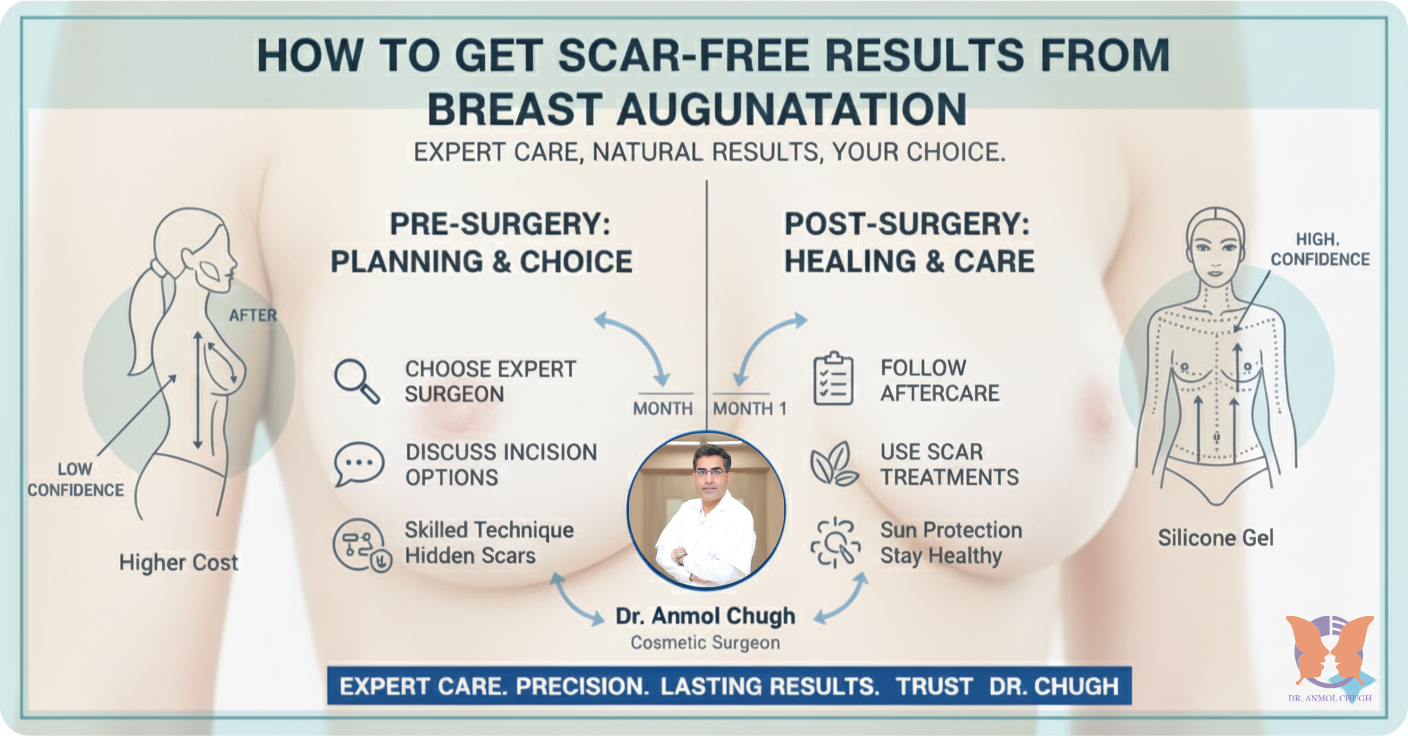
How to Get Scar-Free Results from Breast Augmentation
By Dr. Anmol Chugh, Renowned Cosmetic Surgeon
Breast augmentation is one of the most popular cosmetic surgeries in the world. It helps women feel more confident and happy with their bodies. But one common worry that many patients have is, “Will I have scars after breast surgery?”
The good news is, with the right planning, technique, and care, it is possible to have minimal to almost invisible scars. In this blog, Dr. Anmol Chugh shares his expert advice on how to get the best scar-free results from breast augmentation surgery.
What Is Breast Augmentation?
Breast augmentation is a type of cosmetic surgery that uses implants or fat transfer to increase the size and improve the shape of the breasts. Many women choose it to:
- Add volume to small breasts
- Balance uneven breasts
- Restore shape after pregnancy or weight loss
- Boost self-esteem
It is a safe and trusted procedure when done by skilled surgeons like Dr. Anmol Chugh.
Why Do Scars Happen After Surgery?
Scars are a natural part of the healing process. When the skin is cut or injured, the body works to close the wound. As it heals, new skin grows, which can leave a scar.
In breast augmentation, scars can happen where the surgeon makes incisions to insert the breast implants. But with expert technique and proper care, scars can be kept very small and hidden.
Where Are the Incisions Made?
The location of the incision is a key factor in how noticeable the scar will be. Dr. Anmol Chugh discusses all options with patients before surgery to decide what’s best for their needs and skin type.
Here are the common incision types:
Inframammary Incision (Under the Breast)
- A small cut is made in the crease under the breast.
- The scar hides naturally in the fold.
- Common and preferred method by Dr. Anmol Chugh.
Periareolar Incision (Around the Nipple)
- Cut made along the edge of the nipple.
- Scar blends in with the natural skin color change.
Transaxillary Incision (Under the Armpit)
- Cut is made in the armpit area.
- No scar on the breast at all.
Each method has pros and cons, and Dr. Anmol Chugh helps you choose the safest and most scar-minimizing option.
Factors That Affect Scarring
Some people naturally heal better than others. Here are some key factors that affect how your skin heals and how visible scars become:
- Skin Type: Some skin tones may scar more visibly.
- Genetics: If you scar easily, it may happen again.
- Surgical Technique: Skilled surgeons like Dr. Anmol Chugh use gentle methods to reduce trauma to the skin.
- Post-Surgery Care: How well you care for your incisions after surgery plays a big role in healing.
Tips to Get Scar-Free Results from Breast Augmentation
Now let’s go through the most important steps to get minimal or scar-free results after breast augmentation.
Choose the Right Surgeon
This is the most important step. A skilled and experienced surgeon like Dr. Anmol Chugh knows how to:
- Make clean, precise incisions
- Minimize tissue damage
- Place scars in hidden areas
- Use the right stitching technique
Remember, not all doctors have the same level of training in cosmetic surgery. Always check your surgeon’s experience, before-and-after photos, and patient reviews.
Discuss Your Concerns Before Surgery
Talk to Dr. Anmol Chugh about your scar concerns during the consultation. Let him know if:
- You have a history of keloid or thick scars
- You’re worried about where the scars will be
- You have any allergies to medications or dressings
This will help him plan the surgery better for you.
Follow All Pre-Surgery Instructions
Before the surgery, Dr. Anmol Chugh will give you a list of do’s and don’ts. These may include:
- Avoid smoking (it slows healing)
- Stop taking blood thinners
- Eat healthy foods
- Drink plenty of water
A healthy body heals faster and creates smaller scars.
Let the Incisions Heal Naturally
After surgery, your body will start to heal the cuts. Don’t pick at scabs or touch the stitches too often. This can increase the risk of infection or poor healing.
Keep the area clean, dry, and protected.
Use Silicone Gel or Sheets
Silicone-based scar treatments are often recommended by Dr. Anmol Chugh. These products help keep the skin soft and flat while reducing dark marks or thick scars.
Use them only after the stitches are removed and the wounds are fully healed.
Avoid Sunlight on the Scars
Sunlight can make new scars darker and more visible. For the first few months, avoid direct sun exposure on your incision areas.
If you’re going out, wear soft clothing that covers the area, or use a doctor-recommended sunscreen with SPF 30 or higher.
Wear the Right Support Bra
Dr. Anmol Chugh will recommend a special post-surgery support bra. This helps your breasts heal in the correct shape and keeps pressure off the stitches.
Avoid underwire bras for at least 4–6 weeks.
Massage the Scar Area (When Advised)
Once your incisions are healed, gentle massage of the scar area can help improve blood flow and make scars flatter and softer.
But always ask Dr. Anmol Chugh before starting any massage to avoid damaging healing tissue.
Stay Healthy and Hydrated
Good nutrition, hydration, and sleep all help your skin heal better. Make sure you:
- Eat plenty of fruits and vegetables
- Drink 8–10 glasses of water daily
- Get at least 7–8 hours of sleep
- Avoid alcohol and smoking
Be Patient – Scars Take Time to Fade
Even when you do everything right, it takes time for scars to fully fade. Most scars begin to look lighter and flatter in 3–6 months. In many cases, they continue to improve for up to a year.
Trust the process and stay in touch with Dr. Anmol Chugh for regular follow-ups.
What If You Already Have Scars from Previous Surgery?
If you had surgery before and are unhappy with the scars, Dr. Anmol Chugh may be able to help. Options include:
- Scar revision surgery
- Laser treatments
- Microneedling
- Topical creams and silicone gel
Schedule a consultation to see what’s best for your case.
Frequently Asked Questions
Q. Will I have visible scars after breast augmentation?
All surgeries leave some scars, but with expert techniques by Dr. Anmol Chugh, they can be hidden and minimized. In most cases, they fade and become hard to notice over time.
Q. How long do breast augmentation scars take to heal?
Initial healing takes 2–3 weeks, but the scar will continue to fade over 6 to 12 months.
Q. Can I use makeup to hide scars?
Yes, but only after the wounds are fully healed (usually after 4–6 weeks). Use gentle, non-comedogenic makeup and always remove it properly.
Q. Are there permanent scar removal treatments?
No treatment can remove scars completely, but many can help reduce them. Dr. Anmol Chugh offers several options to improve old or thick scars.
Real Patient Experience
“I was really worried about having scars on my breasts. But Dr. Anmol Chugh made small, hidden cuts, and now I can barely see them. I’m so happy with how natural my results look.”
— Riya, 28, Gurgaon
Final Thoughts from Dr. Anmol Chugh
Scars should never stop you from achieving the body you’ve always wanted. With the right surgeon and care, breast augmentation can give you beautiful, natural results with minimal scars.
At every step, Dr. Anmol Chugh is here to guide you, support you, and help you feel your best, inside and out.
Ready to Begin?
If you’re thinking about breast augmentation and want to make sure you get the best, most scar-free results, book a consultation with Dr. Anmol Chugh today.
Take the first step toward a confident, beautiful you!