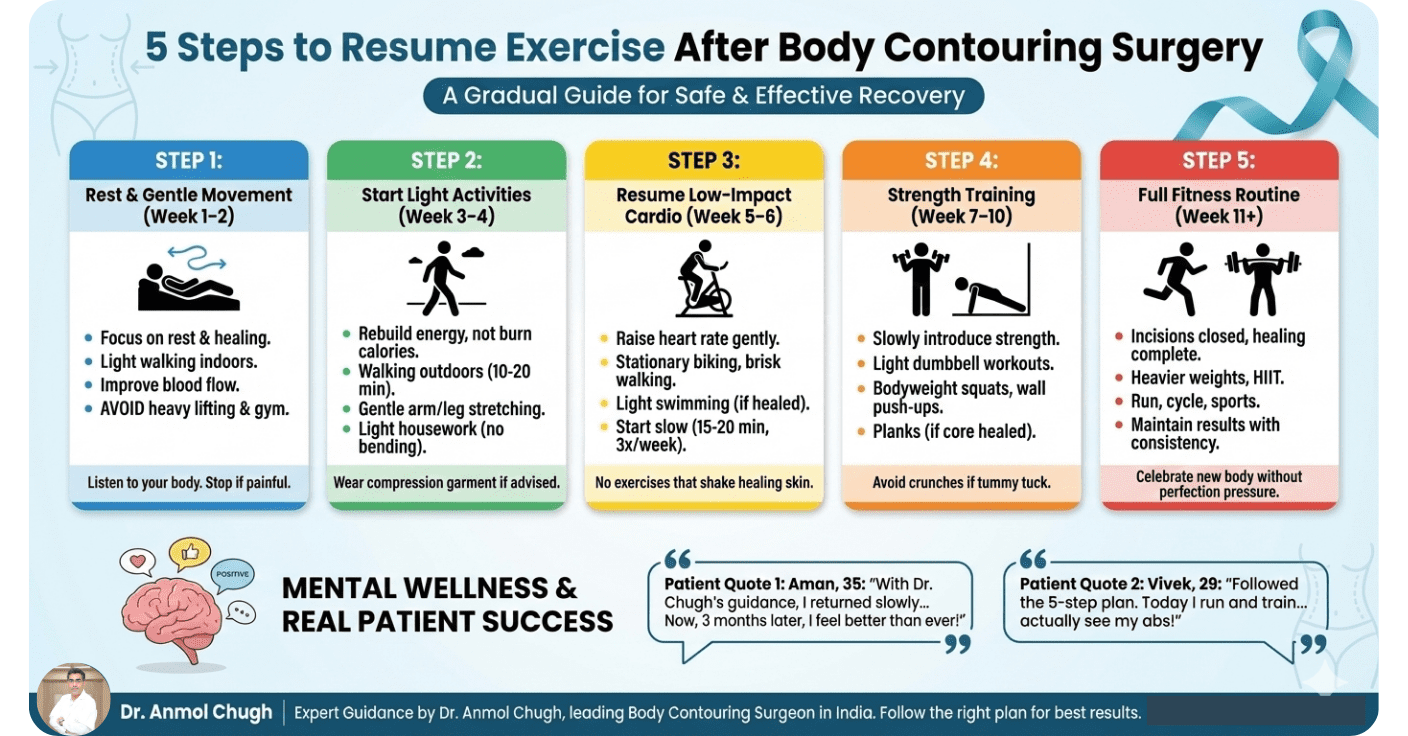
5 Steps to Resume Exercise After Body Contouring Surgery
Body contouring surgery helps people get the shape they want by removing extra fat and tightening the skin. It’s often chosen after a big weight loss or when certain body parts don’t respond to diet and workouts.
After surgery, it’s natural to want to get back to exercise. But going back too fast or doing the wrong type of workout can hurt your results and slow down healing.
In this blog, Dr. Anmol Chugh, a leading expert in body contouring surgery in India, explains the 5 smart steps to safely start exercising after your surgery. These steps will help you heal properly, protect your results, and feel stronger over time.
What Is Body Contouring Surgery?
Body contouring surgery is done to reshape the body. It removes loose skin and stubborn fat to give a more toned, tight, and balanced look. Some common types of body contouring procedures include:
- Liposuction – removes unwanted fat
- Tummy tuck – tightens belly muscles and skin
- Thigh lift – reshapes thighs
- Arm lift – tones arms
- Body lift – reshapes the whole lower body
- Male chest reshaping (like gynecomastia surgery)
Dr. Anmol Chugh uses advanced techniques for scarless and smooth results, helping both men and women feel more confident.
But healing is a big part of your transformation, and exercise after surgery must be done right.
Why Is Exercise Important After Body Contouring?
Once you’ve had surgery and recovered, regular exercise helps in many ways:
- Maintains your new body shape
- Keeps off extra fat
- Builds muscle tone
- Boosts your mood and confidence
- Improves blood flow and healing
But the key is to follow a safe step-by-step plan. Let’s explore the 5 steps that will guide you through a successful return to physical activity.
Step 1: Focus on Rest and Gentle Movement (Week 1–2)
The first step is resting and letting your body begin to heal. This is the time when swelling, bruising, and soreness are normal.
You must avoid any exercise in the first few days. But that doesn’t mean lying in bed all day. You should do light walking around the house to:
- Keep your blood moving
- Reduce the chance of blood clots
- Improve digestion
- Prevent stiffness
“Gentle movement is important for healing, but heavy exercise can delay recovery,” says Dr. Anmol Chugh.
What to Do:
- Get up every few hours and walk for a few minutes
- Move your arms and legs slowly while sitting
- Drink water and eat light, healthy food
What to Avoid:
- Lifting anything heavy
- Climbing stairs too often
- Any form of gym exercise or jogging
Listen to your body. If you feel pain or dizzy, stop immediately.
Step 2: Start Light Activities (Week 3–4)
Once your body begins to feel stronger and Dr. Anmol Chugh says it’s okay, you can add light daily activities to your routine.
These are simple actions that don’t strain your stitches or swollen areas. They help you return to normal life slowly.
“This phase is about rebuilding energy, not burning calories,” explains Dr. Anmol Chugh.
Safe Activities Include:
- Walking outdoors for 10–20 minutes
- Gentle stretching of arms and legs
- Breathing exercises or yoga-style movements
- Light housework (but no bending or lifting)
Key Tips:
- Wear your compression garment if advised
- Watch for signs like swelling, redness, or pain
- Stay hydrated and rest often
Step 3: Resume Low-Impact Cardio (Week 5–6)
After about a month, most patients are ready to start low-impact cardio. This means workouts that raise your heart rate but don’t put pressure on your healing areas.
“Low-impact exercises like cycling or slow swimming are safe and support circulation,” says Dr. Anmol Chugh.
Good Cardio Options:
- Stationary biking
- Brisk walking on a treadmill
- Light swimming (only if wounds are fully healed)
- Elliptical machines
Start slowly, just 15 to 20 minutes, three times a week. Then increase the time as you feel stronger.
Important Reminders:
- Don’t push yourself too hard
- Avoid exercises that shake or stretch your healing skin
- Always get approval from Dr. Anmol Chugh before starting
Step 4: Strength Training and Core Workouts (Week 7–10)
By this time, your body should be healing well, and the swelling should be reduced. Now, it’s safe to slowly introduce muscle-strengthening exercises.
This is especially helpful after tummy tuck or liposuction, where muscle tone is key to keeping your new shape.
“Building muscle gives better definition and helps maintain results from body contouring,” shares Dr. Anmol Chugh.
Exercises You Can Try:
- Dumbbell workouts (light weights only)
- Bodyweight squats or lunges
- Wall push-ups
- Planks (if core muscles are healed)
- Resistance band exercises
Start with one or two sessions per week, then slowly increase.
Avoid:
- Heavy lifting
- Crunches or sit-ups if you’ve had a tummy tuck
- Any workout that stretches surgical scars
Let Dr. Anmol Chugh examine your healing progress before you begin intense exercise.
Step 5: Return to Full Fitness Routine (Week 11 and Beyond)
Now that your healing is nearly complete and the incisions are closed, you can go back to your regular workout schedule. This means doing what you did before surgery, but more wisely.
You’ll likely feel stronger, leaner, and more confident, thanks to your body transformation.
“At this stage, patients see the real results of surgery, and exercise keeps them looking great long-term,” says Dr. Anmol Chugh.
You Can Now:
- Lift heavier weights
- Do core-focused workouts (crunches, planks)
- Try HIIT (high-intensity interval training)
- Run, cycle, or play sports
Tips to Make It Last:
- Be consistent, but don’t overtrain
- Stay away from junk food and sugar
- Track your progress with photos or measurements
- Celebrate your new body, without stressing about perfection
Mental Wellness During Recovery
Healing isn’t just physical, it’s mental too. Many people feel low, impatient, or worried during the first few weeks of recovery.
That’s okay. Dr. Anmol Chugh advises his patients to:
- Stay in touch with the clinic for check-ins
- Talk to family or friends about how they feel
- Practice deep breathing or light meditation
- Remember: full results take 3 to 6 months
“Be kind to your body and mind, healing is a journey, not a race,” says Dr. Anmol Chugh.
Real Patient Experiences
Aman, 35 – Gurgaon
“I had a tummy tuck and chest liposuction. I was worried I’d never work out again. But with Dr. Anmol Chugh’s guidance, I returned to the gym slowly. Now, 3 months later, I look and feel better than ever!”
Vivek, 29 – Dubai
“My belly was always a problem, even after weight loss. After surgery with Dr. Anmol Chugh, I followed his 5-step plan. Today, I can run and train like before, but now, I actually see my abs!”
Quick Guide: 5 Steps to Resume Exercise
| Step | Time | What to Do |
| 1. Rest & Gentle Movement | Week 1–2 | Light walking, no lifting |
| 2. Light Activity | Week 3–4 | Outdoor walks, light stretches |
| 3. Low-Impact Cardio | Week 5–6 | Treadmill, cycling, swimming |
| 4. Strength Training | Week 7–10 | Dumbbells, planks, squats |
| 5. Full Routine | Week 11+ | Weight lifting, sports, HIIT |
Why Choose Dr. Anmol Chugh?
Dr. Anmol Chugh is a renowned plastic surgeon in India, known for his body contouring procedures for men and women. His experience, attention to detail, and care for every patient make him a top choice for:
He also helps patients with a clear recovery plan, including guidance on when and how to exercise safely.
“Your transformation doesn’t end in the operation room, it continues through recovery, fitness, and lifestyle,” says Dr. Anmol Chugh.
Ready to Transform Your Body?
If you’ve had body contouring surgery or are planning one soon, make sure you follow the right exercise plan for the best results.
Let Dr. Anmol Chugh guide your journey, with expert surgery and personal aftercare.
Medically Reviewed By
Dr. Anmol ChughQualifications: MBBS, MS, MCh (Plastic Surgery)
Experience: 16+ Years in Plastic & Aesthetic Surgery
Review Date: 22 Dec 2025
This article has been medically reviewed for accuracy and patient safety.