Rhinoplasty: When Form Meets Function: What Families Should Know
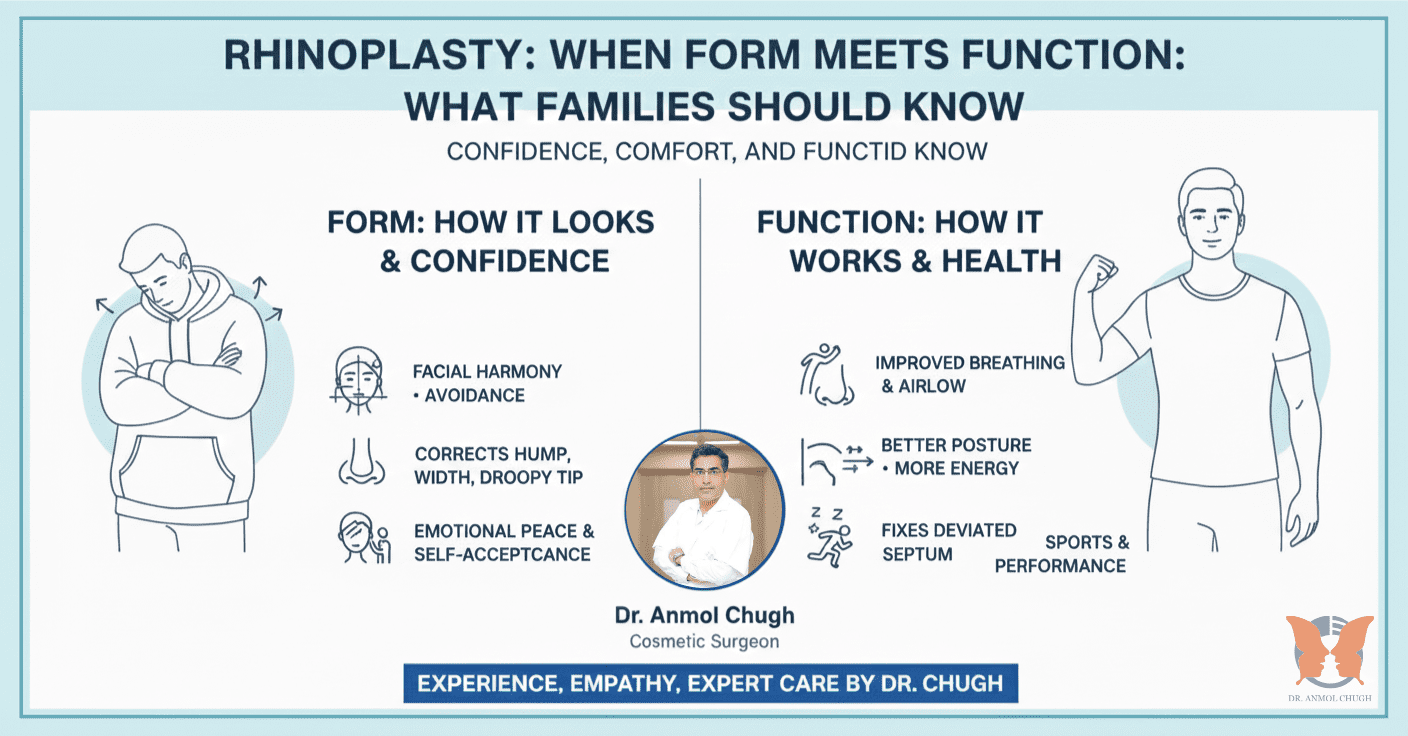
Many people feel unhappy with the shape of their nose. Some avoid photographs because of a hump, a crooked nose, or a drooping tip. Others struggle with something less visible, difficulty breathing through the nose, poor sleep, frequent mouth breathing, or nasal blockage.
What many families do not realize is that rhinoplasty is not always about making the nose smaller or changing the appearance. In many cases, it is also about improving how the nose functions.
A well-planned nose surgery should improve both appearance and breathing. The best result is not just a better-looking nose, it is a nose that works properly and looks natural on the face.
Table of Contents
- What Is Rhinoplasty?
- Why Do People Consider Rhinoplasty?
- The Nose Plays a Major Role in Facial Balance
- Breathing Problems Are Often Overlooked
- What I Commonly See in My Practice
- Dr. Anmol Chugh’s Clinical Perspective
- Who Is a Good Candidate for Rhinoplasty?
- Who Should Avoid Rhinoplasty?
- Common Mistakes Patients Make
- What I Tell My Patients During Consultation
- How Is Rhinoplasty Performed?
- Recovery Protocol Followed at Our Centre
- Risks and Complications of Rhinoplasty
- Safety Checklist Before Rhinoplasty
- Rhinoplasty in Gurgaon and Delhi NCR
- Frequently Asked Questions
What Is Rhinoplasty?
Rhinoplasty is a surgical procedure that reshapes the nose. It may be performed for:
- Cosmetic concerns
- Breathing problems
- Nasal injuries
- Congenital nose deformities
- Revision of a previous nose surgery
In many patients, both cosmetic and functional concerns exist together.
For example, a person may have a crooked nose after an injury and also have difficulty breathing due to a deviated septum. In such cases, surgery addresses both issues during the same procedure.
Why Do People Consider Rhinoplasty?
The reasons usually fall into two categories.
Appearance Concerns
Patients commonly seek treatment for:
- Nose hump
- Wide nose
- Crooked nose
- Drooping nasal tip
- Bulbous tip
- Large nose that feels disproportionate to the face
Functional Concerns
Some patients primarily struggle with:
- Nasal blockage
- Deviated septum
- Difficulty breathing during exercise
- Chronic mouth breathing
- Snoring
- Disturbed sleep
When both appearance and function are affected, rhinoplasty surgery can significantly improve quality of life.
The Nose Plays a Major Role in Facial Balance
The nose sits at the center of the face.
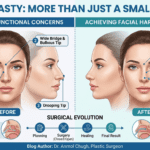
Even a small change in nasal shape can influence how the entire face appears. A successful rhinoplasty does not create a completely different face. Instead, it improves facial harmony.
Most patients do not want an artificial or dramatic result. They want a nose that looks natural and suits their facial features.
This is why modern cosmetic rhinoplasty focuses on balance rather than perfection.
Breathing Problems Are Often Overlooked
Many patients adapt to breathing difficulties for years without realizing that treatment is possible.
A structural problem inside the nose can contribute to:
- Poor sleep quality
- Frequent nasal congestion
- Snoring
- Fatigue
- Reduced exercise performance
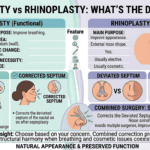
One of the most common causes is a deviated septum, where the internal wall separating the nasal passages is displaced.
Research suggests that nasal obstruction significantly affects sleep quality and overall quality of life. Correcting these structural issues can improve airflow and patient comfort.
Also Read: Functional Rhinoplasty: Enhance Your Breathing and Appearance
What I Commonly See in My Practice
In my practice, many patients initially come because they are unhappy with how their nose looks. However, during consultation, they often mention symptoms such as difficulty breathing through one side of the nose, mouth breathing during sleep, or chronic nasal blockage.
Many have lived with these issues for years and assumed they were normal.
Once we evaluate both the external shape and the internal nasal structure, patients often realize that surgery can address both concerns together.
The most satisfying outcomes are usually those where patients experience both improved facial balance and better breathing.
Dr. Anmol Chugh’s Clinical Perspective
One important point I discuss with patients is that removing too much tissue can create breathing problems later.
A nose should not only look attractive, but it should also remain structurally strong.
Modern rhinoplasty focuses on:
- Preserving nasal support
- Maintaining airflow
- Achieving natural proportions
- Creating long-term stability
A successful rhinoplasty balances aesthetics with function.
Who Is a Good Candidate for Rhinoplasty?
You may be a suitable candidate if you:
- Are you unhappy with the shape of your nose
- Have breathing difficulties
- Have a crooked nose after injury
- Have realistic expectations
- Are in good overall health
- Have completed facial growth (usually after adolescence)
Who Should Avoid Rhinoplasty?
Rhinoplasty may not be appropriate if:
- Facial growth is incomplete
- Expectations are unrealistic
- Significant untreated medical conditions are present
- Smoking cannot be stopped before surgery
- Psychological concerns regarding body image have not been addressed
A detailed consultation helps determine whether surgery is appropriate.
Common Mistakes Patients Make
1. Bringing Celebrity Photos as Expectations
Every face is different. A nose that suits one person may not suit another.
2. Choosing an Overly Aggressive Nose Reduction
Making the nose excessively small can affect breathing and facial harmony.
3. Ignoring Functional Problems
Some patients focus only on appearance and forget to discuss breathing difficulties.
4. Underestimating Recovery
Swelling can take several months to settle completely. Final results require patience.
What I Tell My Patients During Consultation
During consultation, I encourage patients to think beyond a single feature.
Instead of asking, “Can you make my nose smaller?” I ask:
- What bothers you most?
- Do you have breathing concerns?
- What kind of result looks natural to you?
- What are your expectations after surgery?
This conversation helps create a surgical plan tailored to the individual rather than following a one-size-fits-all approach.
How Is Rhinoplasty Performed?
The procedure is usually performed under general anesthesia.
Depending on the case, surgery may involve:
- Reducing a hump
- Straightening the nose
- Refining the tip
- Correcting a deviated septum
- Improving nasal airflow
- Restoring symmetry after injury
The exact technique depends on the patient’s anatomy and goals.
Recovery Protocol Followed at Our Centre
Recovery is an important part of achieving good results.
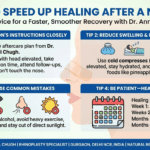
First Week
- Nasal splint remains in place
- Swelling and bruising are common
- Patients should avoid strenuous activities
Two to Four Weeks
- Most bruising improves
- Daily activities can usually resume
- Heavy exercise remains restricted
Six Weeks
- Most swelling has improved
- Patients gradually return to normal exercise
Long-Term Recovery
Approximately 80–90% of swelling improves within the first few months, but subtle refinement may continue for up to 12 months.
Risks and Complications of Rhinoplasty
Every surgical procedure carries risks.
Potential complications include:
- Bleeding
- Infection
- Swelling
- Temporary numbness
- Persistent nasal obstruction
- Asymmetry
- Need for revision surgery
- Unsatisfactory cosmetic outcome
Being honest about these risks helps patients make informed decisions.
Safety Checklist Before Rhinoplasty
✓ Stop smoking at least 4 weeks before surgery
✓ Discuss all medications and supplements
✓ Maintain stable health
✓ Undergo recommended investigations
✓ Have realistic expectations
✓ Arrange support during recovery
✓ Follow all pre-operative instructions
Rhinoplasty in Gurgaon and Delhi NCR
Many patients from Gurgaon, Delhi NCR, and surrounding regions seek rhinoplasty for both cosmetic and functional concerns.
A proper evaluation should include:
- Facial analysis
- Nasal examination
- Airway assessment
- Discussion of goals
- Review of recovery expectations
Choosing an experienced plastic surgeon who understands both aesthetics and nasal function is important for achieving balanced, long-term results.
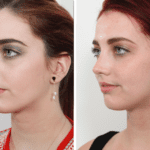
Real Patient Result After Rhinoplasty

See More Real Rhinoplasty Patient Results in Our Before & After Gallery.
Frequently Asked Questions
1. Is rhinoplasty painful?
Most patients experience discomfort rather than severe pain. Medication helps manage symptoms during recovery.
2. How long does recovery take?
Most patients return to routine activities within 1–2 weeks, but final results take several months.
3. Can rhinoplasty improve breathing?
Yes. Functional rhinoplasty can improve airflow and address structural causes of nasal obstruction.
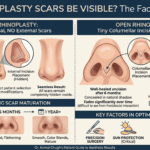
4. Will there be visible scars?
Most scars are hidden or become very difficult to notice after healing.
5. What is the right age for rhinoplasty?
Usually, after facial growth is complete, often after 16–18 years, depending on the individual.
6. Can a crooked nose be corrected?
In many cases, yes. The degree of correction depends on the anatomy and severity.
7. Can rhinoplasty fix a deviated septum?
Yes. Septal correction is commonly performed alongside rhinoplasty when required.
8. How long do results last?
Results are generally long-lasting and considered permanent.
9. Can I wear glasses after surgery?
Temporary restrictions may apply depending on the procedure performed.
10. Will my nose look unnatural?
The goal of modern rhinoplasty is to create a natural result that suits the face.
Conclusion
Rhinoplasty is not simply about changing appearance. It is a procedure that can improve confidence, facial balance, and breathing function at the same time.
The most successful outcomes occur when both form and function are respected. A nose should look natural, suit the face, and allow comfortable breathing.
If you are unsure whether your concern is cosmetic, functional, or a combination of both, a detailed consultation can help you understand your options and choose the most appropriate treatment.
References
- Ishii LE, Tollefson TT, Basura GJ, et al. Clinical Practice Guideline: Improving Nasal Form and Function after Rhinoplasty. Otolaryngology–Head and Neck Surgery.
- American Society of Plastic Surgeons (ASPS). Rhinoplasty: Procedure Overview and Patient Safety Guidelines.
- Rhee JS, Sullivan CD, Frank DO, Kimbell JS, Garcia GJ. A Systematic Review of Patient-Reported Nasal Obstruction Scores. Otolaryngology–Head and Neck Surgery.
- National Center for Biotechnology Information (NCBI). Functional Outcomes Following Septorhinoplasty.
- U.S. Food and Drug Administration (FDA). General Considerations for Elective Cosmetic Surgery Procedures.
Related Procedures
Medically Reviewed By
Dr. Anmol ChughQualifications: MBBS, MS, MCh (Plastic Surgery)
Experience: 16+ Years in Plastic & Aesthetic Surgery
Review Date: 29 Nov 2025
This article has been medically reviewed for accuracy and patient safety.