
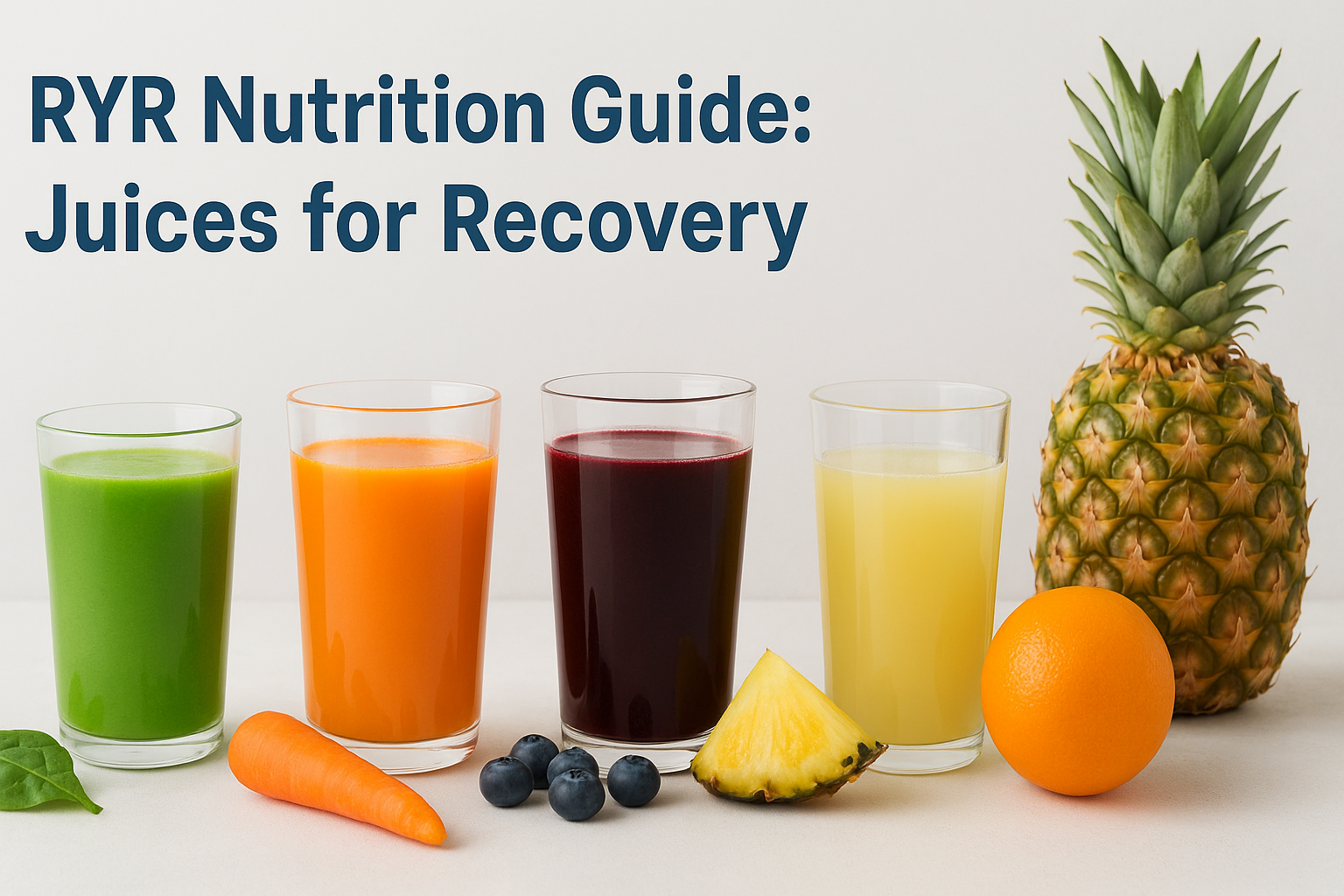
RYR Nutrition Guide: Juices for Recovery (Do’s & Don’ts)
After surgery, it is beneficial to stay hydrated. Water is the best hydrating agent, but if you want to consume juices that promote healing, hydration, and reduce inflammation while avoiding those that may cause irritation or complications, here is the list.
Recommended Juices After Surgery
Vegetable and Green Juices
Cold-pressed juices with greens like kale, spinach, parsley, and broccoli provide vitamins A, C, and K, which aid immune support, collagen synthesis, tissue repair, and reduce inflammation.
Carrot Juice
Rich in vitamin A, supports skin and tissue repair.
Berry Juices
Blueberry, blackberry, and cranberry juices are rich in antioxidants that help combat oxidative stress.
Pineapple Juice
Contains bromelain, an enzyme that reduces pain, swelling, and bruising. (Especially good after Liposuction)
Cucumber, Celery, and Lemon Juices
Hydrating and aid detoxification.
Juices with Ginger and Turmeric
Have anti-inflammatory properties beneficial for recovery. (Usually start after 5–6 days post-surgery)
Non-Citrus Fruit Juices
Apple and grape juices without pulp are usually well tolerated.
Juices and Drinks to Avoid or Limit
Citrus Juices
Orange, grapefruit, and lemon juices can be too acidic and may irritate sensitive tissues or the digestive system post-surgery.
Juices with High Pulp or Added Sugar
Can cause bloating or inflammation.
Alcoholic Beverages and Caffeinated Drinks
Dehydrate and interfere with medication and healing.
Carbonated Drinks
Cause gas and discomfort.
General Guidance
- Opt for freshly made, natural juices without added sugars or preservatives.
- Stay hydrated primarily with water and electrolyte-rich drinks like coconut water.
- Consult healthcare providers regarding any specific juice ingredients, especially if medications have interaction concerns.
Conclusion
These choices help provide vital vitamins, antioxidants, and hydration crucial for healing and tissue repair after surgery.
Important: Remember that juices do not replace water intake – water remains the primary source of hydration.