
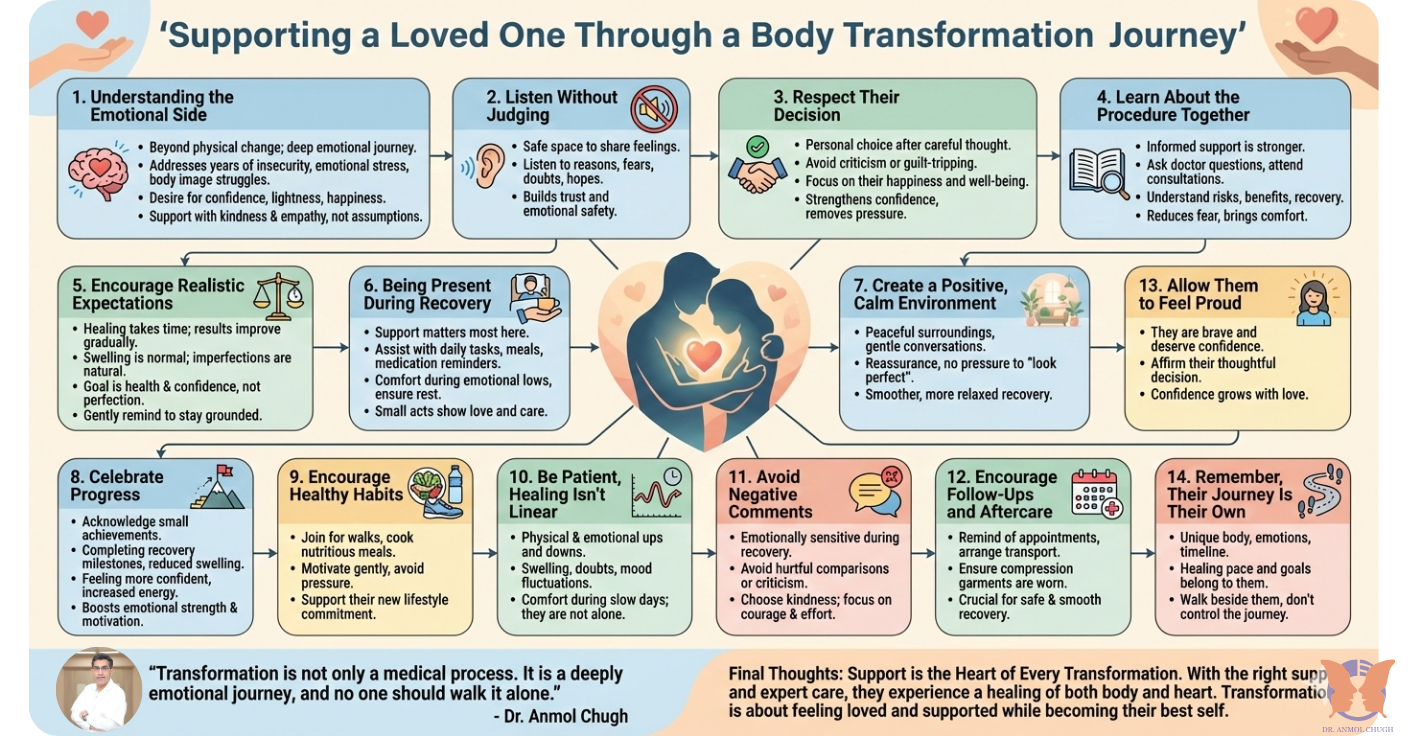
Supporting a Loved One Through a Body Transformation Journey
In India and around the world, more people are choosing body transformation procedures to feel healthier, lighter, and more confident. Whether it’s liposuction, a tummy tuck, a breast lift, or a full body contouring plan, many individuals want to take charge of their physical and emotional well-being.
But one thing is usually overlooked: support.
Every person undergoing a body transformation needs not only a skilled surgeon but also emotional help, comfort, and encouragement. This kind of support often comes from one place: their loved ones.
When someone feels understood, accepted, and guided, their healing becomes smoother, more peaceful, and far more positive. Their confidence grows. Their fear reduces. Their journey becomes not just about changing their body, but also about healing their mind and heart.
This is why Dr. Anmol Chugh, a leading name in aesthetic and reconstructive surgery, always reminds families:
“Transformation is not only a medical process. It is a deeply emotional journey, and no one should walk it alone.”
Let’s understand how you can support a loved one through their body transformation, step by step.
Understanding the Emotional Side of Body Transformation
Many people think body transformation is just about changing physical appearance.
But in reality, it goes much deeper.
People choose procedures like:
…because they want to feel more confident, lighter, and happier in their own skin.
A transformation journey often includes:
- years of insecurity
- emotional stress
- struggles with body image
- discomfort due to physical issues
- difficulty finding clothes that fit
- feeling judged by society
When loved ones understand this emotional side, they can support with kindness and empathy rather than assumptions.
Listen Without Judging, The First Step of Support
The simplest and most powerful support you can offer is listening.
People don’t always need advice.
Sometimes, they only need a safe space to share what they feel.
Listen when they talk about:
- why they chose surgery
- what made them uncomfortable
- their fears and doubts
- the results they want
- how they hope to feel afterward
Listening without judging builds trust and emotional safety, especially during a vulnerable time.
Respect Their Decision, It Belongs to Them
Body transformation is a personal decision.
It comes after a lot of thinking, research, and emotional processing.
Loved ones can show support by:
- respecting their choice
- avoiding criticism like “you don’t need this”
- not making them feel guilty
- focusing on their happiness
Respect strengthens their confidence and removes unnecessary emotional pressure.
Learn About the Procedure Together
Support becomes stronger when it is informed.
Take time to learn about the procedure your loved one is undergoing.
You can:
- ask questions to the doctor
- attend consultations if invited
- understand risks and benefits
- know the recovery process
- discuss expectations
When families learn together, it reduces fear and brings comfort.
Dr. Chugh often encourages loved ones to participate in discussions so everyone feels reassured and confident.
Encourage Realistic Expectations, Gently and Kindly
People undergoing body transformation sometimes imagine instant or “perfect” results.
This can lead to disappointment or stress.
Help them stay grounded by gently reminding them that:
- healing takes time
- swelling is normal
- results improve gradually
- small imperfections are natural
- every body heals differently
The goal is not perfection.
The goal is health, confidence, and emotional well-being.
Being Present During Recovery Makes a Huge Difference
Recovery is the phase where support matters most.
Your loved one may experience:
- soreness
- tiredness
- temporary swelling
- emotional ups and downs
- worries about results
Simple gestures can help enormously.
You can:
- assist with daily tasks
- help with meals
- remind them about medication
- keep their environment positive
- comfort them when they feel low
- make sure they rest properly
Even small acts show love and care during a vulnerable time.
Create a Positive, Calm Environment
The atmosphere around a healing person affects their emotions and comfort.
A positive environment includes:
- peaceful surroundings
- gentle conversations
- reassurance and encouragement
- no criticism
- no pressure to “look perfect” quickly
When the environment is warm and supportive, the recovery experience becomes smoother and more relaxed.
Celebrate Progress, Even the Smallest Steps
Body transformation is not a one-day event.
It is a journey.
Celebrate small achievements like:
- completing the first week of recovery
- reduced swelling
- wearing clothes they once avoided
- feeling more confident
- increased energy
- improved posture
Acknowledging progress boosts emotional strength and motivation.
Encourage Healthy Habits, But Don’t Push
After a body transformation procedure, patients often want to adopt healthier habits.
Loved ones can support by:
- joining them for walks
- cooking nutritious meals
- avoiding junk food around them
- helping them stay hydrated
- motivating them gently
But remember:
Support, not pressure.
Motivation, not force.
Your gentle encouragement helps them stay committed to their new lifestyle.
Be Patient, Healing Isn’t Always Linear
Some days will be good.
Some days will feel slow.
Some days might be emotional.
Healing involves:
- physical ups and downs
- emotional changes
- swelling or bruising
- doubt about results
- mood fluctuations
Being patient and comforting during these moments helps your loved one feel supported rather than alone.
Avoid Negative Comments About Their Appearance
People recovering from body procedures are emotionally sensitive.
Negative comments like:
- “I don’t see any difference.”
- “Why did you do this?”
- “You looked better before.”
- “This was unnecessary.”
…can be deeply hurtful.
Choose kindness instead.
Focus on their courage, their health, and their effort.
Encourage Follow-Ups and Aftercare
Aftercare is just as important as the surgery itself.
Support your loved one by:
- reminding them of follow-up appointments
- helping them arrange transportation
- making sure they wear compression garments
- encouraging them to rest properly
- checking if they feel comfortable
These small reminders help ensure a smooth and safe recovery.
Allow Them to Feel Proud of Their Transformation
Many people feel shy or guilty about choosing body transformation.
Your support can change that.
Tell them:
- they are brave
- they deserve to feel confident
- they made a thoughtful decision
- you are proud of them
Confidence grows faster when love surrounds it.
Remember, Their Journey Is Their Own
Everyone’s body, emotions, expectations, and results are different.
Support becomes powerful when you understand:
- their journey may not match someone else’s
- their timeline may differ
- their healing pace is unique
- their feelings may change
- their goals belong to them
Your job is not to control the journey.
Your job is to walk beside them.
Final Thoughts: Support Is the Heart of Every Transformation
A body transformation is not only a medical change.
It is an emotional, psychological, and deeply personal journey.
With the right support, your loved one feels:
- stronger
- more secure
- more confident
- less anxious
- more connected
- more hopeful
Under the expert care of Dr. Anmol Chugh, combined with your emotional presence, they experience the best version of transformation, one that heals the body and the heart.
Because transformation isn’t only about how someone looks.
It’s about how loved and supported they feel while becoming the best version of themselves.