Tummy Tuck: Why Diet Cannot Fix Every Abdomen
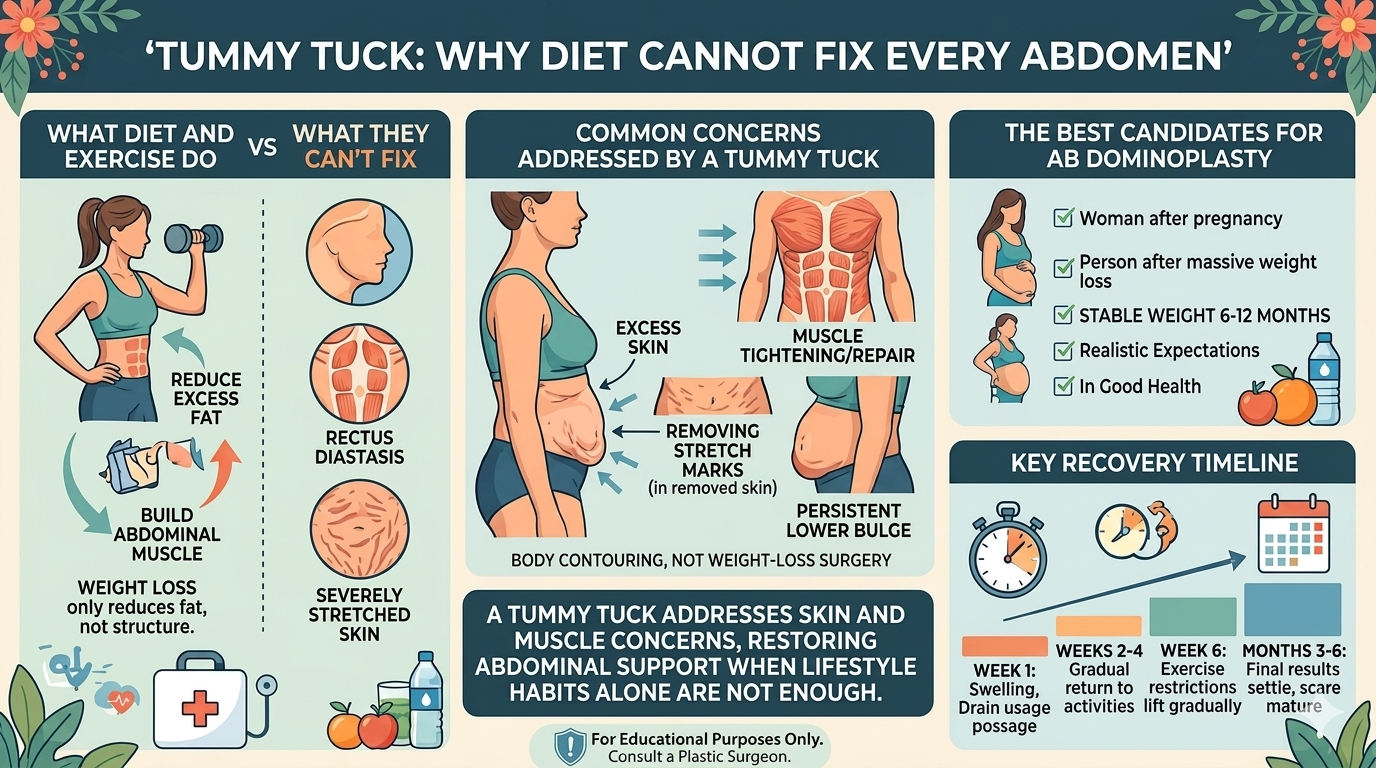
Many people work incredibly hard to lose weight. They follow strict diets, exercise regularly, and achieve significant weight loss. Yet when they look in the mirror, they are disappointed to find that their abdomen still does not look the way they expected.
The lower belly may continue to protrude. Loose skin may hang over the waistline. Stretch marks remain visible. Some patients even notice a bulge in the abdomen despite having very little body fat.
A common question I hear is:
“Doctor, I’ve lost weight. Why does my stomach still stick out?”
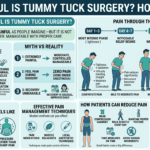
The answer is that not every abdominal concern is caused by excess fat.
In many cases, the problem is loose skin, stretched abdominal muscles, or a condition called rectus diastasis. These issues often cannot be corrected through diet and exercise alone.
This is where a tummy tuck, also known as abdominoplasty, may be considered.
Table of Contents
- What Is a Tummy Tuck (Abdominoplasty)?
- Why Diet Cannot Fix Every Abdomen
- Who Is a Good Candidate for a Tummy Tuck?
- Who Should Avoid or Delay Surgery?
- What I Commonly See in My Practice
- What Happens During a Tummy Tuck Procedure?
- What Results Can You Expect?
- Risks and Possible Complications
- Recovery After a Tummy Tuck
- Important Facts Patients Should Know
- Tummy Tuck Surgery in Gurgaon and Delhi NCR
- Frequently Asked Questions
- Conclusion
- Written By
- References
- Related Procedures
What Is a Tummy Tuck (Abdominoplasty)?
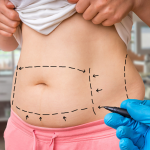
A tummy tuck is a surgical procedure designed to improve the contour of the abdomen by removing excess skin, reducing redundant tissue, and tightening weakened abdominal muscles when necessary.
According to current medical literature, abdominoplasty improves abdominal contour by removing excess skin and subcutaneous fat while addressing muscle laxity when indicated.
The procedure is commonly performed for:
- Excess abdominal skin
- Loose abdominal muscles
- Post-pregnancy abdominal changes
- Massive weight loss changes
- Stretching of the abdominal wall
- Persistent lower abdominal bulging
A tummy tuck is not a weight-loss surgery. It is a body contouring procedure designed to improve shape and restore abdominal support.
Why Diet Cannot Fix Every Abdomen
Many patients assume that if their abdomen still looks prominent, they simply need to lose more weight.
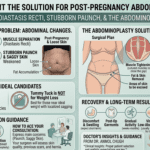
However, weight loss only reduces fat. It cannot tighten severely stretched skin or repair separated abdominal muscles.
For example:
Loose Skin
After pregnancy or major weight loss, the skin may lose elasticity.
Even if all excess fat is removed, loose skin often remains.
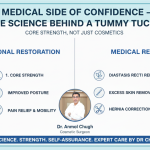
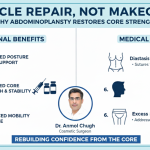
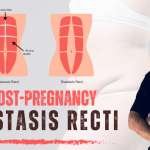
Rectus Diastasis
During pregnancy or significant weight gain, the abdominal muscles can separate.
This separation may cause:
- Abdominal bulging
- Core weakness
- Poor posture
- Difficulty achieving a flat abdomen
Exercise can strengthen muscles, but it often cannot completely close a significant separation.
Stretch Marks
Stretch marks occur when the skin is stretched beyond its capacity.
While certain treatments may improve their appearance, they typically do not disappear completely.
If stretch marks are located on skin removed during a tummy tuck, they may improve significantly.
Who Is a Good Candidate for a Tummy Tuck?
You may be a suitable candidate if:
- You have excess abdominal skin.
- You have completed your family.
- Your weight has been stable for at least 6 to 12 months.
- You have abdominal muscle separation.
- You are in good general health.
- You have realistic expectations.
Many patients seeking abdominoplasty are women following pregnancy or individuals who have experienced substantial weight loss.
Who Should Avoid or Delay Surgery?
A tummy tuck may not be appropriate for:
- Women planning future pregnancies.
- Patients with uncontrolled medical conditions.
- Individuals with active infections.
- Patients with unrealistic expectations.
- Individuals seeking weight-loss treatment rather than body contouring.
Current guidelines also identify smoking as a major risk factor because it can significantly affect healing. Smoking cessation is generally recommended for at least 4 weeks before and after surgery.
What I Commonly See in My Practice
In my practice, many patients arrive feeling frustrated because they believe they have failed despite losing weight.
Often, they have spent years dieting and exercising but still struggle with loose skin and abdominal bulging.
One of the most common situations I see is after pregnancy. A patient may return close to her pre-pregnancy weight but continue to have stretched skin and muscle separation. She often assumes more exercise will solve the problem.
After examination, we frequently find that the issue is not excess fat but structural changes within the abdominal wall.
I also see patients after major weight loss who have achieved impressive results through hard work yet remain bothered by excess hanging skin. For these individuals, further weight loss often does not improve the problem.
The happiest patients are usually those who understand that a tummy tuck is designed to address skin and muscle concerns rather than replace healthy lifestyle habits.
What Happens During a Tummy Tuck Procedure?
The surgery is usually performed under general anesthesia.
During the procedure:
- An incision is made in the lower abdomen.
- Excess skin is removed.
- The abdominal muscles may be repaired.
- Remaining skin is repositioned.
- The belly button may be reshaped or repositioned.
- Incisions are closed.
Different techniques may be used depending on the patient’s anatomy and goals.
Options include:
- Mini Tummy Tuck
- Full Abdominoplasty
- Lipoabdominoplasty
- Combined Liposuction and Tummy Tuck
The treatment plan is individualized for each patient.
Also Read: What you need to Know about Mini Tummy Tuck Surgery?
What Results Can You Expect?
A tummy tuck can improve:
- Abdominal contour
- Waistline definition
- Muscle support
- Loose skin
- Lower abdominal protrusion
- Body proportions
Patients often report that clothing fits better and that they feel more comfortable in fitted garments.
Results are generally long-lasting when weight remains stable.
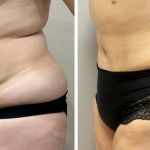
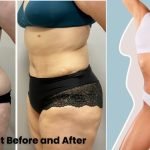
Real Patient Result After Tummy Tuck
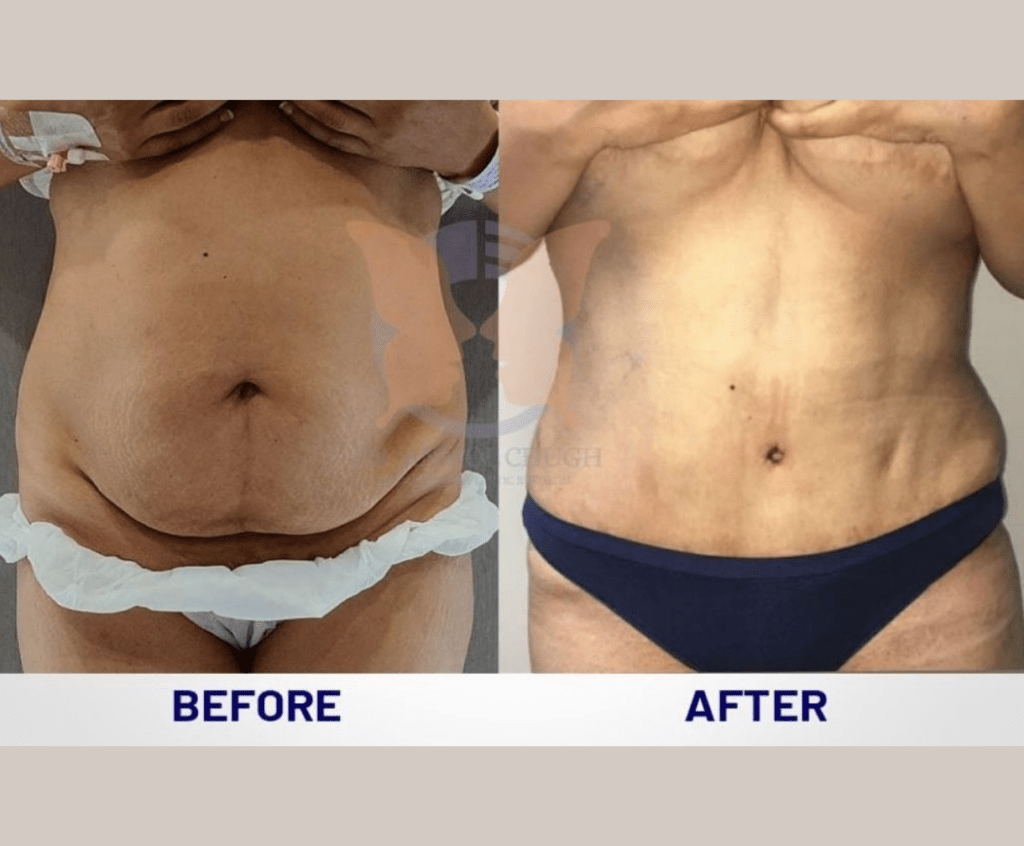
See More Real Tummy Tuck Patient Results in Our Before & After Gallery.
Risks and Possible Complications
Every surgical procedure carries risks.
Potential complications include:
- Bleeding
- Infection
- Seroma (fluid collection)
- Hematoma
- Delayed wound healing
- Scarring
- Skin loss
- Asymmetry
- Numbness
- Blood clots
- Need for revision surgery
Medical literature identifies hematoma, seroma, wound dehiscence, infection, and contour irregularities among recognized complications of abdominoplasty.
An honest discussion of risks is essential before surgery.
Also Read: Tummy Tuck Surgery: Are There Serious Risks?
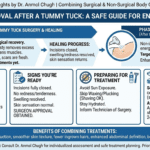
Recovery After a Tummy Tuck
First Week
- Swelling and tightness are expected.
- Walking is encouraged.
- Drain usage may be required in some patients.
Two to Four Weeks
- Most patients gradually resume routine activities.
- Swelling begins to improve.
Four to Six Weeks
- Activity levels increase.
- Exercise restrictions may gradually be lifted.
Two to Three Months
- Abdominal contour continues improving.
- Most residual swelling decreases.
Six Months and Beyond
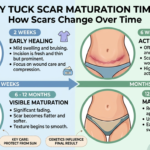
- Scars continue to mature.
- Final results become more apparent.
Recovery varies depending on the extent of surgery and individual healing.
Also Read: Tummy Tuck Recovery: Tips for a Smooth Healing Process
Important Facts Patients Should Know
- A tummy tuck is not a weight-loss procedure.
- Excess skin often cannot be improved with exercise.
- Rectus diastasis may require surgical repair.
- Weight should ideally remain stable for 6–12 months before surgery.
- Smoking should stop for at least 4 weeks before and after surgery.
- More than 170,000 abdominoplasty procedures were reported in the United States in 2023, reflecting growing demand for body contouring surgery.
Tummy Tuck Surgery in Gurgaon and Delhi NCR
Many patients seeking a tummy tuck in Gurgaon and Delhi NCR have already achieved significant weight loss or completed pregnancy-related recovery.
The challenge is often not excess fat but loose skin and weakened abdominal support structures.
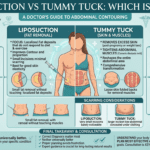
A detailed consultation helps determine whether liposuction, abdominoplasty, or a combination approach is most appropriate for achieving the desired result.
Frequently Asked Questions
Is a tummy tuck a weight-loss surgery?
No. It is a body contouring procedure rather than a weight-loss treatment.
Will a tummy tuck remove all stretch marks?
No. However, stretch marks located on removed skin may improve significantly.
Can exercise repair muscle separation?
Mild cases may improve, but significant rectus diastasis often requires surgical correction.
Is the surgery painful?
Most patients experience discomfort and tightness that gradually improve during recovery.
How long is recovery?
Most patients resume many routine activities within a few weeks, although complete recovery takes longer.
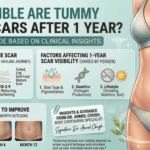
Will I have a scar?
Yes. A scar is necessary, but it is usually placed low enough to be concealed beneath most underwear and swimwear.
Can pregnancy affect my results?
Future pregnancy can stretch the abdominal wall and alter surgical results.
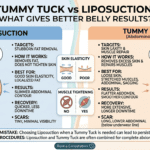
Can liposuction replace a tummy tuck?
Not always. Liposuction removes fat but does not remove excess skin or repair muscle separation.
How long do results last?
Results are generally long-lasting if weight remains stable.
Can a tummy tuck be combined with other procedures?
Yes. It is frequently combined with liposuction, breast surgery, or other body contouring procedures.
Conclusion
Many people assume that every abdominal concern can be solved with diet and exercise. While healthy lifestyle habits are essential, they cannot always correct loose skin, muscle separation, or structural changes that develop after pregnancy or major weight loss.
A tummy tuck is designed to address these concerns by improving abdominal contour, removing excess skin, and restoring support to the abdominal wall.
If you are unsure whether your concern is caused by excess fat, loose skin, rectus diastasis, or a combination of factors, a consultation can help determine the most appropriate treatment option for your goals.
References
- Dawson-Amoah K, Kelecy M, Szymanski KD. Abdominoplasty. StatPearls Publishing, NCBI Bookshelf, 2026.
- American Society of Plastic Surgeons (ASPS). Tummy Tuck (Abdominoplasty) Patient Guide.
- Matarasso A. Abdominoplasty: Classic Principles and Modern Techniques.
- Nahas FX. Anesthetic and Surgical Considerations in Abdominoplasty.
- International Society of Aesthetic Plastic Surgery (ISAPS). Body Contouring Surgery Guidelines.
Medically Reviewed By
Dr. Anmol ChughQualifications: MBBS, MS, MCh (Plastic Surgery)
Experience: 16+ Years in Plastic & Aesthetic Surgery
Review Date: 19 Jun 2026
This article has been medically reviewed for accuracy and patient safety.