Rhinoplasty Scars: Are They Visible After Surgery?
One of the most common concerns patients have before rhinoplasty surgery is:
“Will I have visible scars on my nose after surgery?”
It is a completely understandable question. The nose is located at the center of the face, and many patients worry that surgery may leave obvious marks that draw unwanted attention.
The good news is that modern rhinoplasty techniques are specifically designed to minimize visible scarring. In most cases, rhinoplasty scars are either hidden inside the nose or become so subtle over time that they are difficult to notice.
However, the final appearance of scars depends on several factors, including the surgical technique used, the patient’s healing characteristics, skin type, and adherence to post-operative care instructions.
In this article, we will explain where rhinoplasty scars occur, whether they remain visible long-term, factors that affect scar healing, common misconceptions patients have, and what you can realistically expect after surgery.
Table of Contents
- Quick Answer
- Understanding Rhinoplasty Techniques and Scarring
- Dr. Anmol Chugh’s Clinical Perspective
- Where Is the Rhinoplasty Scar Located?
- What Does the Scar Look Like During Healing?
- Factors That Affect Scar Visibility
- Common Mistakes Patients Make
- What I Tell My Patients During Consultation
- Recovery Protocol Followed at Our Centre
- Safety Checklist Before Rhinoplasty
- Who Should Not Undergo Rhinoplasty?
- Before-and-After Perspective
- Can Rhinoplasty Scars Be Treated If They Remain Visible?
- Final Thoughts
- Dr. Anmol Chugh’s Final Perspective
- Frequently Asked Questions
Quick Answer
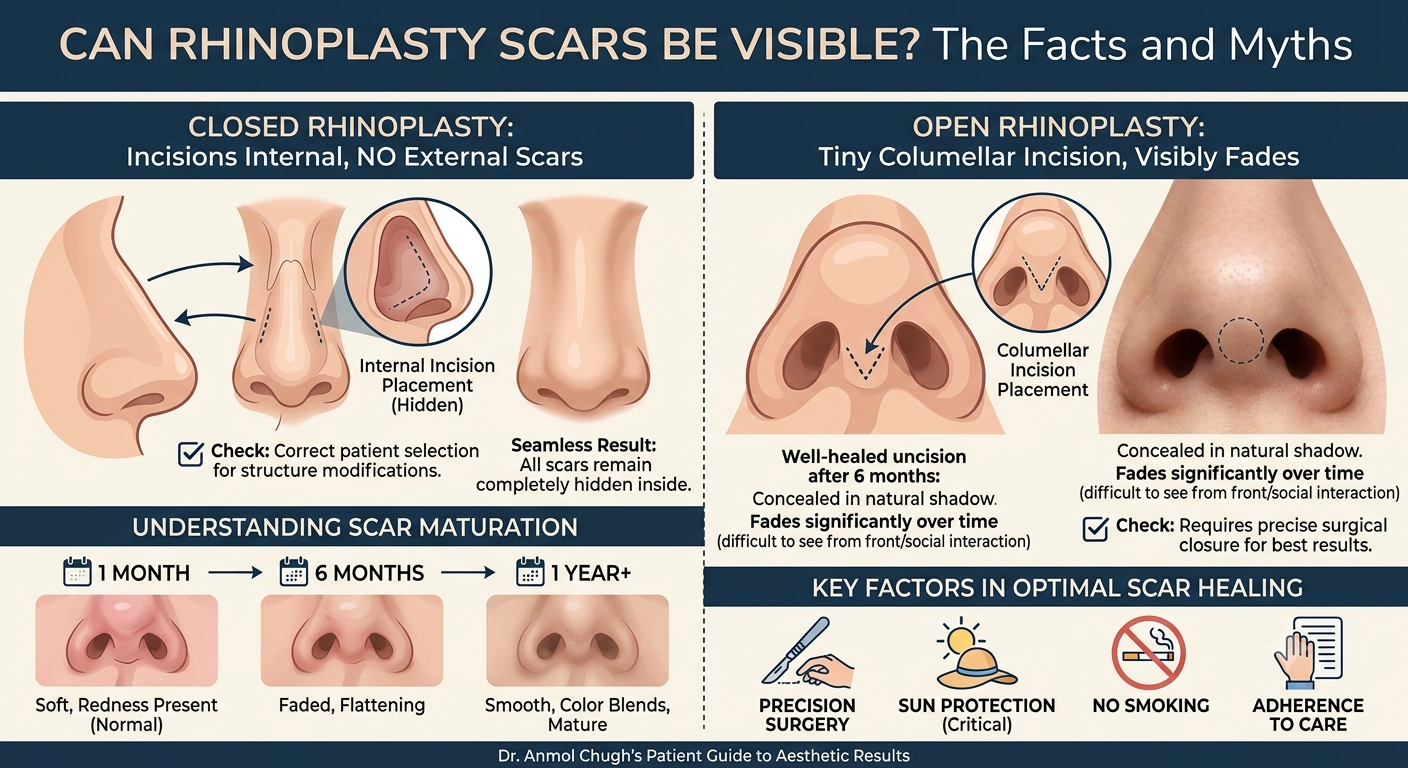
For most patients, rhinoplasty scars are minimal and often nearly invisible once healing is complete.
- Closed rhinoplasty leaves scars inside the nostrils.
- Open rhinoplasty leaves a small scar on the columella (the tissue between the nostrils).
- With proper healing and surgical technique, most scars fade significantly within several months.
- The majority of people will not notice your scar unless they are specifically looking for it.
Understanding Rhinoplasty Techniques and Scarring
The visibility of scars largely depends on the type of rhinoplasty performed.
Closed Rhinoplasty
In a closed rhinoplasty, all incisions are placed inside the nostrils.
Because the incisions remain completely internal:
- No external scars are visible
- Healing is generally straightforward
- The nose maintains its natural external appearance during recovery
Closed rhinoplasty is often suitable for patients requiring moderate reshaping without extensive structural modifications.
Open Rhinoplasty
In an open rhinoplasty, a small incision is made across the columella, the strip of tissue separating the nostrils.
This approach allows the surgeon greater visibility and access to the nasal structures, making it particularly useful for:
- Complex nose reshaping
- Revision rhinoplasty
- Significant tip refinement
- Correction of severe asymmetry
- Functional reconstruction
Although open rhinoplasty creates a small external scar, it is usually positioned in an area that is naturally concealed.
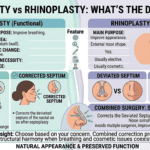
Also Read: Septoplasty vs Rhinoplasty: What’s the Difference?
Dr. Anmol Chugh’s Clinical Perspective
During consultations, many patients arrive believing that open rhinoplasty leaves a large visible scar on the nose.
In reality, the columellar incision used in modern rhinoplasty is extremely small and strategically placed. In most properly healed cases, the scar becomes difficult to detect even at close conversational distance.
The quality of surgical technique often plays a greater role in scar visibility than whether the surgery is open or closed.
Where Is the Rhinoplasty Scar Located?
For patients undergoing open rhinoplasty, the scar is located:
- Between the nostrils
- On the underside of the nose
- Within the natural shadow of the columella
Because of this positioning:
- It is not easily visible from the front
- It is difficult to see during normal social interaction
- It often fades into the surrounding skin over time
Many patients are surprised when they struggle to locate their own scar several months after surgery.
What Does the Scar Look Like During Healing?
Like any surgical incision, rhinoplasty scars go through several healing phases.
First Few Weeks
The scar may appear:
- Pink
- Slightly raised
- Firm to touch
This stage is completely normal.
First Few Months
The scar typically becomes:
- Flatter
- Softer
- Less noticeable
Most redness gradually fades during this period.
Six Months to One Year
For most patients:
- Scar color blends into the surrounding skin
- Texture becomes smoother
- Visibility significantly decreases
Final scar maturation may continue for up to 12–18 months.
Also Read: Rhinoplasty Side Effects: What to Expect After Nose Surgery
Factors That Affect Scar Visibility
Every patient heals differently.
Several factors influence how noticeable a rhinoplasty scar becomes.
Surgical Technique
Precise incision placement and gentle tissue handling are critical.
An experienced rhinoplasty surgeon understands how to position incisions and close wounds in a manner that promotes optimal healing.
Skin Type
Patients with thicker skin may sometimes develop slightly more visible scars initially.
However, thicker skin can also help camouflage minor surface irregularities.
Genetics
Some individuals naturally heal with minimal scarring, while others may be more prone to:
- Hypertrophic scars
- Prolonged redness
- Delayed scar maturation
Smoking
Smoking significantly affects wound healing.
Nicotine reduces blood supply to tissues, which can increase:
- Healing complications
- Scar visibility
- Recovery time
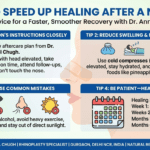
Post-Operative Care
Proper scar care can greatly influence outcomes.
Patients who follow instructions carefully often achieve better scar quality than those who neglect aftercare recommendations.
Common Mistakes Patients Make
One of the most common mistakes patients make is judging their scar too early.
Many people look at their incision within the first few weeks and assume the scar will remain that way permanently.
This is rarely true.
Other common mistakes include:
- Picking at healing skin
- Excessive touching of the nose
- Ignoring follow-up visits
- Smoking during recovery
- Exposing healing scars to direct sunlight
- Using unapproved scar products
Patience is one of the most important aspects of rhinoplasty recovery.
What I Tell My Patients During Consultation
One concern I frequently hear is:
“Will people know I had rhinoplasty because of the scar?”
My answer is usually that people are far more likely to notice an improved facial balance than a properly healed rhinoplasty scar.
Most successful rhinoplasty procedures are recognized because patients look refreshed, balanced, and confident, not because of visible scars.
The goal is always to achieve a natural-looking result where both the nose and the scar blend harmoniously with the rest of the face.
Recovery Protocol Followed at Our Centre
Following rhinoplasty surgery, patients receive detailed scar-care and recovery instructions.
Our recovery protocol typically focuses on:
- Regular follow-up assessments
- Careful wound monitoring
- Swelling management
- Sun protection guidance
- Scar maturation education
- Activity restrictions during early healing
Patients are encouraged to contact the team if they notice:
- Excessive redness
- Persistent swelling
- Wound separation
- Signs of infection
Early intervention helps optimize healing outcomes.
Safety Checklist Before Rhinoplasty
✓ They are medically fit for surgery✓ They understand realistic outcomes
✓ They choose a qualified plastic surgeon experienced in rhinoplasty
✓ They can commit to post-operative care
✓ They are non-smokers or willing to stop smoking before surgery
✓ They understand that scar maturation takes time
Who Should Not Undergo Rhinoplasty?
Rhinoplasty may not be appropriate for:
- Individuals with uncontrolled medical conditions
- Patients with unrealistic expectations
- Active smokers unwilling to quit temporarily
- Individuals seeking perfection rather than improvement
- Patients not prepared for the recovery process
A thorough consultation helps determine whether rhinoplasty is the right choice.
Before-and-After Perspective
When reviewing rhinoplasty results, patients often focus entirely on nose shape changes.
However, one interesting observation is that properly healed scars are rarely noticeable in long-term before-and-after photographs.
Most attention naturally shifts toward:
- Improved facial harmony
- Better nasal proportions
- Enhanced profile balance
- Improved breathing function when functional correction is performed
This demonstrates how subtle rhinoplasty scars typically become over time.
Can Rhinoplasty Scars Be Treated If They Remain Visible?
In the uncommon situation where a scar remains noticeable, several treatments may help improve its appearance.
Options can include:
- Silicone scar therapy
- Medical scar creams
- Steroid injections
- Laser treatments
- Minor scar revision procedures
Fortunately, significant scar problems after rhinoplasty are relatively uncommon when surgery is performed correctly and aftercare instructions are followed.
Final Thoughts
One of the biggest myths surrounding rhinoplasty is that it leaves obvious facial scars.
Modern rhinoplasty techniques are specifically designed to minimize visible scarring, and most patients find that their scars become extremely difficult to detect after healing.
Whether you undergo open or closed rhinoplasty, the key factors influencing scar appearance are:
- Surgical expertise
- Proper healing
- Good aftercare
- Realistic expectations
Dr. Anmol Chugh’s Final Perspective
A successful rhinoplasty is not simply about creating a more attractive nose. It is about achieving facial harmony while preserving natural appearance and function.
When rhinoplasty is performed thoughtfully and precisely, most people notice the improved balance of your face, not the scar.
If you are considering rhinoplasty surgery and have concerns about scarring, a personalized consultation can help you understand exactly what to expect based on your anatomy, goals, and surgical plan.
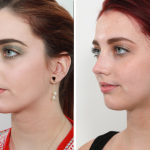
Real Patient Result After Rhinoplasty
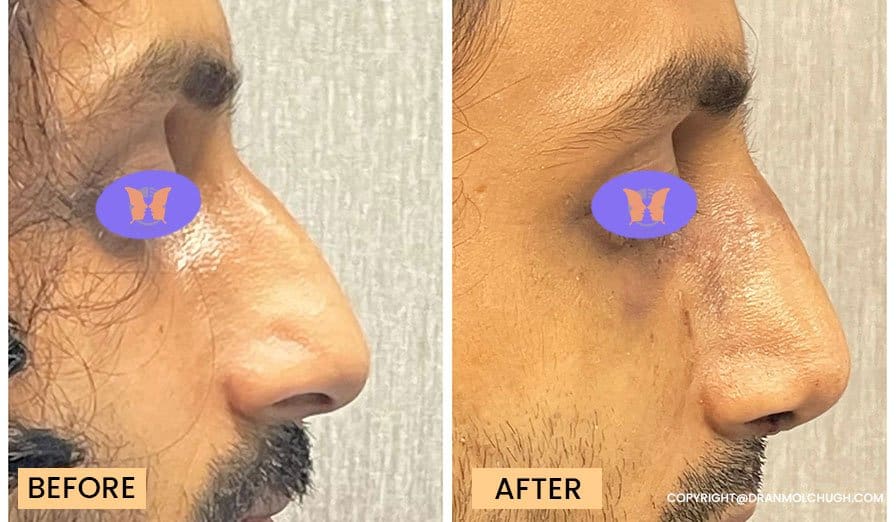
See More Real Rhinoplasty Patient Results in Our Before & After Gallery.
Frequently Asked Questions
Will I have a visible scar after rhinoplasty?
In most cases, no. Closed rhinoplasty leaves scars inside the nostrils, while open rhinoplasty leaves a very small scar on the columella that usually fades significantly over time.
How long does a rhinoplasty scar take to heal?
Most scars become much less noticeable within several months, while complete scar maturation may continue for 12–18 months.
Is open rhinoplasty more likely to leave a scar than closed rhinoplasty?
Open rhinoplasty creates a small external incision, but it is placed in a well-hidden location and is usually difficult to notice after healing.
Can I reduce the appearance of my rhinoplasty scar?
Following your surgeon’s post-operative instructions, protecting the scar from sunlight, and attending follow-up visits can help optimize healing.
Does skin type affect rhinoplasty scars?
Yes. Skin thickness, genetics, and individual healing characteristics all influence the final appearance of scars.
Can smoking affect scar healing?
Yes. Smoking reduces blood supply to healing tissues and increases the risk of delayed healing and more noticeable scars.
When can I start using scar creams?
Only after your surgeon confirms that the incision has healed adequately and recommends an appropriate scar treatment.
Can rhinoplasty scars be corrected if they remain visible?
Yes. Treatments such as silicone therapy, steroid injections, laser treatment, or minor scar revision may be considered in selected cases.
Will people notice I had rhinoplasty because of the scar?
Most people notice the improved facial balance rather than the scar itself, especially after complete healing.
Can all rhinoplasty scars disappear completely?
Every incision forms a scar, but with proper surgical technique and healing, rhinoplasty scars are usually extremely subtle and difficult to detect.
References
- Rohrich RJ, Ahmad J. Rhinoplasty. Plastic and Reconstructive Surgery. 2011;128(2):49e–73e. https://doi.org/10.1097/PRS.0b013e31821e7130
- Ishii LE, Tollefson TT, Basura GJ, et al. Clinical Practice Guideline: Improving Nasal Form and Function after Rhinoplasty. Otolaryngology–Head and Neck Surgery. 2017;156(2 Suppl):S1-S30. https://doi.org/10.1177/0194599816683153
- American Society of Plastic Surgeons (ASPS). Rhinoplasty (Nose Surgery).
- American Academy of Facial Plastic and Reconstructive Surgery (AAFPRS). Rhinoplasty Information.
- Guyuron B. Rhinoplasty: Current Concepts and Techniques. Elsevier; 2020.
- Daniel RK. Rhinoplasty and Rib Grafts: Evolving a Flexible Operative Technique. Plastic and Reconstructive Surgery. 2014;133(3):526e–537e.
- Mayo Clinic. Rhinoplasty.
- National Health Service (NHS). Cosmetic Surgery – Rhinoplasty.
Related Procedures
- Rhinoplasty Surgery
- Septorhinoplasty
- Revision Rhinoplasty
- Chin Implant Surgery
- Facial Plastic Surgery
Medically Reviewed By
Dr. Anmol ChughQualifications: MBBS, MS, MCh (Plastic Surgery)
Experience: 16+ Years in Plastic & Aesthetic Surgery
Review Date: 24 Jun 2026
This article has been medically reviewed for accuracy and patient safety.