Loose Skin After Weight Loss? Why Tummy Tuck May Be Necessary
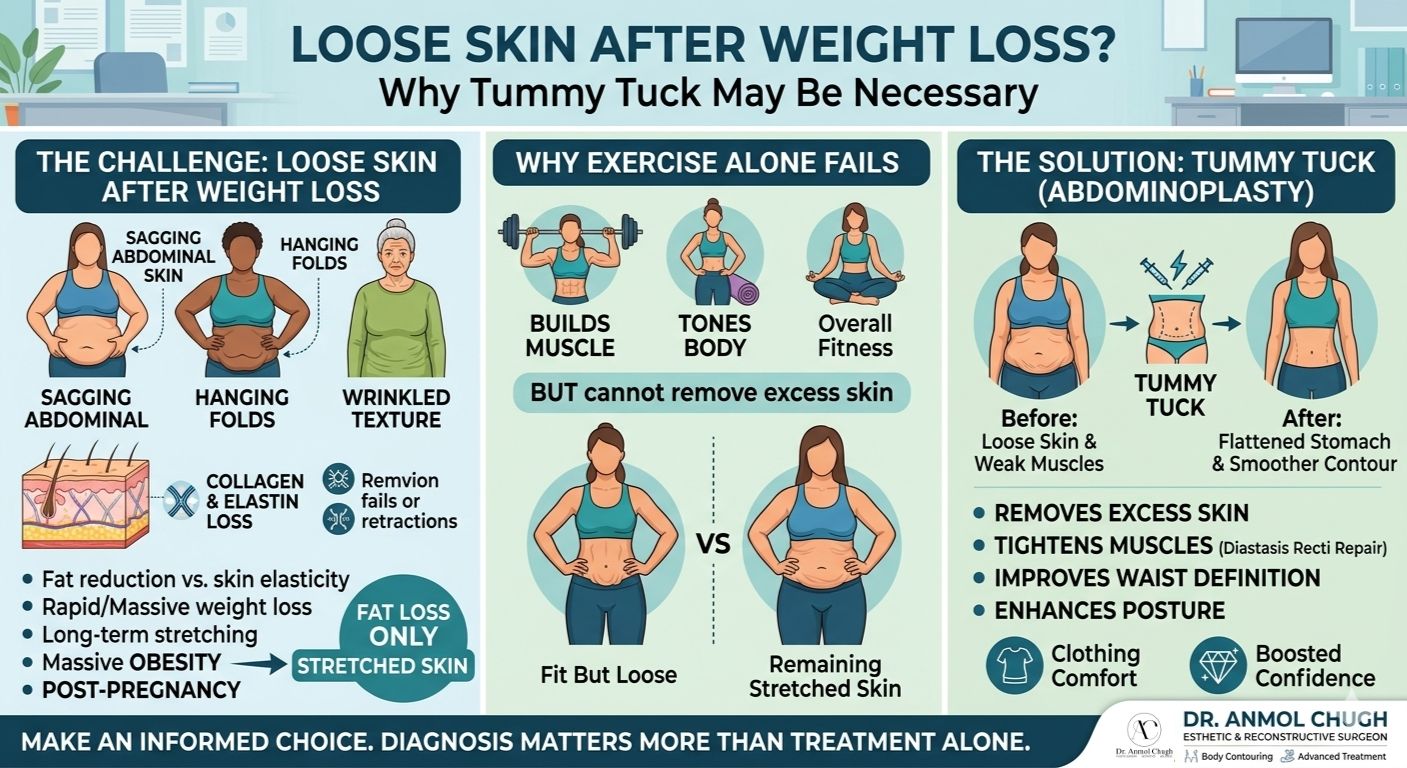
It’s a huge accomplishment to have lost a lot of weight. This change, whether it’s through diet, exercise, lifestyle changes, or weight loss surgery, can have a beneficial impact on your overall health, mobility, and confidence. Many people, however, are surprised to find that once the weight is lost, one of the next challenges often present themselves — loose skin that hangs.
Patients will not see the body that they expect, which is flat and toned, but they will see:
- Sagging abdominal skin
- Folds that hang over the tummy area.
- Wrinkled skin texture
- Continued abdominal bloating in low belly area
It can be annoying after months or years of effort.
When patients come in for a consultation, one of the most frequently asked questions is:
“I lost the weight… why does my tummy still feel loose?”
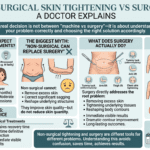
The answer is that even though one is losing weight, fat is being lost, but not necessarily the elasticity of the skin. After this, the skin is no longer able to shrink back naturally.
Dr. Anmol Chugh often sees patients who have lost weight but still have excess skin in their tummy that impacts their appearance and comfort in their clothes. In many of these instances, tummy tuck surgery is probably the most best alternative for getting back a flat tummy.
This guide covers the causes of loose skin following weight loss, when exercise is not enough to correct the issue, and when a tummy tuck might be needed.
Table of Contents
- Loose Skin After Weight Loss (Quick Answer)
- Why Does Loose Skin Happen After Weight Loss?
- Why Exercise Cannot Remove Loose Skin
- Signs That Loose Skin May Need Surgical Treatment
- The Emotional Side of Loose Skin
- What Is a Tummy Tuck?
- Why Tummy Tuck Is Often Necessary After Weight Loss
- Can Liposuction Alone Fix Loose Skin?
- Who Is a Good Candidate for Tummy Tuck After Weight Loss?
- What Results Can You Expect?
- What About Tummy Tuck Scars?
- Can Loose Skin Improve Naturally Over Time?
- Common Mistakes Patients Make
- Non-Surgical Treatments: Do They Work?
- Final Thoughts
- Book a Consultation
Loose Skin After Weight Loss (Quick Answer)
After a substantial amount of weight loss, loose skin occurs because stretched skin may be unable to contract following weight loss. Exercise will build muscle strength, but it can’t eliminate skin.
If abdominal skin is moderate to severe, a tummy tuck may be the best choice of treatment.
Why Does Loose Skin Happen After Weight Loss?
The skin stretches slowly with changes in the body.
During weight gain:
- The fat increases under the skin.
- Collagen and elastin fibers stretch
- Growth of the abdominal wall over time
Fat loss can cause the skin to stretch when a weight loss happens too quickly or too much, which may not allow it to shrink.
This is especially common after:
- Massive weight loss
- Pregnancy
- Weight loss surgery
- Long-term obesity
Dr. Anmol Chugh says that the longer the skin is stretched, the more difficult it will be to achieve complete skin tightening.
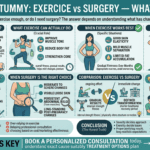
Why Exercise Cannot Remove Loose Skin
One of the biggest misconceptions that patients have is this.
Exercise helps:
- Burn fat
- Build muscle
- Improve body tone
- Support overall fitness
But:
👉 Exercise cannot remove stretched excess skin.
A lot of patients keep exercising even after they have lost weight loss so that the skin around their belly becomes tighter with time. The extra skin may not change, although the muscle tone beneath it might.
That’s why, after a substantial amount of weight loss, some people look “fit but loose.”
Also Read:
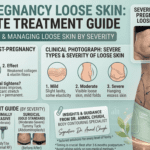
👉 Post-Pregnancy Loose Skin: Complete Treatment Guide
Signs That Loose Skin May Need Surgical Treatment
You may require professional treatment if you notice:
- Hanging abdominal folds
- Wrinkled lower belly skin
- Skin irritation beneath folds
- Persistent sagging despite weight stability
- Difficulty fitting clothing comfortably
- Belly shape that still appears protruding after fat loss
In more advanced cases, the excess skin may interfere with:
- Physical activity
- Hygiene
- Confidence
- Posture
The Emotional Side of Loose Skin
Most patients want to look completely different after their weight loss.
Having any space left over can be an emotional discouragement.
Patients commonly report:
- Avoiding fitted clothes
- Not having a good time at the gym
- Problem with recognizing the weight loss success
- Ongoing struggle with body image
A key lesson that patients discover when consulting is:
👉 There is no failure in loose skin.
This is a problem of the skin’s inability to retract itself from its normal ability.
What Is a Tummy Tuck?
The tummy tuck (abdominoplasty) is a surgical procedure that is meant to:
- Get rid of extra tummy skin
- Tighten abdominal muscles
- Improve waist contour
- Flatten the stomach
A tummy tuck corrects: The tummy tuck corrects, as opposed to liposuction, which primarily removes fat.
- Skin laxity
- Muscle separation
- Structural abdominal looseness
Also Read:
👉 Tummy Tuck vs Liposuction: What Gives Better Belly Results?
Why Tummy Tuck Is Often Necessary After Weight Loss
- Excess Skin Cannot Shrink on Its Own
Once elasticity is significantly damaged, natural tightening becomes limited.
A tummy tuck physically removes:
- Hanging skin
- Lower abdominal folds
- Excess stretched tissue
This creates a much smoother abdominal contour.
- Weight Loss Often Weakens Abdominal Muscles
Many patients also develop:
- Muscle laxity
- Core weakness
- Diastasis recti (muscle separation)
A tummy tuck allows internal muscle tightening, which:
- Improves abdominal firmness
- Supports posture
- Enhances waist definition
- Better Clothing Fit and Body Shape
Patients often notice major improvement in:
- Clothing comfort
- Body proportions
- Confidence in fitted outfits
During his clinical practice, Dr. Anmol Chugh often witnesses patients becoming more content with their weight reduction plans once they are dealt with properly with regard to the loose skin.
Can Liposuction Alone Fix Loose Skin?
In some cases, patients choose to have liposuction performed rather than a tummy tuck because:
- Smaller scars
- Faster recovery
- Less invasive approach
However:
👉 If the skin has little elasticity, liposuction might cause the skin to become looser.
If this happens, there will be areas of the body where skin hangs down without fat being removed.
- Deflated appearance
- More wrinkling
- Persistent sagging
That is why patient selection is very crucial.
Also Read:
👉 Liposuction vs Tummy Tuck: Which Is Better?
Who Is a Good Candidate for a Tummy Tuck After Weight Loss?
Ideal candidates are usually:
- Weight stable for several months
- Near their target body weight
- Experiencing moderate to severe loose skin
- Non-smokers or willing to stop smoking
- Physically healthy overall
Stability is important because future major weight fluctuations can affect results.
What Results Can You Expect?
A tummy tuck can significantly improve:
- Belly flatness
- Waist contour
- Skin tightness
- Lower abdominal shape
Patients often describe:
- A more proportionate body shape
- Improved confidence
- Better comfort during movement
The goal is not perfection but a smoother and more natural abdominal contour.
Loose Skin After Weight Loss Before and After Tummy Tuck Real Patient Result
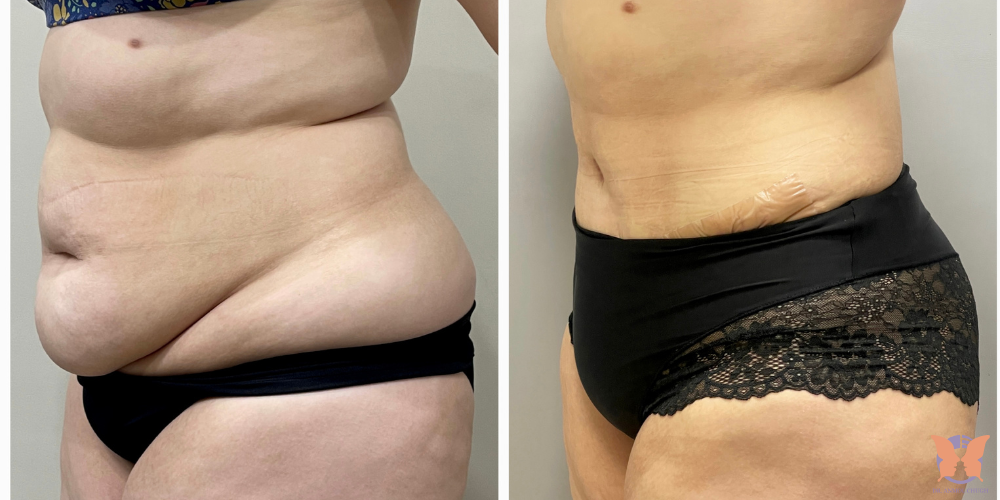
To find out about the results of surgeries and patient experiences, visit our Real Results / Before–After hub, or explore the profile page of Dr. Anmol Chugh to learn more about his expertise, surgical approach, and philosophy for aesthetic and reconstructive surgeries.
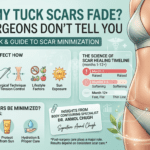
What About Tummy Tuck Scars?
It is important to take into account the possibility of scarring.
After undergoing a tummy tuck, a woman will have:
- A scar on the lower part of the abdomen
- Lying on top of the underwear line
- Gentle, gradual fading over time
Patients have few concerns with the scar, and most are amazed at the improvement in contour.
Also Read:
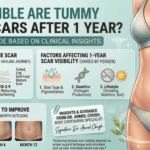
👉 Tummy Tuck Scars After 1 Year: What Patients Should Expect
Can Loose Skin Improve Naturally Over Time?
Loose skin in the thighs may improve slightly with:
- Time
- Muscle building
- Healthy lifestyle
- Skin care
However, if there is a lot of skin looseness, you will not get away with it.
Factors affecting natural recovery include:
- Age
- Genetics
- Amount of weight lost
- Duration of obesity
- Skin quality
Common Mistakes Patients Make
Waiting Too Long Hoping Skin Will Tighten
Years are spent by many patients trying:
- Creams
- Extreme workouts
- Supplements
- Tightening devices
These can be beneficial for mild laxity, but typically won’t be of much benefit for excessive skin.
Choosing Treatment Based Only on Cost
Others may refrain from seeing a surgeon because they think surgery isn’t needed or that it’s cosmetic surgery.
In fact, some serious loose skin can occur in:
- Comfort
- Skin hygiene
- Physical activity
- Emotional well-being
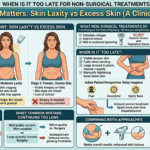
Non-Surgical Treatments: Do They Work?
Here are some non-surgical options that could be beneficial:
- Mild laxity
- Early skin looseness
- Skin texture improvement
In the case of larger amounts of overhanging skin, however:
👉 Surgery remains the most effective solution.
Final Thoughts
While weight loss may be a significant achievement, patients may not have the ability to reap the benefits of their transformation fully due to excess skin.
It’s important to remember that loose skin is not a lack of effort. This can be caused by the loss of natural firmness that occurs with age.
Even though it is important to maintain a healthy lifestyle and exercise, it is not enough to eliminate excess skin. For most people, the tummy tuck is the best solution for the final steps in their body contouring after a significant weight loss.
When assessed and guided by a professional, patients will find the results to be balanced, natural, and long-lasting.
Book a Consultation
If you’ve shed some weight and are still facing excess skin, you can get the best solution during a personal consultation.
You can expect to:
- Understand whether surgery is necessary
- Check your skin, belly shape, and features
- Explore the most suitable treatment options
👉 Schedule an appointment with Dr. Anmol Chugh now and get one step closer to finishing your weight loss transformation.
Medically Reviewed By
Dr. Anmol ChughQualifications: MBBS, MS, MCh (Plastic Surgery)
Experience: 16+ Years in Plastic & Aesthetic Surgery
Review Date: 21 May 2026
This article has been medically reviewed for accuracy and patient safety.