Rhinoplasty – Why Nose Surgery Is Not Just About Making the Nose Smaller
Many people think rhinoplasty is simply a surgery to make the nose smaller. In reality, nose surgery is much more complex than reducing the size.
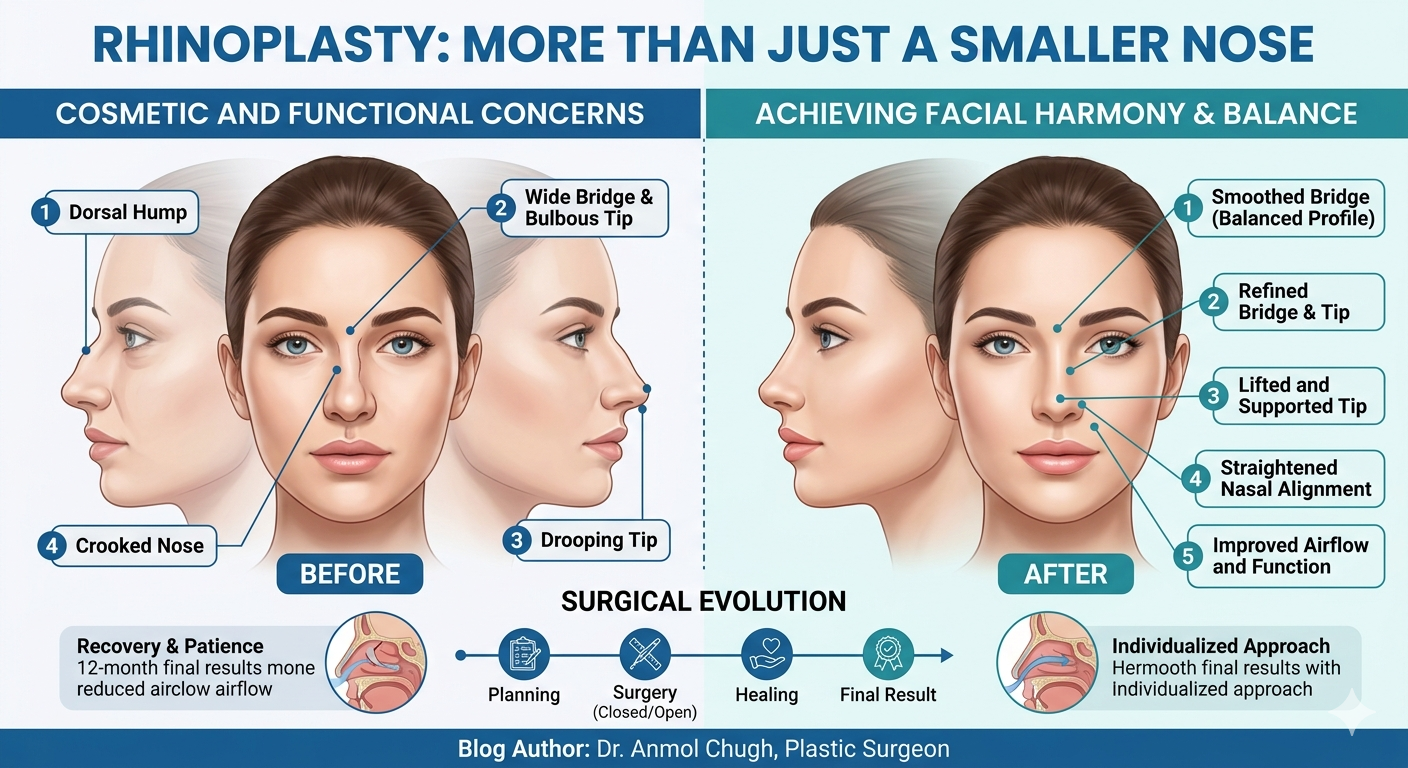
Some patients feel their nose looks too large for their face. Others struggle with a crooked nose, a hump on the bridge, a drooping tip, or breathing difficulties caused by a deviated septum. In many cases, the goal of rhinoplasty is not to create a smaller nose but to create better balance between the nose and the rest of the facial features while preserving or improving function.
A well-performed rhinoplasty should make the nose look natural and harmonious with the face. The best results are often those where people notice the face looks more balanced but cannot immediately identify what has changed.
Table of Contents
- What Is Rhinoplasty?
- Why Making the Nose Smaller Is Not Always the Goal
- What Problems Can Rhinoplasty Correct?
- Who Is a Good Candidate for Rhinoplasty?
- Who Should Avoid or Delay Rhinoplasty?
- What Happens During Rhinoplasty?
- What I Commonly See in My Practice
- Risks and Possible Complications
- Recovery After Rhinoplasty
- Important Medical Facts Patients Should Know
- Rhinoplasty in Gurgaon and Delhi NCR
- Frequently Asked Questions
- Conclusion
What Is Rhinoplasty?
Rhinoplasty is a surgical procedure that changes the shape, structure, or function of the nose.
The surgery can address:
- A prominent dorsal hump
- A wide nasal bridge
- A bulbous or drooping tip
- Nasal asymmetry
- A crooked nose
- Breathing difficulties
- Birth defects affecting the nose
- Injuries that have changed the nasal shape
Rhinoplasty can be performed for cosmetic reasons, functional reasons, or a combination of both.
In many patients, improving appearance and breathing can be achieved during the same procedure.
Why Making the Nose Smaller Is Not Always the Goal
One of the biggest misconceptions about rhinoplasty is that the surgeon simply removes tissue to reduce the size of the nose.
Modern rhinoplasty focuses on reshaping rather than simply reducing.
A nose that is made excessively small may look unnatural and can even create breathing problems. The goal is to maintain proper support structures while improving facial harmony.
For example:
- A wide nose may need refinement rather than significant reduction.
- A drooping tip may require support and lifting.
- A crooked nose may require straightening rather than downsizing.
- A large nose may actually need only subtle changes to improve balance.
Every nose is unique, which is why rhinoplasty is considered one of the most customized procedures in plastic surgery.
What Problems Can Rhinoplasty Correct?
Dorsal Hump
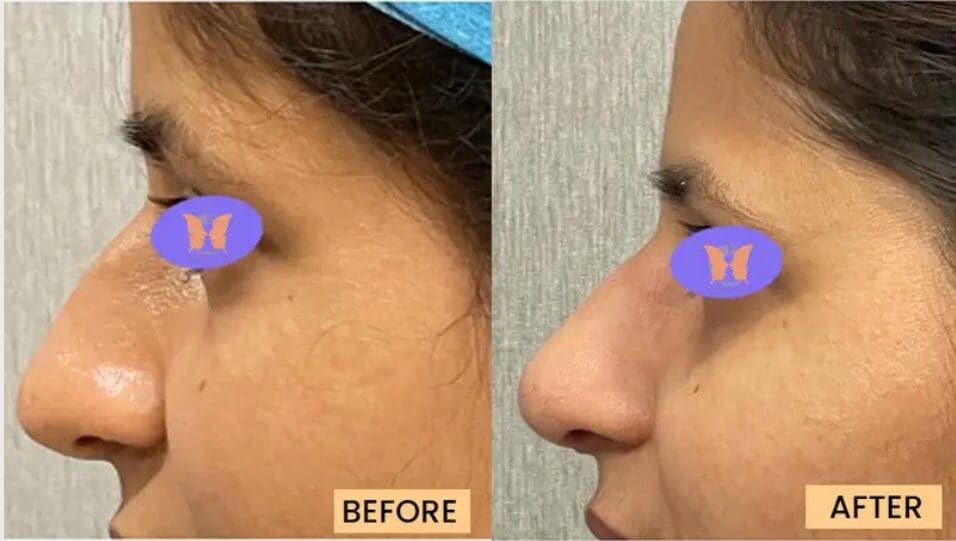
Many patients are bothered by a bump on the bridge of the nose when viewed from the side.
Rhinoplasty can smooth the bridge while maintaining natural contours.
Drooping Nasal Tip
A tip that points downward can make the nose appear longer and can affect facial proportions.
Tip refinement techniques can improve projection and rotation.
Wide Nose
Some patients feel their nose appears too broad when viewed from the front.
The nasal bones and cartilage can be reshaped to create a more refined appearance.
Crooked Nose
A crooked nose may be caused by injury, genetics, or structural abnormalities.
Correction often involves repositioning both bone and cartilage.
Breathing Problems
Structural issues such as a deviated septum can restrict airflow.
Functional rhinoplasty may improve breathing while also enhancing appearance.
Who Is a Good Candidate for Rhinoplasty?
You may be a suitable candidate if:
- You are unhappy with the shape of your nose.
- Your facial growth is complete.
- You have realistic expectations.
- You are in good general health.
- You experience breathing difficulties caused by your nasal structure.
- You want improved facial balance rather than perfection.
Most surgeons prefer patients to wait until nasal growth is complete before undergoing rhinoplasty.
Who Should Avoid or Delay Rhinoplasty?
Rhinoplasty may not be suitable for:
- Individuals with uncontrolled medical conditions.
- Patients with unrealistic expectations.
- Active smokers unwilling to stop smoking before surgery.
- Individuals undergoing major emotional stress.
- Patients whose facial growth is not yet complete.
Smoking significantly increases the risk of wound healing complications. Many surgeons recommend stopping smoking at least 4 weeks before and 4 weeks after surgery.
What Happens During Rhinoplasty?
The procedure is typically performed under general anesthesia.
Depending on the patient’s needs, the surgeon may:
- Reshape nasal cartilage
- Refine the nasal tip
- Straighten the septum
- Reduce a hump
- Narrow the nasal bones
- Improve airflow passages
The surgery usually takes between 2 and 4 hours, although complex revision cases may take longer.
There are two common approaches:
Closed Rhinoplasty
All incisions are placed inside the nose.
Benefits include:
- No visible external scar
- Less swelling in selected cases
Open Rhinoplasty
A small incision is made across the columella, the tissue between the nostrils.
Benefits include:
- Better visualization of structures
- More precision in complex cases
- Improved access for revision surgery
The choice depends on the patient’s anatomy and surgical goals.
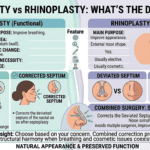
Also Read: Septoplasty vs Rhinoplasty: What’s the Difference?
What I Commonly See in My Practice
In my practice, many patients come for consultation saying they want a smaller nose. However, after examining their facial proportions, we often find that size is not the main issue.
Some patients have a drooping tip that makes the nose appear larger than it actually is. Others have asymmetry or a prominent hump that draws attention to the nose. In many cases, subtle adjustments can create a significant improvement without dramatically reducing nasal size.
I also frequently see patients who are concerned about both appearance and breathing. Addressing these concerns together often provides the most satisfying long-term outcome.
The most successful rhinoplasty results are usually those that look natural and fit the patient’s facial features rather than following a specific trend.
Risks and Possible Complications
Like any surgery, rhinoplasty carries risks.
Potential complications include:
- Bleeding
- Infection
- Swelling
- Bruising
- Temporary numbness
- Scarring
- Breathing difficulties
- Asymmetry
- Unsatisfactory cosmetic outcome
- Need for revision surgery
Studies suggest that revision rhinoplasty may be required in approximately 5% to 15% of patients, depending on the complexity of the original surgery.
Having realistic expectations and choosing an experienced surgeon can help reduce these risks.
Recovery After Rhinoplasty
Most patients are surprised that recovery is generally more comfortable than expected.
First Week
- Swelling and bruising are common.
- A nasal splint is usually worn.
- Most patients return for follow-up within 7 days.
Two to Three Weeks
- Most visible bruising improves.
- Many patients return to work or social activities.
One to Three Months
- Significant swelling continues to settle.
- The nose begins to take on its new shape.
Six to Twelve Months
- Final results gradually become more visible.
- Tip swelling continues to improve.
It is important to understand that rhinoplasty results develop slowly. Patience is an important part of recovery.
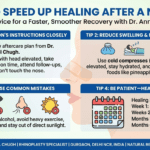
Know more details about: 10 Tips to Speed Up Your Recovery after Rhinoplasty Surgery
Important Medical Facts Patients Should Know
- Facial growth should be complete before rhinoplasty.
- Smoking should stop at least 4 weeks before and after surgery.
- Most patients return to desk work within 1 to 2 weeks.
- Final rhinoplasty results may take 12 months or longer to fully develop.
- Revision surgery is reported in approximately 5% to 15% of cases in published studies.
Rhinoplasty in Gurgaon and Delhi NCR
Rhinoplasty has become increasingly popular among patients in Gurgaon, Delhi NCR, and surrounding regions. Patients often seek consultation for concerns such as a dorsal hump, broad nasal appearance, post-traumatic deformity, or breathing problems.
A detailed facial assessment is important because the ideal rhinoplasty plan differs from one patient to another. What works well for one face may not be appropriate for another.
Frequently Asked Questions
Is rhinoplasty painful?
Most patients experience mild to moderate discomfort rather than significant pain.
Will I have visible scars?
Closed rhinoplasty leaves no visible external scars. Open rhinoplasty leaves a small scar that usually heals very well.
How long does recovery take?
Most patients return to normal activities within 1 to 2 weeks, but final results take several months.
Can rhinoplasty improve breathing?
Yes. Functional rhinoplasty can improve airflow when structural problems are present.
Will my nose look natural?
The goal of modern rhinoplasty is to create a natural-looking result that complements the face.
Can the nose become crooked again?
In some cases, healing changes can affect the final shape, although significant recurrence is uncommon.
When can I exercise again?
Light activities can often resume after a few weeks, but strenuous exercise may need to be avoided for several weeks.
Is rhinoplasty permanent?
Yes. The structural changes are generally permanent, although natural aging continues.
Can I wear glasses after surgery?
Patients are often advised to avoid pressure on the nose for several weeks.
Can rhinoplasty be combined with other facial procedures?
Yes. Some patients choose to combine rhinoplasty with chin augmentation or other facial procedures to improve overall balance.
Conclusion
Rhinoplasty is not simply a procedure to make the nose smaller. It is a highly individualized surgery designed to improve facial harmony, nasal shape, and in many cases, breathing function.
The best rhinoplasty results are those that enhance the face naturally while preserving the unique features that make each person look like themselves.
If you are confused about whether your concern is related to nasal size, shape, asymmetry, or breathing difficulty, a consultation can help determine the most appropriate treatment option for your goals.
Written By
Dr. Anmol Chugh
MCh Plastic Surgeon
Founder, SkinLift Studio Clinic, Gurgaon
References
- Rohrich RJ, Ahmad J. Rhinoplasty. Plastic and Reconstructive Surgery.
- Ishii LE, Tollefson TT, Basura GJ et al. Clinical Practice Guideline: Improving Nasal Form and Function after Rhinoplasty.
- American Society of Plastic Surgeons (ASPS). Rhinoplasty Patient Safety Information.
- U.S. Food and Drug Administration (FDA). Cosmetic Surgery Information Resources.
- Rhee JS, Sullivan CD, Frank DO et al. A Systematic Review of Patient-Reported Outcomes Following Rhinoplasty.
Medically Reviewed By
Dr. Anmol ChughQualifications: MBBS, MS, MCh (Plastic Surgery)
Experience: 16+ Years in Plastic & Aesthetic Surgery
Review Date: 12 Jun 2026
This article has been medically reviewed for accuracy and patient safety.