Transformative Results with Axillary Breast Reduction: A 44-Year-Old Woman’s Journey
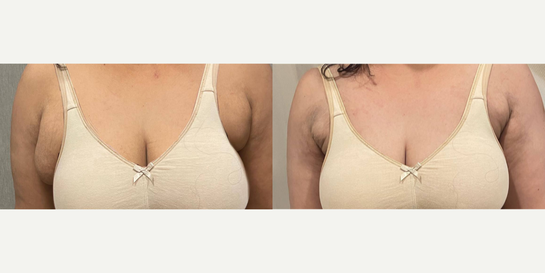
Accessory breast tissue in the underarm area is more common than many people realize. For some women, it is a small cosmetic concern, while for others it causes daily discomfort, difficulty wearing certain clothes, irritation during movement, and reduced confidence.
Our 44-year-old patient had lived with excess tissue in both underarms for several years. Although she adapted to the condition, it gradually affected her clothing choices, exercise routine, and overall comfort.
After consulting Dr. Anmol Chugh, she decided to undergo an axillary breast reduction to improve both function and appearance.
One month after surgery, she experienced significant improvement in her comfort and confidence.
This case study shares her journey, explains the procedure, and discusses what patients can realistically expect during recovery.
Table of Contents
- Quick Overview
- What Is Axillary Breast Tissue?
- The Patient’s Concerns Before Surgery
- Clinical Assessment
- The Surgical Procedure
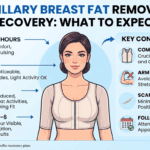
- Recovery During the First Month
- Benefits Experienced by the Patient
- Dr. Anmol Chugh’s Clinical Perspective
- Common Mistakes Patients Make
- Recovery Protocol Followed at Our Centre
- Safety Checklist
- Who May Benefit From Axillary Breast Reduction?
- What I Tell My Patients During Consultation
- Frequently Asked Questions
- Final Thoughts
Quick Overview
Patient Age: 44 years
Concern: Accessory (axillary) breast tissue
Procedure: Axillary Breast Reduction Surgery
Recovery: One month
Outcome:
- Smoother underarm contour
- Improved comfort
- Better clothing fit
- Increased confidence
- Return to routine activities
What Is Axillary Breast Tissue?
Accessory breast tissue, also called axillary breast tissue, develops when breast tissue remains in the underarm area during fetal development.
Some women notice it during puberty, while others become aware of it during pregnancy, breastfeeding, or weight changes because hormonal fluctuations can make the tissue more noticeable.
Depending on the individual, the underarm swelling may contain:
- Fat
- Glandular breast tissue
- Excess skin
- A combination of all three
Unlike ordinary fat, accessory breast tissue often does not disappear with exercise or weight loss.
The Patient’s Concerns Before Surgery
Our patient had noticed fullness beneath both arms for many years.
Although it was not a serious medical condition, it affected her daily life in several ways.
She reported:
- Difficulty wearing sleeveless dresses
- Visible bulging in fitted clothing
- Discomfort during exercise
- Irritation caused by rubbing
- Feeling self-conscious in social situations
Like many women with accessory breast tissue, she wanted a smoother underarm contour while maintaining a natural appearance.
Clinical Assessment
During consultation, Dr. Anmol Chugh performed a detailed examination to determine the nature of the underarm swelling.
The assessment included:
- Skin quality
- Amount of fatty tissue
- Presence of glandular tissue
- Degree of skin excess
- Symmetry between both sides
- Overall body proportions
After discussing her concerns and treatment goals, axillary breast reduction was recommended as the most suitable option.
The Surgical Procedure
The procedure was carefully planned to improve the contour of the underarm while minimizing visible scarring.
Depending on the patient’s individual needs, axillary breast reduction may involve:
- Removal of excess fatty tissue
- Removal of glandular breast tissue
- Removal of excess skin when necessary
Small, carefully placed incisions help achieve a smoother contour while allowing scars to remain as discreet as possible.
Throughout the procedure, preserving natural body proportions remains an important goal.
Recovery During the First Month
First Week
During the first few days, mild swelling and soreness were expected.
The patient wore her compression garment as advised and limited strenuous arm movements.
Pain was well controlled with prescribed medications.
Second Week
Swelling gradually began to decrease.
The patient became more comfortable performing routine daily activities.
The underarm contour already appeared noticeably smoother, although healing was still ongoing.
One Month After Surgery
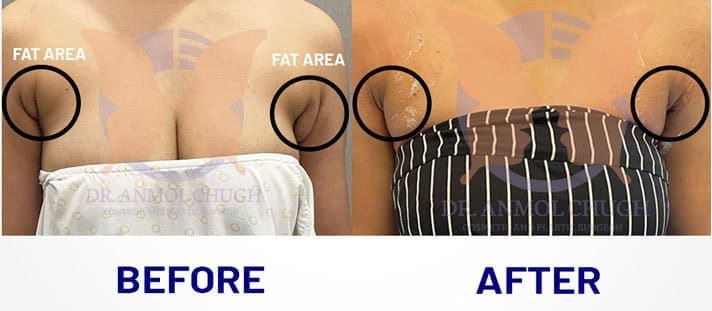
At her one-month follow-up, significant improvement was visible.
She reported:
- Greater comfort during daily activities
- Improved arm movement
- Better fit in clothing
- Increased confidence wearing sleeveless outfits
- No more bulky appearance beneath the arms
Although mild residual swelling was still present, the surgical outcome was progressing as expected.
Benefits Experienced by the Patient
Better Underarm Contour
The excess fullness had been significantly reduced, creating a smoother transition between the chest and upper arm.
Improved Comfort
Activities that previously caused rubbing or irritation became much more comfortable.
Greater Clothing Confidence
She no longer felt the need to choose clothing based on hiding the underarm bulge.
Easier Physical Activity
Exercise and routine arm movements became more comfortable because of the reduced bulk.
Improved Self-Confidence
Perhaps the most meaningful change was emotional.
Feeling comfortable with her appearance allowed her to enjoy everyday activities with greater confidence.
Dr. Anmol Chugh’s Clinical Perspective
Accessory breast tissue is often underestimated because many women assume it is simply excess fat.
However, in many cases, it contains true breast tissue that does not respond to weight loss or exercise.
When evaluating patients, I focus on understanding exactly what contributes to the underarm fullness before recommending treatment.
The objective is not simply to remove tissue but to create a smooth, natural contour that complements the patient’s body while improving comfort and confidence.
Common Mistakes Patients Make
Assuming Exercise Will Remove Accessory Breast Tissue
If glandular breast tissue is present, exercise alone may not eliminate the fullness.
Wearing Tight Clothing Too Soon
Compression garments should be worn according to postoperative instructions rather than switching immediately to tight-fitting clothing.
Returning to Heavy Exercise Too Early
Allowing adequate healing helps reduce complications and supports better results.
Ignoring Scar Care
Proper scar management plays an important role in achieving the best cosmetic outcome.
Expecting Final Results Within a Few Weeks
Most swelling improves during the first month, but the final contour continues to develop over the following months.
Recovery Protocol Followed at Our Centre
Recovery plans are individualized for every patient.
Our general protocol includes:
- Compression garment as advised
- Pain management
- Wound care instructions
- Scar care guidance
- Gradual return to normal activities
- Temporary restriction of heavy lifting
- Scheduled follow-up appointments
- Monitoring healing and symmetry
These steps help support a smooth recovery and long-term results.
Safety Checklist
Before surgery, patients should:
✔ Complete a detailed medical evaluation
✔ Discuss all medications with the surgeon
✔ Stop smoking if advised
✔ Maintain a stable body weight
✔ Follow preoperative instructions carefully
✔ Arrange postoperative support if required
✔ Attend all follow-up visits
Who May Benefit From Axillary Breast Reduction?
This procedure may be suitable for women who:
- Have accessory breast tissue in the underarm
- Experience discomfort or irritation
- Notice visible bulging in clothing
- Feel self-conscious because of underarm fullness
- Maintain realistic expectations regarding surgery
A consultation helps determine whether surgery is the most appropriate treatment.
What I Tell My Patients During Consultation
Many women feel embarrassed discussing accessory breast tissue because they believe it is uncommon.
I reassure them that it is a recognized condition and that they are not alone.
Treatment is not only about appearance, it is also about improving comfort, confidence, and quality of life.
Every surgical plan is customized to the patient’s anatomy so that the results look natural and balanced.
Frequently Asked Questions
Is accessory breast tissue common?
Yes. Accessory breast tissue is a recognized developmental variation and affects many women to varying degrees.
Can exercise remove axillary breast tissue?
Exercise may reduce surrounding body fat, but glandular accessory breast tissue usually does not disappear with exercise alone.
Will the tissue come back after surgery?
The tissue removed during surgery does not typically grow back, although future weight changes or hormonal changes may affect nearby tissues.
Will there be visible scars?
Incisions are planned carefully to make scars as discreet as possible, and they generally fade over time.
When will I see the final results?
Most swelling improves within the first few weeks, while the final contour continues to develop over several months.
Final Thoughts
This patient’s one-month journey demonstrates how axillary breast reduction can improve both physical comfort and self-confidence. While every individual’s recovery is different, carefully planned surgery can provide smoother underarm contours, reduce discomfort, and make everyday activities more comfortable.
During a personalized consultation, Dr. Anmol Chugh carefully evaluates each patient’s anatomy, concerns, and treatment goals before recommending the most appropriate surgical approach. Every procedure is planned with a focus on safety, natural-looking results, and long-term patient satisfaction.
Related Procedures
References
- American Society of Plastic Surgeons (ASPS). Breast Reduction Surgery.
- International Society of Aesthetic Plastic Surgery (ISAPS). Patient Safety Resources.
- American Society of Breast Surgeons. Benign Breast Conditions.
- American College of Obstetricians and Gynecologists (ACOG). Benign Disorders of the Breast.
- UCLA Health. Accessory Breast Tissue Overview.
- Marshall MB, Moynihan JJ, Frost A, et al. Ectopic Breast Tissue: Clinical Presentation and Management. Annals of Plastic Surgery.
- Journal of Plastic, Reconstructive & Aesthetic Surgery (JPRAS). Management of Axillary Accessory Breast Tissue.
Medically Reviewed By
Dr. Anmol ChughQualifications: MBBS, MS, MCh (Plastic Surgery)
Experience: 16+ Years in Plastic & Aesthetic Surgery
Review Date: 01 Dec 2024
This article has been medically reviewed for accuracy and patient safety.