Breast Implants: What Patients Should Know Before Surgery

Many women considering breast augmentation surgery spend months or even years thinking about the decision before booking a consultation.
Some want fuller breasts after pregnancy and breastfeeding. Others have naturally small breasts and want better proportions. Some patients have breast asymmetry and are looking for improved balance.
One of the most common concerns I hear is:
“Doctor, are breast implants safe?”
Another common question is:
“Will I need to replace my implants every 10 years?”
These are important questions because breast implant surgery is a significant decision that should be based on accurate information rather than social media trends or myths.
Understanding what breast implants can and cannot do helps patients make informed decisions and develop realistic expectations.
Table of Contents
- What Are Breast Implants?
- Types of Breast Implants
- Why Women Choose Breast Augmentation
- Who Is a Good Candidate for Breast Implant Surgery?
- Who Should Avoid or Delay Surgery?
- What I Commonly See in My Practice
- What Happens During Breast Implant Surgery?
- What Results Can You Expect?
- Risks and Possible Complications
- Recovery After Breast Augmentation Surgery
- Important Facts Patients Should Know
- Breast Implant Surgery in Gurgaon and Delhi NCR
- Frequently Asked Questions
What Are Breast Implants?
Breast implants are medical devices used to increase breast volume, improve shape, restore fullness, or correct asymmetry.
They are commonly used for:
- Breast augmentation
- Correction of breast asymmetry
- Volume restoration after pregnancy
- Reconstruction following breast cancer treatment
- Improvement of breast proportions
Modern implants are available in different shapes, sizes, and profiles to suit individual anatomy and goals.
The objective is not simply to make breasts larger. The goal is to create a balanced and natural-looking result that complements the patient’s body frame.
Types of Breast Implants
Silicone Breast Implants
Silicone implants contain a cohesive silicone gel designed to mimic the feel of natural breast tissue.
Many patients prefer silicone implants because they generally provide a softer and more natural feel.
Saline Breast Implants
Saline implants are filled with sterile salt water.
If rupture occurs, the saline is naturally absorbed by the body.
While less commonly used than silicone implants today, they remain an option for selected patients.
Why Women Choose Breast Augmentation
Patients choose breast augmentation surgery for different reasons.
Common motivations include:
- Naturally small breast size
- Loss of breast volume after pregnancy
- Weight loss-related volume loss
- Breast asymmetry
- Desire for improved body proportions
The procedure should be performed because the patient wants the change for herself rather than due to external pressure.
Who Is a Good Candidate for Breast Implant Surgery?
You may be a suitable candidate if:
- You are physically healthy.
- Your breast development is complete.
- You have realistic expectations.
- You are bothered by breast size, shape, or asymmetry.
- You understand the benefits and limitations of implants.
Good candidates understand that breast implants improve volume and shape but cannot solve every breast-related concern.
Who Should Avoid or Delay Surgery?
Breast augmentation may not be appropriate for:
- Women who are pregnant or breastfeeding.
- Patients with active infections.
- Individuals with uncontrolled medical conditions.
- Patients with unrealistic expectations.
- Smokers unwilling to stop smoking before surgery.
Smoking can significantly increase healing-related complications. Most plastic surgeons recommend stopping smoking at least 4 weeks before and 4 weeks after surgery.
What I Commonly See in My Practice
In my practice, many women arrive believing they need the largest implant possible to achieve a beautiful result.
In reality, the best outcomes usually come from selecting an implant that matches the patient’s chest width, existing breast tissue, skin quality, and body proportions.
I also frequently meet patients who are worried that implants will look artificial. Modern breast augmentation surgery focuses on creating a natural appearance rather than an obviously operated look.
Another common misconception is that implants are lifetime devices that never require monitoring. While many patients enjoy excellent results for 15 to 20 years or longer, regular follow-up and awareness of implant-related changes remain important.
The happiest patients are often those who prioritize proportion and balance rather than simply choosing the largest implant available.
What Happens During Breast Implant Surgery?
The procedure is usually performed under general anesthesia.
During surgery:
- An incision is created.
- A pocket is prepared.
- The implant is inserted.
- Position and symmetry are checked.
- Incisions are closed.
The operation typically takes approximately 1 to 2 hours, depending on complexity.
Common incision locations include:
- Under the breast fold
- Around the areola
- In selected cases, through the armpit
The choice depends on anatomy and surgical planning.
What Results Can You Expect?
Breast augmentation can improve:
- Breast volume
- Upper pole fullness
- Symmetry
- Clothing fit
- Body proportions
Patients generally notice immediate improvement after surgery, although swelling initially affects the final appearance.
Final results continue to develop over several months.
Patients often report greater confidence in clothing choices and improved satisfaction with body proportions.
Results are generally long-lasting, although natural aging, pregnancy, breastfeeding, and weight fluctuations can continue to affect breast appearance over time.
Risks and Possible Complications
Every surgical procedure carries risks.
Potential complications include:
- Bleeding
- Infection
- Delayed wound healing
- Implant displacement
- Asymmetry
- Changes in nipple sensation
- Scarring
- Seroma
- Hematoma
- Need for revision surgery
Specific implant-related complications include:
Capsular Contracture
The body naturally forms a capsule around every implant.
In some patients, this capsule becomes excessively tight, causing firmness, distortion, or discomfort.
Breast Implant Rupture
Both silicone and saline implants can rupture over time.
Modern cohesive silicone implants often maintain their shape even if rupture occurs.
Implant Malposition
The implant may shift from its intended position and occasionally require correction.
Being transparent about potential risks helps patients make informed decisions.
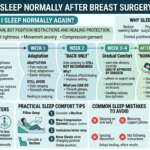
Recovery After Breast Augmentation Surgery
First Week
- Swelling and tightness are common.
- Most patients experience manageable discomfort.
- Light walking is encouraged.
Two to Four Weeks
- Many patients return to desk-based work.
- Swelling gradually decreases.
Four to Six Weeks
- Physical activity is gradually increased.
- Implant position continues to settle.
Three to Six Months
- Breasts appear more natural.
- Residual swelling resolves.
Recovery varies between individuals, but most patients return to routine daily activities relatively quickly.
Following postoperative instructions carefully plays an important role in achieving optimal results and minimizing complications.
Important Facts Patients Should Know
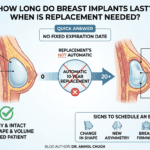
- Breast implants are not lifetime devices.
- Many implants remain in place for 15–20 years or longer without problems.
- Implant replacement is usually performed when there is a specific reason rather than on a fixed schedule.
- Smoking should stop 4 weeks before and after surgery.
- Regular follow-up is important.
- Choosing the correct implant size is often more important than choosing the largest implant available.
Breast Implant Surgery in Gurgaon and Delhi NCR
Many women seeking breast augmentation in Gurgaon and Delhi NCR are looking for natural-looking enhancement rather than dramatic enlargement.
A detailed consultation helps determine the most appropriate implant size, profile, and placement based on individual anatomy and goals.
The treatment plan should always be personalized rather than based on trends or celebrity photographs.
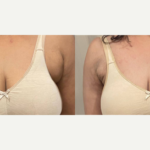
Real Patient Result After Breast Implant

See More Real Breast Implants Patient Results in Our Before & After Gallery.
Frequently Asked Questions
Are breast implants safe?
Modern breast implants have been extensively studied and are considered safe when used appropriately.
Do implants need replacement every 10 years?
Not necessarily. Replacement is usually recommended only if a problem develops or if the patient desires a change.
Will my breasts look natural?
A properly selected implant can produce a very natural appearance.
Can implants affect breastfeeding?
Many women can successfully breastfeed after augmentation, although outcomes vary.
Is the surgery painful?
Most patients describe the discomfort as manageable rather than severe.
Will I have visible scars?
Incisions are planned carefully and generally fade significantly with time.
Can implants rupture?
Yes. Both silicone and saline implants can rupture, although modern implants are highly durable.
Can I exercise after surgery?
Yes, but strenuous exercise is usually restricted for several weeks.
Will implants prevent breast cancer screening?
No. Special imaging techniques can be used when necessary.
How long do breast implants last?
Many patients maintain their implants for 15–20 years or longer without requiring replacement.
Conclusion
Breast implants remain one of the most popular and studied procedures in aesthetic surgery. However, successful outcomes depend on much more than implant size alone.
Understanding the benefits, limitations, recovery process, and potential risks helps patients make informed decisions and achieve realistic expectations.
If you are unsure whether breast augmentation, breast fat transfer, or another procedure would be most suitable for your goals, a consultation can help identify the best treatment approach for your body and expectations.
References
- U.S. Food and Drug Administration (FDA). Breast Implants Information for Patients.
- American Society of Plastic Surgeons (ASPS). Breast Augmentation Patient Guide.
- Breast Augmentation. StatPearls Publishing, NCBI Bookshelf.
- Spear SL, Murphy DK. Natrelle Round Silicone Breast Implants: Core Study Results.
- International Society of Aesthetic Plastic Surgery (ISAPS). Breast Augmentation Safety Guidelines.
Related Procedures
- Breast Fat Transfer
- Breast Lift Surgery
- Breast Reduction Surgery
- Mommy Makeover Surgery
- Body Contouring Surgery
Medically Reviewed By
Dr. Anmol ChughQualifications: MBBS, MS, MCh (Plastic Surgery)
Experience: 16+ Years in Plastic & Aesthetic Surgery
Review Date: 20 Jun 2026
This article has been medically reviewed for accuracy and patient safety.