Breast Lift vs Implants: What Families Should Know
Many women notice changes in their breasts after pregnancy, breastfeeding, weight loss, or simply with age. Some feel their breasts have lost volume, while others are more concerned about sagging. It is common to wonder:
“Do I need a breast lift or breast implants?”
Although these procedures are often discussed together, they are designed to solve different problems.
One of the most important parts of a consultation is identifying what has changed the size, the position, or both.
Understanding this difference helps you choose the treatment that will give you the most natural and satisfying result.
In this guide, we’ll explain the difference between a breast lift and breast implants, who may benefit from each procedure, and what you should consider before making a decision.
Table of Contents
- Quick Answer
- What Is a Breast Lift?
- What Are Breast Implants?
- Breast Lift vs Breast Implants: What’s the Difference?
- Who Is a Good Candidate for a Breast Lift?
- Who Is a Good Candidate for Breast Implants?
- Can You Have Both Procedures Together?
- Dr. Anmol’s Clinical Perspective
- What Is Recovery Like?
- What Are the Risks?
- Who Should Avoid Surgery?
- Common Mistakes Patients Make
- Frequently Asked Questions
- Final Thoughts
Quick Answer
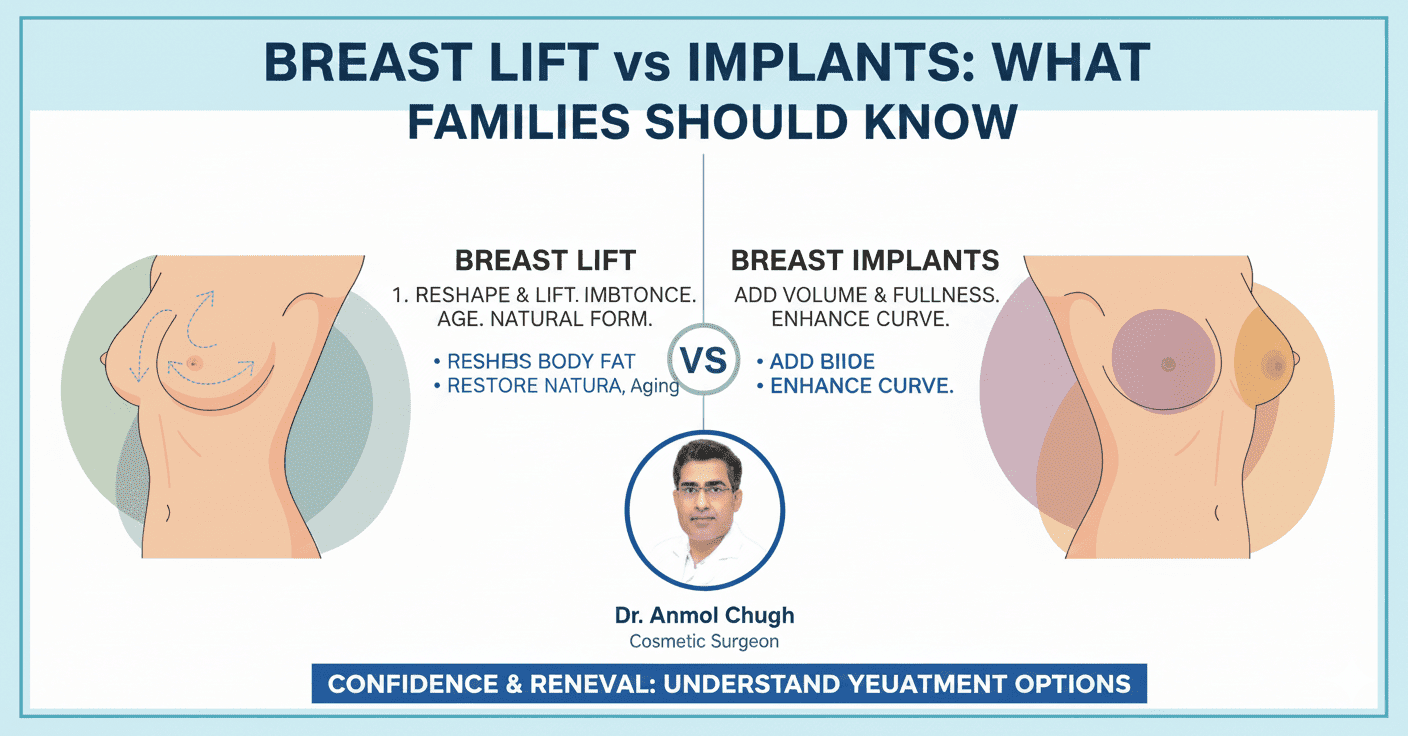
A breast lift improves the position and shape of sagging breasts without significantly increasing their size.
Breast implants increase breast volume and fullness but do not correct significant sagging on their own.
If you have both loss of volume and breast drooping, you may benefit from a breast lift with implants.
What Is a Breast Lift?
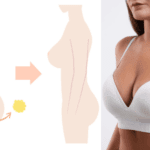
A breast lift, also called mastopexy, is a procedure that reshapes and lifts the natural breast tissue.
During surgery, excess skin is removed, the breast tissue is repositioned, and the nipple is moved to a higher, more youthful position when necessary.
A breast lift is designed to improve:
- Sagging breasts
- Low nipple position
- Loose breast skin
- Breast shape
- Breast symmetry
However, it is important to understand that a breast lift does not significantly increase breast size.
If you are happy with your breast volume but dislike the way your breasts have drooped over time, a lift may be the right solution.
What Are Breast Implants?
Breast implants, also known as breast augmentation, are used to increase breast size and improve fullness.
The implants may be placed either behind the breast tissue or beneath the chest muscle, depending on your body type and treatment goals.
Breast implants are commonly chosen by women who:
- Naturally have small breasts
- Have lost breast volume after pregnancy or weight loss
- Want a fuller breast shape
- Wish to improve breast symmetry
Modern implants are available in different:
- Sizes
- Shapes
- Profiles
- Materials
This allows the treatment to be tailored to each patient’s body and expectations.
Breast Lift vs Breast Implants: What’s the Difference?
Although both procedures improve the appearance of the breasts, they address different concerns.
| Concern | Breast Lift | Breast Implants |
|---|---|---|
| Improves sagging | ✔ Yes | ✖ No |
| Increases breast size | ✖ Minimal | ✔ Yes |
| Restores lost volume | ✖ Limited | ✔ Yes |
| Improves nipple position | ✔ Yes | Limited |
| Creates fuller upper breast | Slightly | ✔ Yes |
The most suitable option depends on your anatomy rather than simply your preferred cup size.
Who Is a Good Candidate for a Breast Lift?
A breast lift may be suitable if you:
- Feel your breasts have sagged after pregnancy or breastfeeding
- Have nipples pointing downward
- Notice loose skin around the breasts
- Are satisfied with your breast size
- Want a firmer, more youthful breast shape
Women who have experienced significant weight loss also commonly benefit from a breast lift because skin elasticity may not fully recover.
Who Is a Good Candidate for Breast Implants?
Breast implants may be appropriate if you:
- Want larger breasts
- Have naturally small breasts
- Have lost breast fullness after pregnancy
- Want better upper breast fullness
- Desire improved breast symmetry
Patients considering implants should also have realistic expectations and understand that implants improve volume, not significant sagging.
Can You Have Both Procedures Together?
Yes.
Many women benefit from combining a breast lift with breast implants.
This combination is commonly recommended when there is:
- Loss of breast volume
- Noticeable sagging
- Downward nipple position
- Loose breast skin
The lift restores the breast to a more youthful position, while the implant restores fullness.
Rather than treating only one concern, combining both procedures can produce a more balanced and natural-looking result in appropriately selected patients.
Dr. Anmol’s Clinical Perspective
One of the biggest misconceptions I see during consultations is that patients believe breast implants automatically lift the breasts.
In reality, implants mainly add volume.
If significant sagging is already present, simply inserting a larger implant may actually make the breast appear heavier over time.
On the other hand, some women request a breast lift because they think their breasts have become “smaller,” when the real issue is loss of position rather than loss of volume.
This is why every consultation begins with understanding what has changed and what the patient hopes to achieve.
The best results come from choosing the procedure that matches the patient’s anatomy not simply the one that seems most popular.
What Is Recovery Like?
Recovery after both breast lift surgery and breast implant surgery is generally smooth when patients follow their surgeon’s instructions.
Most women experience:
- Mild swelling
- Tightness in the chest
- Temporary discomfort
- Bruising for the first few days
Many patients can return to desk work within 5–7 days, although recovery varies depending on the procedure performed and individual healing.
Most surgeons recommend:
- Wearing a surgical bra for several weeks
- Avoiding heavy lifting for about 4–6 weeks
- Sleeping on your back initially
- Attending scheduled follow-up visits
While you may feel better within a couple of weeks, the breasts continue to settle over the next few months. Final results usually become more apparent once swelling has resolved.
What Are the Risks?
Every surgical procedure carries some risks, even when performed by an experienced plastic surgeon.
Possible risks include:
- Infection
- Bleeding
- Temporary changes in nipple sensation
- Scarring
- Delayed wound healing
- Mild breast asymmetry
With breast implants, additional long-term considerations include:
- Implant rupture
- Capsular contracture
- Implant displacement
- The possibility of future implant replacement
These complications are uncommon but should always be discussed before surgery so patients can make informed decisions.
Who Should Avoid Surgery?
A consultation helps determine whether surgery is appropriate.
Treatment may need to be delayed if you:
- Are pregnant or breastfeeding
- Have an uncontrolled medical condition
- Smoke and are unwilling to stop before surgery
- Have unrealistic expectations
- Plan significant weight loss in the near future
Women planning another pregnancy soon may also be advised to postpone surgery, as future pregnancy can affect breast shape and long-term results.
Common Mistakes Patients Make
One of the most common mistakes is choosing surgery based only on the desired cup size.
A larger implant does not always produce a better result. If the breast tissues cannot safely support a large implant, the breasts may appear unnatural or sag earlier over time.
Another common mistake is assuming a breast lift will significantly increase breast size.
A lift improves shape and position, not volume.
Some women also delay consultation because they believe they must choose between a lift and implants on their own. In reality, this decision is made after examining breast tissue, skin quality, nipple position, and personal goals.
An experienced plastic surgeon recommends the procedure that best matches your anatomy rather than applying the same treatment to every patient.
Frequently Asked Questions
1. How do I know if I need a breast lift or breast implants?
If your main concern is sagging, you may need a breast lift. If your breasts have lost volume, breast implants may be more suitable. Some women benefit from combining both procedures.
2. Can breast implants lift sagging breasts?
Not significantly.
Implants add fullness but do not correct moderate or severe breast drooping. A breast lift may be required when the nipples have moved downward.
3. Will a breast lift make my breasts smaller?
A breast lift mainly reshapes the breasts by removing excess skin. Although the breasts may appear slightly smaller because they become firmer and more lifted, the procedure is not designed to reduce breast size.
4. How long do breast implants last?
Modern implants are durable, but they are not considered lifetime devices. Many patients enjoy their results for many years, although some may require replacement or revision surgery in the future depending on individual circumstances.
5. Will there be scars after surgery?
Both breast lift and breast implant surgery involve incisions, so some scarring is expected.
Experienced plastic surgeons place incisions carefully so that scars usually fade gradually and become less noticeable with time.
6. Can I breastfeed after breast surgery?
Many women can successfully breastfeed after surgery, but this depends on the surgical technique used and individual anatomy. This topic should be discussed during your consultation if you plan future pregnancies.
Final Thoughts
Choosing between a breast lift and breast implants is not about selecting the more popular procedure—it’s about choosing the treatment that best addresses your concerns.
If your breasts have lost shape, a breast lift may be enough.
If they have lost volume, breast implants may provide the improvement you are looking for.
For women experiencing both sagging and loss of fullness, combining the two procedures often provides the most balanced and natural-looking result.
A detailed consultation allows your surgeon to assess your anatomy, discuss your expectations, and recommend the option that is safest and most appropriate for your body.
If you are unsure which procedure is right for you, speaking with an experienced plastic surgeon can help you understand your options and make an informed decision with confidence.
References
- American Society of Plastic Surgeons. Breast Lift (Mastopexy).
https://www.plasticsurgery.org/cosmetic-procedures/breast-lift - American Society of Plastic Surgeons. Breast Augmentation.
https://www.plasticsurgery.org/cosmetic-procedures/breast-augmentation - Plastic and Reconstructive Surgery. Spear SL, Bulan EJ, Venturi ML. Breast augmentation. 2004;114(5):73E–81E.
https://doi.org/10.1097/01.PRS.0000138593.18204.7D - Plastic and Reconstructive Surgery. Rohrich RJ, Hartley W, Brown SA. Mastopexy advancements and current techniques. 2006;117(3):773–785.
https://doi.org/10.1097/01.prs.0000200827.23560.a5 - Journal of Plastic, Reconstructive & Aesthetic Surgery. Mallucci P, Branford OA. Concepts in aesthetic breast dimensions and proportion. 2014;67(1):8–16.
https://doi.org/10.1016/j.bjps.2013.09.015 - American Board of Cosmetic Surgery. Breast Lift and Breast Augmentation Guide.
https://www.americanboardcosmeticsurgery.org/procedure-learning-center/breast/
Related Procedures
Medically Reviewed By
Dr. Anmol ChughQualifications: MBBS, MS, MCh (Plastic Surgery)
Experience: 16+ Years in Plastic & Aesthetic Surgery
Review Date: 18 Nov 2025
This article has been medically reviewed for accuracy and patient safety.