The Latest Technology in Breast Lift Surgery
Can Modern Technology Improve Breast Lift Results?
Many women considering a breast lift surgery (mastopexy) ask the same question:
“Has breast lift surgery become safer and more natural with modern technology?”
The answer is yes.
Over the past decade, advances in surgical planning, anesthesia, tissue handling, and recovery protocols have made breast lift surgery more precise than ever before. Today’s techniques focus not only on lifting sagging breasts but also on creating natural-looking results, reducing recovery time, and minimizing visible scars.
However, technology alone does not guarantee excellent results. The experience and judgment of your plastic surgeon remain the most important factors in achieving a safe procedure and a balanced, long-lasting outcome.
In this guide, we’ll explain how modern technology has changed breast lift surgery, what these innovations mean for patients, and how they contribute to safer surgery and better recovery.
Table of Contents
- Quick Answer
- What Is a Breast Lift Surgery?
- How Has Breast Lift Surgery Changed?
- Modern Technologies Used in Breast Lift Surgery
- Dr. Anmol’s Clinical Perspective
- Recovery Protocol Followed at Our Centre
- Common Myths About Breast Lift Technology
- Recovery Timeline
- Frequently Asked Questions
- Final Thoughts
- References
- Related Procedures
Quick Answer
Modern breast lift surgery combines advanced surgical planning, improved anesthesia, precision surgical instruments, refined suturing techniques, and enhanced recovery protocols to improve patient safety and cosmetic outcomes.
These advances help surgeons:
- Create a more natural breast shape
- Reduce tissue trauma
- Improve scar quality
- Shorten recovery time
- Enhance long-term breast support
The best results are achieved when advanced technology is combined with the expertise of an experienced plastic surgeon.
What Is a Breast Lift Surgery?
A breast lift (mastopexy) is a surgical procedure that raises and reshapes sagging breasts by removing excess skin and repositioning the breast tissue and nipple.
Unlike breast augmentation, a breast lift is designed to improve shape and position, not necessarily increase breast size.
Women commonly choose breast lift surgery after:
- Pregnancy and breastfeeding
- Significant weight loss
- Age-related skin laxity
- Loss of breast firmness over time
Depending on your goals, a breast lift may also be combined with breast implants or fat transfer to restore lost volume.
How Has Breast Lift Surgery Changed?
Years ago, breast lift procedures involved larger incisions, longer recovery periods, and less predictable cosmetic outcomes.
Today, improvements in surgical science allow surgeons to perform breast lifts with greater precision while preserving healthy tissues.
Modern breast lift surgery focuses on:
- Better surgical planning
- Smaller and more carefully placed incisions
- Improved blood supply to breast tissue
- Stronger internal support
- Faster healing
- Better scar management
Rather than relying on one new device or machine, today’s success comes from combining multiple advances throughout the entire surgical journey.
Modern Technologies Used in Breast Lift Surgery
Advanced Preoperative Planning
Successful surgery begins long before entering the operating room.
Modern consultation involves careful assessment of:
- Breast shape
- Skin quality
- Degree of sagging
- Chest wall anatomy
- Nipple position
- Body proportions
Careful planning allows the surgeon to select the most appropriate surgical technique for each individual rather than using the same approach for every patient.
This personalised planning helps create more balanced and natural-looking results.
Precision Surgical Instruments
Modern breast lift surgery uses refined surgical instruments that allow delicate tissue handling.
These instruments help surgeons:
- Minimise damage to surrounding tissues
- Improve surgical accuracy
- Reduce unnecessary bleeding
- Preserve healthy blood vessels
Gentle tissue handling contributes to better healing and improved scar quality.
Improved Electrosurgical Technology
Modern energy devices help surgeons control small blood vessels during surgery.
Compared with older techniques, this offers several advantages:
- Better visibility during surgery
- Reduced blood loss
- Less swelling
- Lower risk of bruising
These improvements also help create a cleaner surgical field, allowing more precise reshaping of the breast.
Advanced Suturing Techniques
Today’s breast lift procedures use stronger, more refined suturing methods than those used years ago.
Instead of simply closing the skin, surgeons often use multiple layers of internal sutures to support the breast tissue.
This approach helps:
- Reduce tension on the skin
- Improve scar healing
- Maintain breast shape
- Provide longer-lasting support
Because less tension is placed on the skin incision, scars often heal more favourably over time.
Internal Tissue Support
For selected patients, modern breast lift surgery may include additional internal tissue support.
Rather than relying entirely on the skin to hold the breast in its new position, deeper breast tissue is reshaped and secured internally.
This technique helps:
- Improve long-term breast shape
- Reduce the early recurrence of sagging
- Provide stronger structural support
Not every patient requires this approach, but it can be beneficial in women with poor skin quality or significant breast drooping.
Modern Anesthesia and Patient Monitoring
One of the biggest improvements in cosmetic surgery has been patient safety.
Today’s anesthesia techniques are safer and more predictable than ever before.
During surgery, advanced monitoring continuously measures:
- Heart rate
- Blood pressure
- Oxygen levels
- Carbon dioxide levels
- Body temperature
These systems allow the anesthesia team to respond immediately to any changes throughout the procedure.
As a result, patients usually experience:
- Smoother anesthesia recovery
- Less nausea
- Better pain control
- Earlier mobilisation after surgery
Fat Grafting for Selected Patients
Modern fat transfer technology has expanded the options available during breast lift surgery.
For women who desire a modest increase in breast fullness without implants, carefully processed fat harvested from another part of the body may be transferred to selected areas of the breast.
Fat grafting can help improve:
- Upper pole fullness
- Breast symmetry
- Contour irregularities
- Natural softness
However, it is not a replacement for breast implants in patients seeking a significant increase in breast size.
Better Scar Management
Scar care has improved significantly over the past decade.
Modern recovery protocols may include:
- Silicone gel
- Silicone sheets
- Improved wound dressings
- Early scar assessment
- Sun protection guidance
When combined with careful surgical technique, these measures help scars mature into thinner, lighter lines over time.

Dr. Anmol’s Clinical Perspective
One of the biggest misconceptions I hear from patients is:
“Doctor, if the latest technology is used, will my results automatically be better?”
Technology certainly improves breast lift surgery, but it is only one part of the equation.
The most important factor is selecting the right procedure for your anatomy. Two women with similar breast sizes may require completely different surgical techniques depending on their skin quality, nipple position, breast tissue, and long-term goals.
Modern technology allows me to perform surgery with greater precision, but creating natural-looking breasts still depends on careful planning, surgical experience, and understanding what will suit each patient’s body.
The goal is not simply to lift the breasts. The goal is to create results that remain balanced, natural, and proportionate for many years.
Recovery Protocol Followed at Our Centre
Technology helps during surgery, but recovery plays an equally important role in achieving excellent results.
At our centre, patients receive detailed recovery guidance that typically includes:
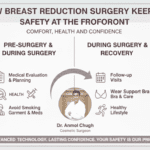
- Wearing a supportive surgical bra as advised
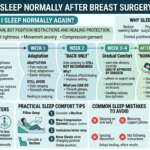
- Walking gently from the first day to improve circulation
- Sleeping on the back for the first few weeks
- Avoiding heavy lifting for approximately 4–6 weeks
- Eating a protein-rich diet to support healing
- Keeping incision sites clean and dry
- Attending scheduled follow-up appointments
We also educate patients about scar care once the incisions have healed, including the appropriate use of silicone-based scar therapy when indicated.
Following these instructions helps reduce complications and supports long-lasting results.
Also Read: How Surgeons Keep Safety in Mind During a Breast Lift
Common Myths About Breast Lift Technology
Myth 1: Modern technology means there will be no scars.
Fact: Every breast lift requires surgical incisions. Modern techniques help make scars smaller and better hidden, but they cannot eliminate them completely.
Myth 2: New technology replaces surgical experience.
Fact: Advanced equipment is only as effective as the surgeon using it. Experience, judgment, and surgical planning remain the biggest contributors to successful outcomes.
Myth 3: Every patient needs the newest device or technique.
Fact: Treatment should always be individualized. The best procedure depends on your breast anatomy, skin quality, and cosmetic goals—not on using every available technology.
Myth 4: Recovery is instant with modern surgery.
Fact: Recovery has become smoother than before, but your body still needs time to heal. Following post-operative instructions is essential for achieving the best results.
Recovery Timeline
Although every patient heals differently, a general recovery timeline includes:
First Week
- Mild swelling and bruising
- Wearing a surgical support bra
- Light walking encouraged
Weeks 2–4
- Swelling gradually decreases
- Most patients return to office work
- Light daily activities become easier
Weeks 4–6
- Resume most regular activities with your surgeon’s approval
- Breast shape begins settling naturally
Three to Six Months
- Final breast shape continues to develop
- Scars gradually soften and fade
- Swelling resolves completely
Patience is important, as final results develop gradually over several months.
Also Read: Breast Lift Results: How Long Will They Last?
Frequently Asked Questions
Does modern technology make breast lift surgery safer?
Yes. Improvements in anesthesia, patient monitoring, surgical planning, and tissue handling have significantly improved the safety of breast lift surgery.
Will I have less pain with modern techniques?
Most patients experience less discomfort than they expect. Improved surgical methods and modern pain management protocols help make recovery more comfortable.
Can technology prevent breast sagging from returning?
No surgery can permanently stop the natural ageing process. However, modern surgical techniques provide stronger internal support and long-lasting improvement. Maintaining a stable weight and wearing supportive bras can help preserve results.
Is a breast lift possible without implants?
Yes. Many women achieve excellent results with a breast lift alone. If additional volume is desired, implants or fat grafting may be discussed during consultation.
How long do breast lift results last?
Results are generally long-lasting, especially when patients maintain a healthy lifestyle, avoid major weight fluctuations, and follow their surgeon’s recommendations.
Final Thoughts
Breast lift surgery has advanced significantly over the past decade. Modern technology now allows surgeons to perform procedures with greater precision, improved safety, better scar management, and more natural-looking outcomes.
However, technology should never replace surgical expertise. The best results come from combining advanced techniques with careful planning, personalised treatment, and meticulous surgical execution.
Choosing an experienced plastic surgeon ensures that every aspect of your treatment, from consultation to recovery, is tailored to your individual needs.
If you are considering breast lift surgery, a personalised consultation with Dr. Anmol Chugh can help you understand your options, evaluate your breast anatomy, and determine the approach that will provide the safest and most natural-looking results.
References
- American Society of Plastic Surgeons.
Breast Lift (Mastopexy).
https://www.plasticsurgery.org/cosmetic-procedures/breast-lift - American Board of Cosmetic Surgery.
Breast Lift Guide.
https://www.americanboardcosmeticsurgery.org/procedure-learning-center/breast/breast-lift-guide/ - Hall-Findlay EJ.
A simplified vertical reduction mammaplasty: Shortening the learning curve.
Plastic and Reconstructive Surgery. 1999;104(3):748–759.
https://doi.org/10.1097/00006534-199909010-00015 - Rohrich RJ, Gosman AA, Brown SA, Reisch J.
Current preferences for breast reduction and mastopexy techniques: A survey of board-certified plastic surgeons.
Plastic and Reconstructive Surgery. 2004;114(7):1724–1733.
https://doi.org/10.1097/01.PRS.0000142475.81442.8F - Spear SL, Howard MA.
Evolution of Mastopexy and Mastopexy-Augmentation Techniques.
Clinics in Plastic Surgery. 2009;36(1):45–58.
https://doi.org/10.1016/j.cps.2008.08.001 - Mustoe TA, Cooter RD, Gold MH, et al.
International Clinical Recommendations on Scar Management.
Plastic and Reconstructive Surgery. 2002;110(2):560–571.
https://doi.org/10.1097/00006534-200208000-00031 - The Aesthetic Society.
Breast Lift (Mastopexy): Patient Guide.
https://www.theaestheticsociety.org/procedures/breast/breast-lift
Related Procedures
- Breast Lift Surgery
- Breast Augmentation Surgery
- Breast Fat Transfer
- Breast Reduction Surgery
- Mommy Makeover Surgery
Medically Reviewed By
Dr. Anmol ChughQualifications: MBBS, MS, MCh (Plastic Surgery)
Experience: 16+ Years in Plastic & Aesthetic Surgery
Review Date: 16 Aug 2025
This article has been medically reviewed for accuracy and patient safety.