Ensuring Safety in Breast Fat Transfer Procedures
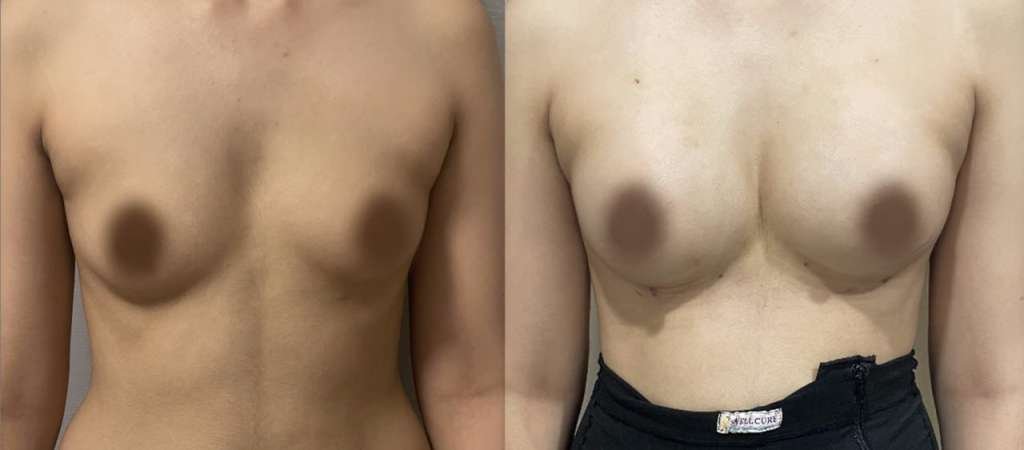
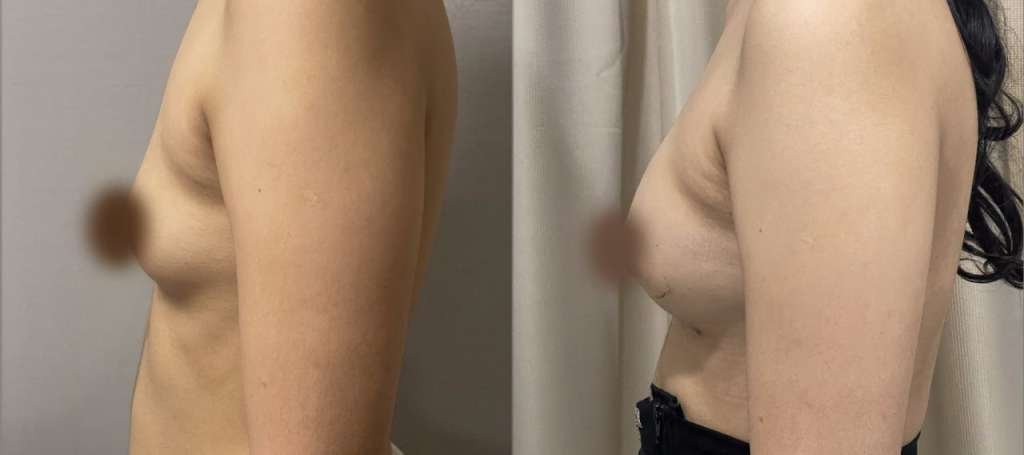
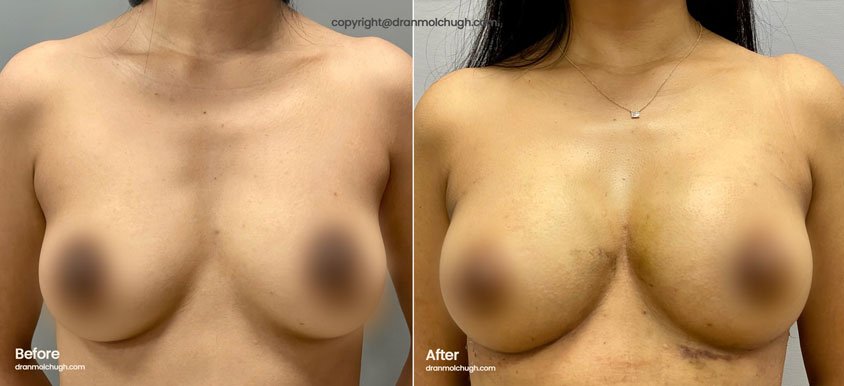
When it comes to breast enhancement, women want not only beautiful results but also safety. One of the most advanced techniques today is breast fat transfer, also called fat grafting breast augmentation. This procedure uses your own body fat to enhance breast size and shape.
Because it uses natural tissue, many women feel it is safer than implants. However, like any surgery, safety is the most important factor. In this blog, we will explain how breast fat transfer procedures are done safely, what steps are taken to protect patients, and why choosing an expert like Dr. Anmol Chugh is the key to safe and natural results.
What Is Breast Fat Transfer?
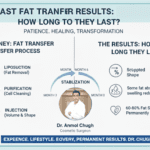
Breast fat transfer is a procedure where fat is taken from one part of the body (like the tummy, thighs, or hips) and injected into the breasts. The steps are:
- Liposuction – Fat is carefully removed from donor areas.
- Purification – The fat is cleaned to separate healthy fat cells.
- Injection – Purified fat is injected into the breasts to improve volume and shape.
Since the procedure uses your own fat, the results are more natural and carry fewer risks of rejection.

Why Safety Matters in Breast Fat Transfer
Even though breast fat transfer is considered safe, the procedure still involves surgery. Safety is important because:
- It prevents complications like infection or fat necrosis.
- It ensures fat is placed correctly, avoiding risks.
- It helps achieve long-lasting, natural results.
- It gives patients confidence and peace of mind.
When handled by a skilled surgeon like Dr. Anmol Chugh, safety is always the top priority.
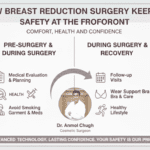
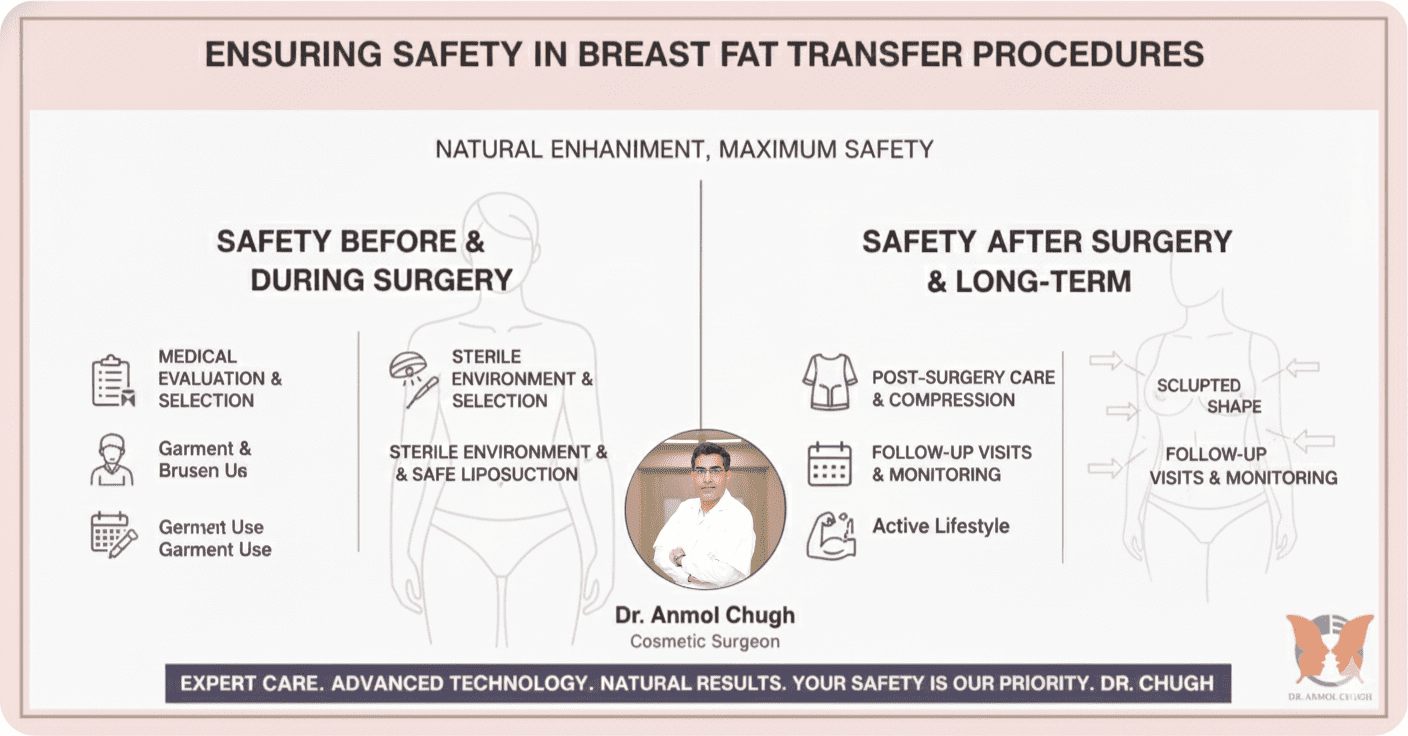
Safety Before the Procedure
-
Medical Evaluation
Before surgery, patients go through a full medical check-up. This includes:
- Reviewing medical history
- Checking for allergies or conditions
- Understanding lifestyle habits like smoking
This ensures the patient is fit for surgery.
-
Choosing the Right Candidate
Not everyone is suitable for breast fat transfer. Ideal candidates are:
- Women in good health
- Non-smokers
- Those with enough donor fat
- Women looking for a moderate size increase
By selecting the right candidate, surgeons reduce risks and ensure safety.
-
Pre-Surgery Instructions
Patients are advised to:
- Stop smoking and alcohol before surgery
- Avoid blood-thinning medicines
- Eat healthy to support recovery
Following these steps keeps the body strong for surgery.
Safety During the Procedure
-
Sterile Environment
The surgery is done in a fully sterile operating room. This lowers the chance of infection.
-
Safe Liposuction Techniques
Modern liposuction tools are used to remove fat gently. Techniques include:
- Power-assisted liposuction (PAL)
- Ultrasound-assisted liposuction (UAL)
These protect surrounding tissues while safely collecting fat.
-
Purification of Fat
Only the healthiest fat cells are used. Purification systems remove:
- Oil
- Blood
- Damaged fat cells
This ensures that only quality fat is injected, making the procedure safer and the results more stable.
-
Correct Injection Methods
The fat is injected in small amounts, layer by layer. This is important for safety because it:
- Prevents fat clumps
- Avoids risks like fat embolism
- Ensures even distribution
Dr. Anmol Chugh uses advanced techniques to place fat safely and effectively.
-
Monitoring During Surgery
Throughout the procedure, patients are monitored with advanced systems that check:
- Heart rate
- Blood pressure
- Oxygen levels
This ensures an immediate response if anything unusual happens.
Safety After the Procedure
-
Post-Surgery Care
Patients are given antibiotics and pain relief medicines to prevent infection and discomfort.
-
Compression Garments
After liposuction, compression garments are worn. They:
- Reduce swelling
- Support healing
- Improve contour in donor areas
-
Follow-Up Visits
Regular follow-ups with Dr. Anmol Chugh are scheduled to:
- Check healing
- Monitor fat survival
- Ensure there are no complications
-
Healthy Lifestyle
Patients are advised to:
- Maintain a stable weight
- Eat nutritious food
- Avoid smoking and alcohol
- Stay active with light exercise
These steps improve recovery and long-term results.
Advanced Technology for Safer Breast Fat Transfer
Modern tools and techniques make this procedure even safer. These include:
-
3D Imaging
Helps plan the surgery with accurate size and shape goals.
-
Microfat and Nanofat Grafting
Allows precise placement of fat for smoother results and safety.
-
Closed-System Fat Transfer
Reduces exposure of fat to air, lowering infection risks.
-
Advanced Sutures and Small Incisions
Smaller cuts mean less risk of scarring and infection.
Dr. Anmol Chugh uses the latest technology to combine safety with natural beauty.
Benefits of Breast Fat Transfer When Done Safely
When performed with proper care, the procedure offers:
- Natural-looking results
- Soft and realistic feel
- Minimal scarring
- Lower risks compared to implants
- Dual benefits of body contouring + breast enhancement
Risks and How They Are Prevented
Like all surgeries, there are some risks, but safety measures reduce them.
-
Fat Reabsorption
Some fat may not survive. To prevent this, fat is injected carefully in small amounts.
-
Infection
Prevented with sterile techniques, antibiotics, and careful monitoring.
-
Fat Necrosis (Hard Lumps)
Avoided by proper fat purification and skilled injection.
-
Uneven Results
Reduced by using advanced imaging and precise grafting methods.
With Dr. Anmol Chugh’s expertise, these risks are kept to a minimum.
Comparing Safety: Fat Transfer vs. Implants
| Safety Factor | Breast Implants | Breast Fat Transfer |
| Material | Silicone/Saline | Natural body fat |
| Risk of Rejection | Possible | None |
| Infection Risk | Moderate | Low |
| Capsular Contracture | Yes | No |
| Rupture/Leak | Possible | None |
| Long-Term Safety | Requires replacement | Permanent (surviving fat) |
Clearly, breast fat transfer offers a safer and more natural choice.
The Role of Surgeon’s Expertise in Safety
Technology and tools are important, but the surgeon’s skill is what ensures maximum safety. Dr. Anmol Chugh provides:
- Extensive experience in breast surgeries
- Precise techniques for fat placement
- Personalized treatment plans for each patient
- Focus on safety and comfort from consultation to recovery
This is why patients trust him for their breast enhancement journey.
FAQs on Safety in Breast Fat Transfer
-
Is breast fat transfer safer than implants?
Yes, it is safer because it uses your own fat, avoiding risks such as implant rupture or rejection.
-
Can fat transfer cause cancer?
No, research shows there is no link between fat grafting and breast cancer.
-
How much downtime is needed?
Most patients return to light activities in 3-5 days, with full recovery in a few weeks.
-
How do I ensure maximum safety?
Choose a qualified surgeon, such as Dr. Anmol Chugh, follow pre- and post-surgery instructions, and attend follow-ups.
-
Will the results last?
Yes, the fat that survives becomes a permanent part of your breast tissue.
Conclusion
Ensuring safety in breast fat transfer procedures is about careful planning, advanced technology, and expert hands. From medical evaluation and sterile techniques to advanced fat purification and precise injection methods, every step is designed to protect the patient.
With the experience and expertise of Dr. Anmol Chugh, women can enjoy a safe journey to natural-looking, long-lasting breast enhancement.
If you are considering breast fat transfer, consult Dr. Anmol Chugh to understand your options and ensure the safest path to your dream results.
Medically Reviewed By
Dr. Anmol ChughQualifications: MBBS, MS, MCh (Plastic Surgery)
Experience: 16+ Years in Plastic & Aesthetic Surgery
Review Date: 01 Dec 2025
This article has been medically reviewed for accuracy and patient safety.