Non-Surgical Gynecomastia: Does It Really Work?
Many men who notice chest enlargement immediately ask:
“Can Gynecomastia Be Treated Without Surgery?”
The idea of avoiding surgery is naturally appealing. Most patients first search for alternatives like gym workouts, chest exercises, medicines, supplements, fat burners, or home remedies before considering a procedure.
But the real question is not whether these options exist. The real question is:
👉 Do non-surgical gynecomastia treatments actually work in real life?
The answer is more nuanced than a simple yes or no. Some patients genuinely improve without surgery, while others spend years trying every non-surgical option possible without seeing meaningful change.
The key difference lies in understanding what is actually causing the chest enlargement.
This detailed guide explains when non-surgical gynecomastia treatments can help, when they fail, and why surgery remains the only permanent solution in many cases.
Table of Contents
- Understanding Gynecomastia Properly
- Types of Chest Enlargement in Men
- What Is Non-Surgical Gynecomastia Treatment?
- Does Non-Surgical Gynecomastia Treatment Really Work?
- Situations Where Non-Surgical Treatment Can Help
- Situations Where Non-Surgical Treatment Usually Fails
- Non-Surgical Options Explained in Detail
- Why Non-Surgical Gynecomastia Treatments Often Fail
- Surgical vs Non-Surgical Gynecomastia Treatment
- When Should You Consider Surgery?
- Can Gynecomastia Go Away Naturally?
- Common Myths About Non-Surgical Gynecomastia
- Choosing the Right Treatment
- Final Thoughts
- Consultation Is Key
Understanding Gynecomastia Properly
Gynecomastia is the enlargement of the male chest caused by one or more of the following:
- Hormonal imbalance
- Excess glandular breast tissue
- Fat accumulation in the chest
- Combination of gland and fat
👉 Learn more about gynecomastia treatment here:
One of the biggest misconceptions is assuming that every enlarged male chest is the same. In reality, different causes require completely different treatment approaches.
In my clinical practice, I frequently meet patients who have spent years doing intense chest workouts, believing they only had “stubborn fat.” After examination, many are surprised to learn that the actual issue is firm glandular tissue that exercise simply cannot remove.
Types of Chest Enlargement in Men
Before discussing treatment, it is important to identify the type of chest enlargement.
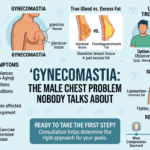
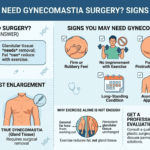
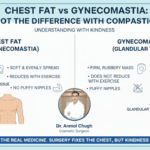
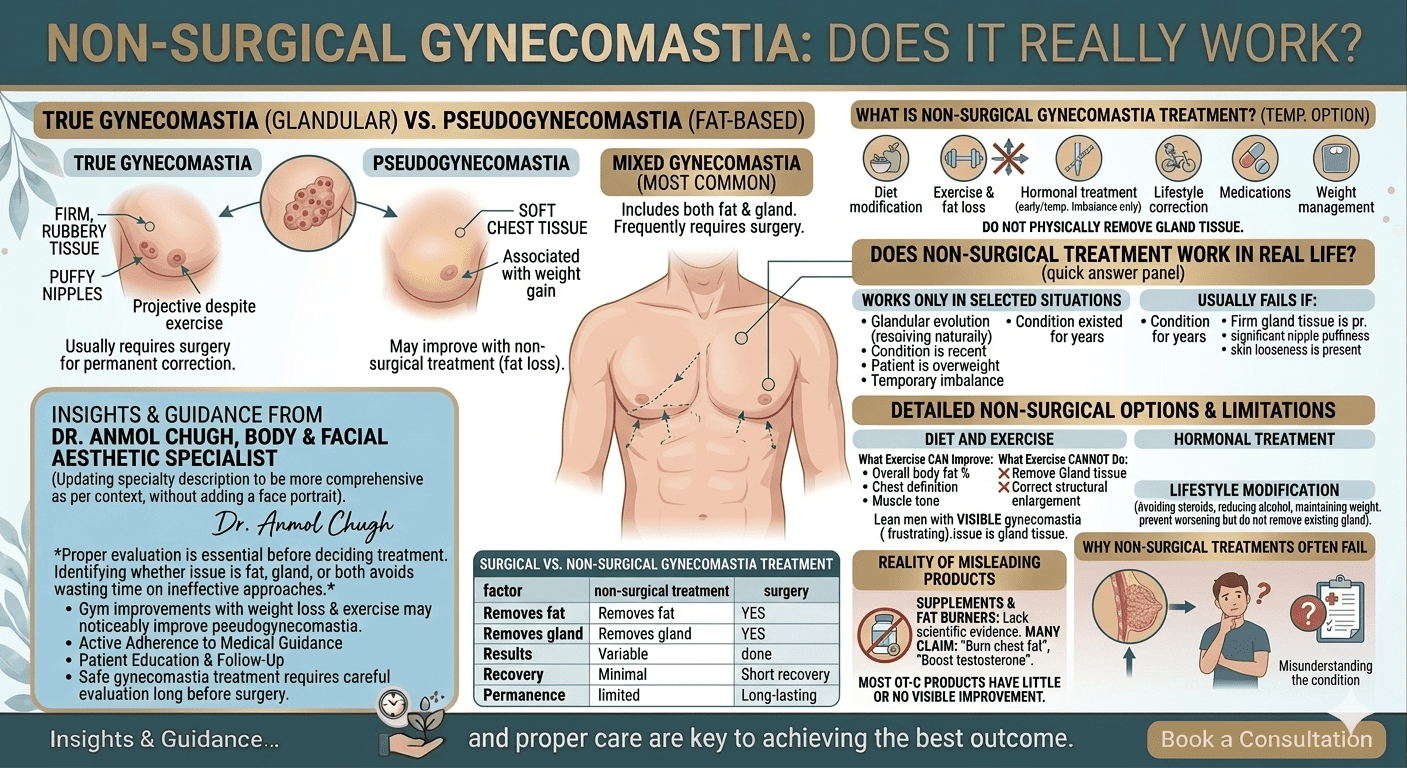
- True Gynecomastia (Glandular Type)
This type is caused mainly by enlarged gland tissue.
Characteristics include:
- Firm or rubbery tissue beneath the nipple
- Puffy nipples
- Chest projection that remains despite exercise
- Minimal improvement with weight loss
👉 This type usually requires surgery for permanent correction.
- Pseudogynecomastia (Fat-Based Chest)
This occurs primarily due to excess fat accumulation.
Characteristics include:
- Soft chest tissue
- Associated with overall weight gain
- Improves with fat loss and fitness
👉 This type may improve with non-surgical treatment.
- Mixed Gynecomastia
This is the most common presentation seen in practice.
It includes both:
- Fat accumulation
- Glandular enlargement
In these cases, weight loss may improve the chest partially, but gland tissue often remains visible.
👉 Mixed gynecomastia frequently requires surgical correction for complete improvement.
What Is Non-Surgical Gynecomastia Treatment?
Non-surgical gynecomastia treatment refers to methods that avoid surgery altogether.
These may include:
- Diet modification
- Exercise and fat loss
- Hormonal treatment
- Lifestyle correction
- Medications
- Weight management
The goal is usually to reduce fat or correct a temporary hormonal imbalance.
However, it is important to understand that these methods do not physically remove gland tissue.
Does Non-Surgical Gynecomastia Treatment Really Work?
The honest medical answer is:
👉 It works only in selected situations.
Whether it works depends entirely on:
- The type of gynecomastia
- Duration of the condition
- Presence of gland tissue
- Skin quality
- Overall body composition
This is why some patients improve naturally while others see almost no change despite months of effort.
Situations Where Non-Surgical Treatment Can Help
Non-surgical approaches may work when:
- The enlargement is mostly fat-based
- The condition is recent
- Hormonal imbalance is temporary
- The patient is overweight
- Pubertal gynecomastia is still resolving naturally
In these cases, improving lifestyle and reducing body fat may noticeably improve chest appearance.
Situations Where Non-Surgical Treatment Usually Fails
Unfortunately, many patients fall into this category.
Non-surgical treatment is unlikely to work if:
- Firm gland tissue is present
- The condition has existed for years
- The chest remains enlarged despite fitness efforts
- There is significant nipple puffiness
- Skin looseness is present
👉 In such cases, surgery becomes the only reliable and permanent solution.
Non-Surgical Options Explained in Detail
- Diet and Exercise
This is the first approach most patients try.
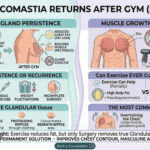
What Exercise Can Improve:
- Overall body fat percentage
- Chest definition
- Muscle tone
- Body proportions
What Exercise Cannot Do:
- Remove gland tissue
- Flatten firm nipple projection
- Correct structural enlargement
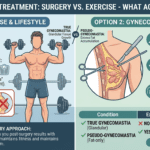
👉 Exercise is helpful for fat reduction, but cannot eliminate true gynecomastia.
I often see lean and physically fit men with visible gynecomastia who become frustrated because their chest never changes despite years of training. In most of these cases, the persistent issue is gland tissue rather than fat.
Also read: Gynecomastia Surgery vs Exercise: What Actually Works?
- Weight Loss
Weight loss can significantly improve pseudogynecomastia.
Benefits may include:
- Reduced chest fat
- Better body contour
- Improved definition
However, if gland tissue exists underneath, the chest may still appear enlarged even after substantial weight reduction.
This is why some patients notice that every part of the body becomes leaner except the chest area.
- Hormonal Treatment
In selected early cases, hormonal medications may be prescribed.
These are generally useful when:
- Hormonal imbalance is recent
- Pubertal gynecomastia is evolving
- Medical causes are identified early
However:
- Results are inconsistent
- Long-standing gland tissue does not disappear
- Established gynecomastia responds poorly
Hormonal treatment is not universally effective and should always be medically supervised.
- Supplements and Fat Burners
This is one of the most misleading areas online.
Many supplements claim to:
- “Burn chest fat”
- “Boost testosterone”
- “Eliminate gynecomastia naturally”
The reality is:
👉 Most over-the-counter products lack scientific evidence.
Many patients spend large amounts of money on supplements with little or no visible improvement.
- Lifestyle Modification
Lifestyle improvement helps overall hormonal and physical health.
This may include:
- Avoiding anabolic steroids
- Reducing alcohol consumption
- Maintaining a healthy body weight
- Managing medications carefully
These changes may prevent worsening, but do not remove existing gland tissue.
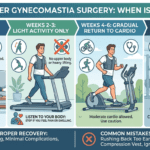
Also read: Gym After Gynecomastia Surgery: When Is It Safe?
Why Non-Surgical Gynecomastia Treatments Often Fail
- Gland Tissue Cannot Be “Burned”
This is the single most important reason.
👉 Gland tissue is structurally different from fat.
Exercise reduces fat cells. It does not dissolve dense glandular breast tissue.
This is why many patients continue to see puffy nipples even after becoming physically fit.
- Delay in Proper Treatment
Many individuals spend years trying ineffective approaches before seeking proper evaluation.
This often leads to:
- Increased frustration
- Loss of confidence
- More severe skin laxity over time
Early diagnosis prevents unnecessary delay.
- Misunderstanding the Condition
A large number of patients self-diagnose incorrectly.
Some assume they only have fat, while others believe surgery is always necessary.
The truth is that proper examination is essential before deciding treatment.
Surgical vs Non-Surgical Gynecomastia Treatment
| Factor | Non-Surgical Treatment | Surgery |
| Removes fat | Sometimes | Yes |
| Removes gland | No | Yes |
| Results | Variable | Predictable |
| Recovery | Minimal | Short recovery |
| Permanence | Limited | Long-lasting |
👉 Surgery remains the most reliable solution for glandular gynecomastia.
When Should You Consider Surgery?
Surgical treatment should be considered when:
- Non-surgical methods have failed
- Gland tissue is clearly present
- Chest shape affects confidence
- Puffy nipples persist
- The condition is long-standing
👉 Explore body contouring procedures here:
Modern gynecomastia surgery focuses on creating a flatter, masculine, and natural-looking chest contour with minimal visible scarring.
Also read: How to Find the Best Gynecomastia Surgeon in Delhi
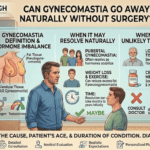
Can Gynecomastia Go Away Naturally?
Sometimes, yes.
Pubertal gynecomastia in teenagers may improve naturally within 1–2 years.
However, if the condition persists beyond that period, spontaneous resolution becomes less likely.
Long-standing glandular tissue usually does not disappear on its own.
Also read: Best Age for Gynecomastia Surgery – What Dr. Anmol Chugh Recommends
Common Myths About Non-Surgical Gynecomastia
Myth 1: Gym Can Cure All Gynecomastia
Reality: Exercise improves fat, not gland tissue.
Myth 2: Supplements Permanently Remove Chest Enlargement
Reality: There is no proven supplement that removes glandular gynecomastia.
Myth 3: Surgery Should Always Be Avoided
Reality: In true glandular gynecomastia, surgery is often the most effective and definitive solution.
Choosing the Right Treatment
The correct treatment depends on:
- Type of chest enlargement
- Severity
- Duration
- Skin elasticity
- Overall body composition
👉 A professional evaluation is essential before deciding treatment.
Final Thoughts
So, does non-surgical gynecomastia treatment really work?
👉 The honest answer is:
Yes—but only in selected cases.
- Fat-based enlargement may improve with weight loss and lifestyle correction
- True glandular gynecomastia usually requires surgery for permanent correction
The most important step is proper diagnosis. Without identifying whether the issue is fat, gland, or both, patients often waste time on treatments that cannot solve the real problem.
With expert guidance from Dr. Anmol Chugh, patients can understand their condition clearly and choose the treatment approach that delivers realistic and lasting results.
Consultation Is Key
Every patient’s chest anatomy is different. A personalized consultation helps:
- Identify the exact type of gynecomastia
- Understand realistic treatment outcomes
- Avoid unnecessary delays and ineffective treatments
- Build a customized treatment plan
👉 Book your consultation here:
Medically Reviewed By
Dr. Anmol ChughQualifications: MBBS, MS, MCh (Plastic Surgery)
Experience: 16+ Years in Plastic & Aesthetic Surgery
Review Date: 28 Apr 2026
This article has been medically reviewed for accuracy and patient safety.