Real Complications After Gynecomastia Surgery
Gynecomastia surgery is one of the most commonly performed procedures for men dealing with enlarged chest tissue. It offers a significant improvement in chest contour and often restores confidence that may have been affected for years. While the results are generally very satisfying, many patients hesitate before taking the next step due to concerns about possible complications.
These concerns are valid. Like any surgical procedure, gynecomastia surgery involves certain risks. However, the key lies in understanding what complications are actually possible, how common they are, and how they can be managed or prevented.
This article provides a clear and realistic perspective based on clinical experience from Dr. Anmol Chugh, who specializes in treating gynecomastia with a focus on safety, precision, and natural-looking results.
In my clinical practice, I often meet patients who are extremely anxious about complications they’ve read about online. Once we discuss actual risks and real outcomes, most of them feel reassured and can make a more confident decision.
Real Complications After Gynecomastia Surgery (Quick Answer)
Most complications are mild and temporary, such as swelling, bruising, or minor irregularities. Serious complications are rare when the procedure is performed by an experienced surgeon and proper care is followed.
Understanding the Safety of Gynecomastia Surgery
Before discussing complications, it is important to understand that gynecomastia surgery is generally considered safe when performed under appropriate medical conditions.
Complications typically arise due to factors such as poor surgical technique, inadequate planning, or lack of proper aftercare. In experienced hands, these risks are significantly minimized.
👉 Learn more about gynecomastia surgery treatment
In clinical practice, Dr. Anmol Chugh emphasizes careful evaluation and patient selection to ensure predictable and safe outcomes.
Common and Temporary Complications
Most patients may experience some temporary effects after surgery, which are a normal part of the healing process.
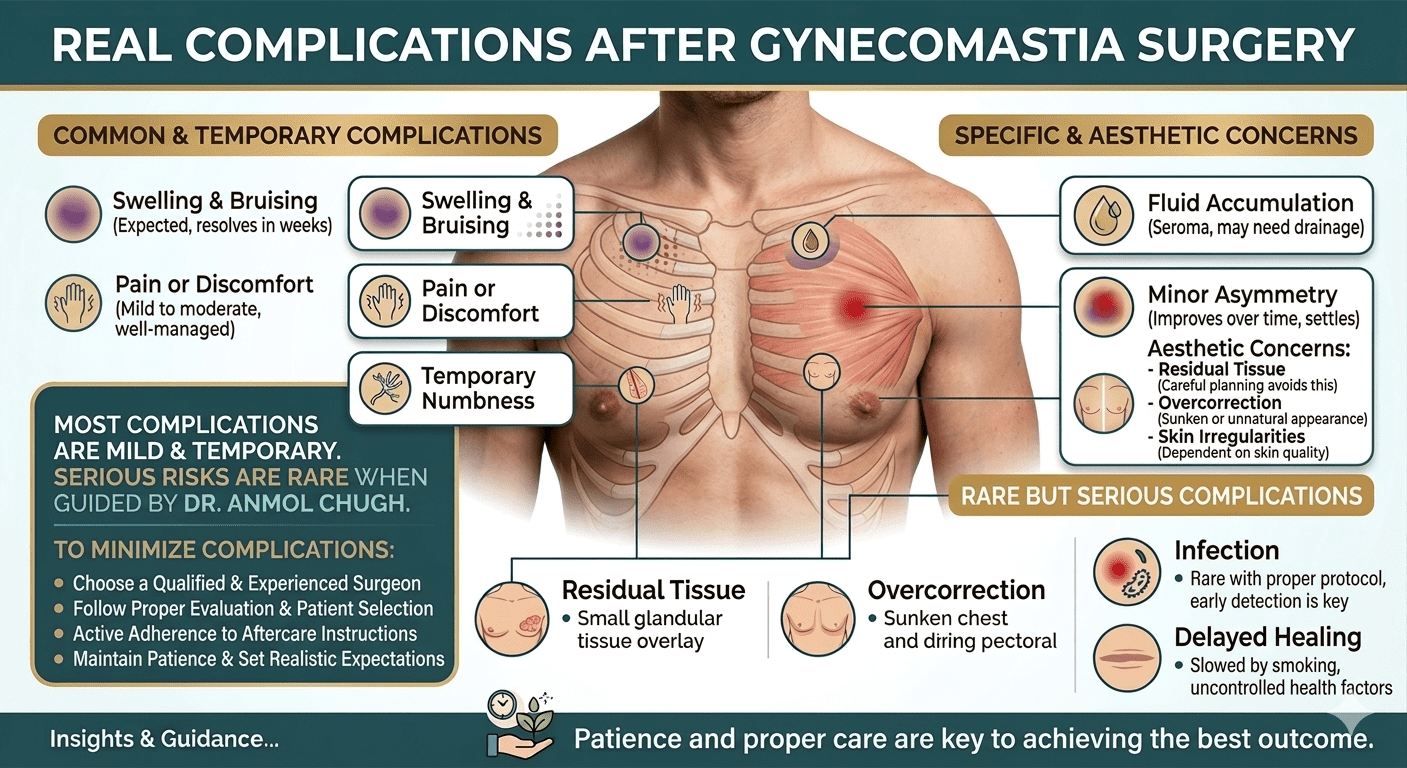
Swelling and Bruising
Swelling and bruising are expected after surgery and usually improve over a few weeks. In some cases, mild swelling may persist for a longer duration before settling completely.
Pain or Discomfort
Mild to moderate discomfort is common in the initial days after surgery. This is typically well-managed with prescribed medications and gradually subsides as healing progresses.
Temporary Numbness
Some patients may notice reduced sensation around the chest area due to nerve irritation. This is usually temporary and improves over time.
Also read: Life After Gynecomastia Surgery: Results and Confidence Boost
Specific Complications to Be Aware Of
While less common, certain complications may require attention.
Fluid Accumulation (Seroma)
Fluid may collect under the skin after surgery, leading to swelling. This condition can be managed with drainage if necessary.
Hematoma (Blood Collection)
A hematoma occurs when blood accumulates in the surgical area. It is uncommon but may require medical intervention if significant.
Minor Asymmetry
Slight differences in shape or contour may occur during healing. In most cases, this improves over time as swelling settles.
Aesthetic Concerns
Some complications are related to the final appearance rather than medical safety.
Residual Tissue
In some cases, a small amount of glandular tissue may remain, leading to incomplete flattening of the chest. This is usually addressed through careful surgical planning.
Overcorrection
Excessive tissue removal can result in a sunken or unnatural appearance. This highlights the importance of balanced and precise technique.
Skin Irregularities
Patients with poor skin elasticity may notice mild looseness or unevenness after fat removal. This depends on individual skin quality.
👉 Explore skin tightening treatments for better contour
Rare but Serious Complications
Serious complications are uncommon but important to understand.
Infection
Infection is rare when proper surgical protocols are followed. Early detection and treatment ensure effective management.
Scarring Issues
While incisions are typically small and discreet, some patients may develop thicker or more noticeable scars depending on their healing response.
Delayed Healing
Certain factors, such as smoking or underlying health conditions, can slow the healing process and increase the risk of complications.
Who Is at Higher Risk?
Certain patients may have a higher likelihood of complications.
This includes individuals with uncontrolled medical conditions, poor skin quality, or those who do not follow post-operative instructions. Large or advanced cases may also involve slightly higher complexity.
Proper evaluation helps identify these risks in advance.
How to Minimize Complications
The most effective way to reduce complications is through proper planning and expert care.
Choosing a qualified and experienced surgeon is essential. Following all pre-operative and post-operative instructions, including wearing compression garments and attending follow-up visits, plays a critical role in recovery.
👉 You can also explore body contouring and liposuction procedures
According to Dr. Anmol Chugh, patient education and adherence to medical guidance significantly improve outcomes and reduce risks.
Setting Realistic Expectations
Understanding the healing process helps avoid unnecessary concern.
Initial swelling, minor irregularities, or temporary changes are part of recovery and usually resolve over time. Final results may take several weeks to months to fully appear.
In my experience, patients who understand this timeline beforehand are much more comfortable during recovery and less likely to worry about normal healing changes.
Patience and proper care are key to achieving the best outcome.
Balancing Risks and Benefits
While it is important to understand potential complications, it is equally important to consider the benefits.
Gynecomastia surgery can significantly improve chest contour, posture, and confidence. For many patients, the improvement in quality of life far outweighs the temporary discomfort or manageable risks.
Conclusion
Gynecomastia surgery is a safe and effective procedure when performed under the right conditions. Most complications are mild, temporary, and manageable, while serious risks are rare.
The key to a successful outcome lies in choosing the right surgeon, understanding the process, and following proper care throughout the recovery period.
With expert guidance from Dr. Anmol Chugh, patients can approach the procedure with confidence and achieve natural, long-lasting results.
Book a Consultation
If you are considering gynecomastia surgery and want a clear understanding of the risks and outcomes, a personalized consultation can provide the clarity you need.
You will be able to:
- Assess your suitability for surgery
- Understand potential risks in your case
- Plan a safe and effective treatment
👉 Book your consultation here:
Medically Reviewed By
Dr. Anmol ChughQualifications: MBBS, MS, MCh (Plastic Surgery)
Experience: 16+ Years in Plastic & Aesthetic Surgery
Review Date: 25 Apr 2026
This article has been medically reviewed for accuracy and patient safety.