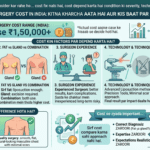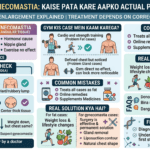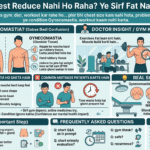
Chest Fat vs Gynecomastia: Spot the Difference with Compassion
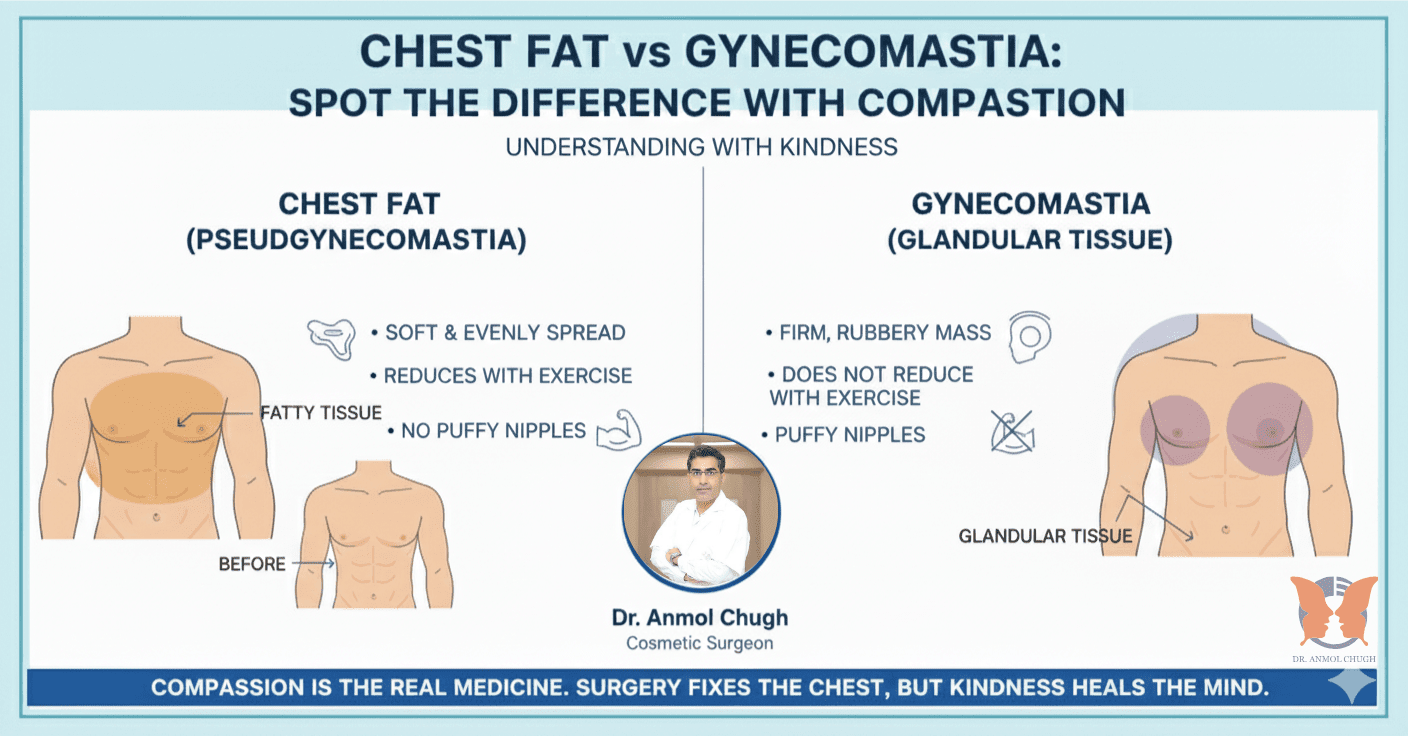
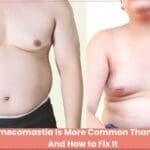
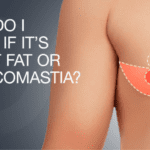
Many men become concerned when they notice fullness in their chest. Some describe it as “fat that won’t go away,” while others notice puffy nipples even after losing weight or exercising regularly.
Because these changes can look similar, many people assume every enlarged male chest is caused by excess body fat. In reality, there are two common possibilities:
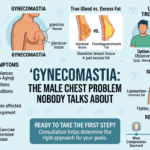
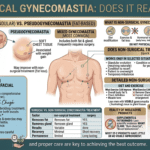
- Pseudogynecomastia (chest fat) – enlargement mainly due to excess fatty tissue.
- Gynecomastia – enlargement caused by glandular breast tissue, sometimes together with fat.
Understanding the difference is important because the treatment depends on the underlying cause. More importantly, it helps men realize that persistent chest enlargement is not always the result of poor lifestyle habits.
In this guide, Dr. Anmol Chugh explains how chest fat differs from gynecomastia, when lifestyle changes may help, when medical evaluation is necessary, and what treatment options are available.
Table of Contents
- Quick Answer
- What Is Chest Fat (Pseudogynecomastia)?
- What Is Gynecomastia?
- Chest Fat vs Gynecomastia
- Can You Tell the Difference Yourself?
- When Should You See a Doctor?
- Can Exercise Cure Gynecomastia?
- How Is Gynecomastia Diagnosed?
- Treatment Options
- Dr. Anmol Chugh’s Clinical Perspective
- Common Mistakes Patients Make
- Recovery Protocol Followed at Our Centre
- Safety Checklist
- Who May Not Be a Good Candidate for Surgery?
- What I Tell My Patients During Consultation
- Frequently Asked Questions
- Final Thoughts
- Related Procedures
- References
Quick Answer
Chest fat and gynecomastia may appear similar, but they are different conditions.
Chest Fat (Pseudogynecomastia)
- Mainly excess fatty tissue
- Often associated with overweight or obesity
- May improve with weight loss and exercise
Gynecomastia
- Enlargement of glandular breast tissue
- May occur because of hormonal changes, medications, certain medical conditions, or may have no identifiable cause
- Established glandular tissue often does not disappear with exercise alone
Some men have both chest fat and gynecomastia, making diagnosis more challenging.
What Is Chest Fat (Pseudogynecomastia)?
Pseudogynecomastia refers to enlargement of the male chest primarily because of excess fat.
It is commonly associated with:
- Weight gain
- Obesity
- Reduced physical activity
- Genetic fat distribution
The chest usually feels:
- Soft
- Compressible
- Diffuse rather than concentrated beneath the nipple
As overall body fat decreases, chest fat often reduces as well.
What Is Gynecomastia?
Gynecomastia is the benign enlargement of male breast glandular tissue.
It develops when the balance between estrogen activity and androgen activity within breast tissue changes.
Common situations include:
- Puberty
- Ageing
- Certain medications
- Anabolic steroid use
- Some medical conditions affecting the liver, kidneys, thyroid, or testes
- In many adults, no specific cause is identified
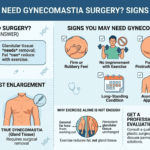
Unlike fatty tissue, glandular tissue forms a firmer disc beneath or around the nipple.
Many cases during puberty resolve naturally over time, while persistent adult gynecomastia may require treatment depending on symptoms and patient concerns.
Chest Fat vs Gynecomastia
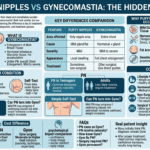
| Feature | Chest Fat | Gynecomastia |
|---|---|---|
| Main tissue | Fat | Glandular tissue (often with some fat) |
| Feel | Soft | Firm or rubbery beneath the nipple |
| Related to weight | Usually | Not always |
| Improves with weight loss | Often | May improve if fat is present, but glandular tissue usually persists |
| Puffy nipples | Less common | Common |
| Tenderness | Uncommon | May occur, especially early |
| Treatment | Lifestyle changes | Depends on the cause; surgery may be considered in persistent cases |
Can You Tell the Difference Yourself?
Although some men can notice differences, self-diagnosis is not always reliable.
Both conditions may exist together.
A clinical examination helps determine:
- Whether the enlargement is mainly fat
- Whether glandular tissue is present
- Whether further investigations are needed
Sometimes ultrasound or additional tests are recommended if the diagnosis is uncertain.
When Should You See a Doctor?
Medical assessment is important if you notice:
- Rapid enlargement
- Enlargement affecting only one side
- A hard or irregular lump
- Bloody nipple discharge
- Skin dimpling
- Nipple retraction
- Persistent pain
- Swollen lymph nodes
These features require evaluation because not every breast lump in a man is gynecomastia.
Can Exercise Cure Gynecomastia?
Exercise is beneficial for overall health and body composition.
It can:
- Reduce body fat
- Improve chest muscle definition
- Improve posture
- Support weight management
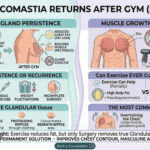
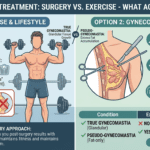
However, exercise cannot reliably remove established glandular breast tissue.
This explains why even lean athletes and bodybuilders may continue to have puffy nipples despite low body fat.
How Is Gynecomastia Diagnosed?
Diagnosis usually begins with:
- Medical history
- Physical examination
- Review of medications and supplements
- Assessment of weight changes
- Evaluation for hormonal or medical causes when indicated
Additional investigations are not necessary for every patient but may include:
- Blood tests
- Hormone evaluation
- Ultrasound
- Mammography in selected situations
The goal is to identify whether the enlargement is physiological, medication-related, associated with another condition, or persistent gynecomastia.
Treatment Options
Treatment depends on the underlying diagnosis.
Chest Fat
Management usually focuses on:
- Weight reduction
- Regular exercise
- Balanced nutrition
- Long-term lifestyle changes
Recent Pubertal Gynecomastia
Observation is often appropriate because many adolescent cases improve spontaneously within one to three years.
Persistent Gynecomastia
If glandular tissue persists, causes symptoms, or significantly affects quality of life, surgery may be considered.
Treatment may involve:
- Liposuction for excess fat
- Surgical gland excision
- Skin reduction in more advanced cases
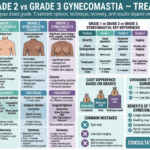
The exact approach depends on the grade of gynecomastia and chest anatomy.
Dr. Anmol Chugh’s Clinical Perspective
One of the biggest misconceptions I encounter is that every enlarged male chest is simply “fat.”
Many patients have spent years exercising intensely because they believed they had not worked hard enough. Others avoid seeking help because they feel embarrassed.
The first step is not surgery it is an accurate diagnosis. Once we understand whether the concern is fat, glandular tissue, loose skin, or a combination, we can discuss the most appropriate treatment.
Common Mistakes Patients Make
Assuming It Is Always Fat
Persistent fullness despite weight loss may indicate glandular tissue.
Ignoring Medication History
Certain medications and anabolic steroids can contribute to gynecomastia.
Buying Unproven Supplements
Many products marketed online lack scientific evidence.
Delaying Medical Assessment
Sudden enlargement or one-sided breast changes should not be ignored.
Expecting Exercise to Remove Gland Tissue
Exercise improves fitness but does not reliably eliminate established glandular breast tissue.
Recovery Protocol Followed at Our Centre
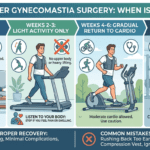
For patients undergoing surgery, our recovery protocol generally includes:
- Compression garment
- Early walking
- Pain management
- Wound care
- Activity restrictions during early healing
- Gradual return to exercise
- Scheduled follow-up visits
Recovery varies depending on the extent of surgery and individual healing.
Safety Checklist
Before treatment:
✔ Confirm the diagnosis
✔ Review medications and supplements
✔ Investigate underlying causes when appropriate
✔ Achieve a stable weight if possible
✔ Stop smoking if advised
✔ Understand realistic expectations
✔ Choose a qualified plastic surgeon
Who May Not Be a Good Candidate for Surgery?
Surgery may be delayed if you:
- Have active hormonal or medical conditions that require treatment first
- Have recent pubertal gynecomastia that may resolve naturally
- Continue anabolic steroid use
- Have uncontrolled medical conditions
- Have unrealistic expectations
What I Tell My Patients During Consultation
An enlarged male chest is not a reflection of your discipline or self-worth.
Some men have excess fat, some have glandular tissue, and many have both. The goal of consultation is not to judge the condition but to understand its cause and recommend the most appropriate treatment.
Frequently Asked Questions
Can I have both chest fat and gynecomastia?
Yes. Many men have a combination of excess fat and glandular tissue.
Will losing weight remove gynecomastia?
Weight loss can reduce fat, but persistent glandular tissue often remains.
Is gynecomastia common during puberty?
Yes. Pubertal gynecomastia is common and frequently resolves without surgery.
Does every case require surgery?
No. Treatment depends on the cause, duration, symptoms, and patient preferences.
Can medications cause gynecomastia?
Yes. Several prescription medications, anabolic steroids, and some recreational substances have been associated with gynecomastia.
Final Thoughts
Although chest fat and gynecomastia may look similar, they are different conditions that require different approaches. Chest fat often responds to weight management and exercise, whereas persistent glandular enlargement may require medical evaluation and, in selected cases, surgical treatment.
The most important step is obtaining the correct diagnosis rather than assuming every enlarged male chest is simply excess fat. During a personalized consultation, Dr. Anmol Chugh carefully evaluates your chest anatomy, medical history, medications, and treatment goals before recommending the most appropriate management plan.
Related Procedures
- Gynecomastia Surgery
- Scarless Gynecomastia Surgery
- High Definition Liposuction
- Liposuction Surgery
- Male Body Contouring
- 6 Pack Abs Surgery
References
- Narula HS, Carlson HE. Gynecomastia. Endocrinology and Metabolism Clinics of North America. 2007.
https://pubmed.ncbi.nlm.nih.gov/17543771/ - Endotext. Gynecomastia: Etiology, Diagnosis, and Treatment. National Center for Biotechnology Information (NCBI).
https://www.ncbi.nlm.nih.gov/books/NBK279105/ - American Society of Plastic Surgeons (ASPS). Gynecomastia Surgery.
https://www.plasticsurgery.org/reconstructive-procedures/gynecomastia-surgery - European Academy of Andrology. Clinical Practice Guidelines for Gynecomastia Evaluation and Management.
https://onlinelibrary.wiley.com/doi/10.1111/andr.12636 - American Association of Clinical Endocrinology (AACE). Male Breast Disorders.
https://pro.aace.com/ - Fagerlund A, Lewin R, Rufolo G, Elander A, Selvaggi G. Gynecomastia: A Systematic Review. Journal of Plastic Surgery and Hand Surgery. 2015.
https://doi.org/10.3109/2000656X.2015.1014571 - American Society of Plastic Surgeons. Gynecomastia Surgery Recovery and Safety.
https://www.plasticsurgery.org/reconstructive-procedures/gynecomastia-surgery/recovery
Medically Reviewed By
Dr. Anmol ChughQualifications: MBBS, MS, MCh (Plastic Surgery)
Experience: 16+ Years in Plastic & Aesthetic Surgery
Review Date: 23 Nov 2025
This article has been medically reviewed for accuracy and patient safety.