Gynecomastia: The Male Chest Problem Nobody Talks About
Many men spend years hiding their chest.
They avoid fitted T-shirts, swimming pools, gym changing rooms, and even family photographs. Some wear loose clothing throughout the year, regardless of the weather. Others stop participating in activities they enjoy because they feel self-conscious about the appearance of their chest.
One of the most common things I hear during consultation is:
“Doctor, I thought I was the only one dealing with this.”
The reality is that gynecomastia is extremely common. However, because it affects male body image and confidence, many men hesitate to discuss it openly.
The good news is that understanding the cause of male chest enlargement is the first step toward finding the right treatment.
Table of Contents
- What Is Gynecomastia?
- How Common Is Gynecomastia?
- What Causes Gynecomastia?
- Why Diet and Exercise Do Not Always Fix the Problem
- Who Is a Good Candidate for Gynecomastia Surgery?
- Who Should Avoid or Delay Surgery?
- What I Commonly See in My Practice
- What Is the Treatment for Gynecomastia?
- What Happens During Gynecomastia Surgery?
- Common Patient Mistakes Before Surgery
- Risks and Possible Complications
- Recovery After Gynecomastia Surgery
- Important Facts Patients Should Know
- Gynecomastia Surgery in Gurgaon and Delhi NCR
- Frequently Asked Questions
- Conclusion
What Is Gynecomastia?
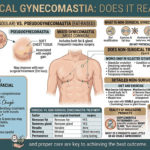
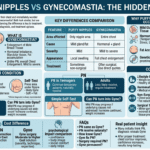
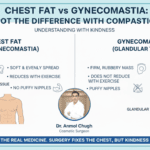
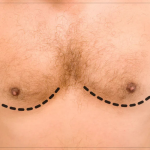
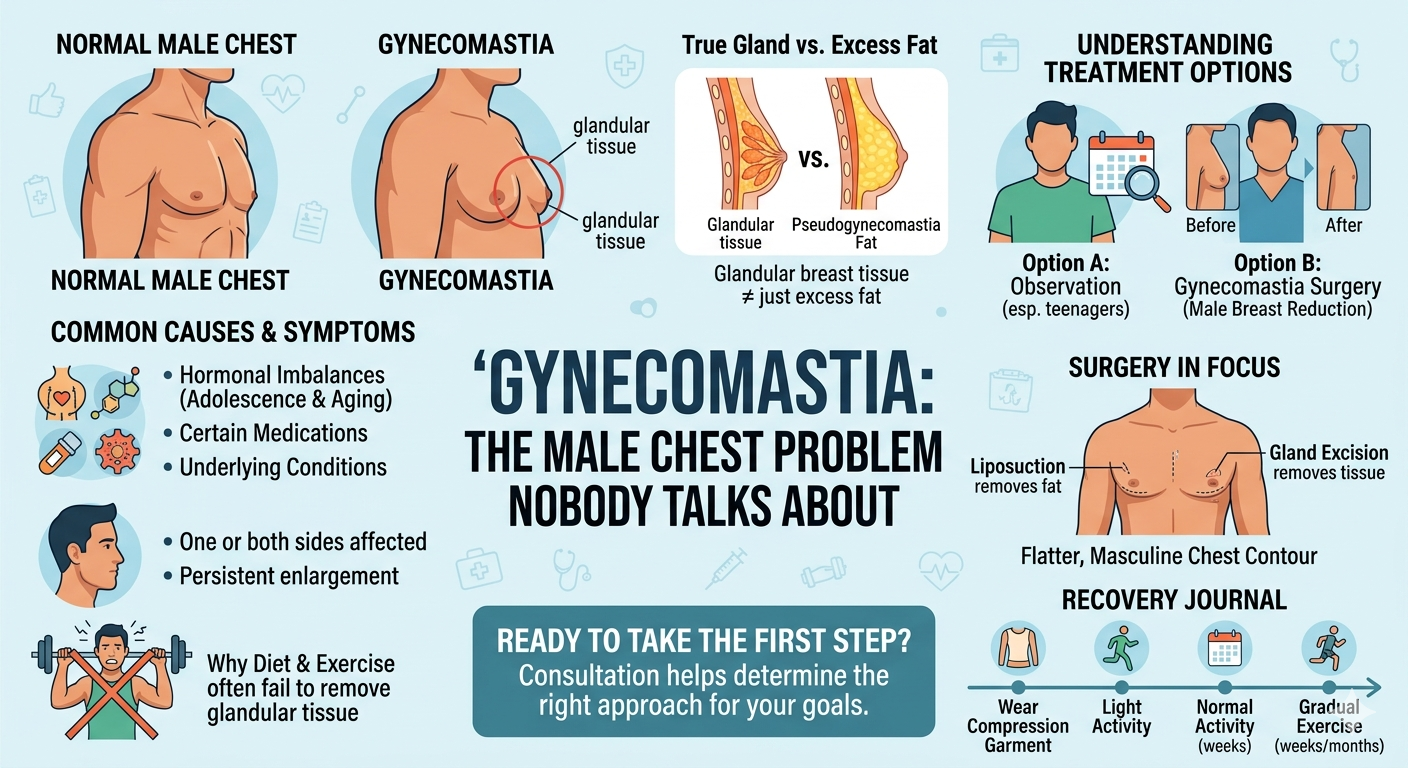
Gynecomastia is the enlargement of male breast tissue caused by the growth of glandular breast tissue beneath the nipple and chest area.
It is different from simply having excess chest fat.
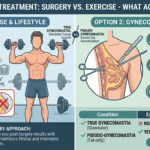
True gynecomastia involves breast gland enlargement, while excess fat in the chest is often referred to as pseudogynecomastia.
In many patients, both glandular tissue and fat are present together.
The condition can affect:
- One side of the chest
- Both sides of the chest
- Teenagers
- Young adults
- Middle-aged men
- Older men
The degree of enlargement can range from a small puffy nipple appearance to a more noticeable breast-like contour.
Read more about: What is the difference between Gynecomastia and PseudoGynecomastia?
How Common Is Gynecomastia?
Many men are surprised to learn how common the condition actually is.
According to medical literature, up to 60–70% of adolescent boys may experience some degree of pubertal gynecomastia during development. In most cases, it improves naturally over time.
The condition can also occur later in life due to hormonal changes, medications, weight gain, or other medical factors.
Because many men never seek treatment, the true number of affected individuals may be even higher.
What Causes Gynecomastia?
The condition develops when there is an imbalance between hormones that influence breast tissue growth.
Common causes include:
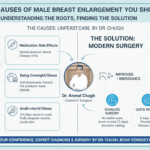
Puberty
Temporary hormonal fluctuations during adolescence are one of the most common causes.
Many cases improve within 1 to 3 years without treatment.
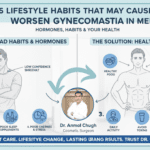
Weight Gain
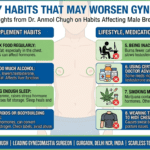
Increased body fat can contribute to chest enlargement and may worsen the appearance of gynecomastia.
Medications
Certain medications may contribute to breast tissue enlargement.
Examples include:
- Some blood pressure medications
- Certain psychiatric medications
- Some prostate medications
- Anabolic steroids
Hormonal Conditions
Underlying hormonal disorders can occasionally cause gynecomastia.
Aging
Hormonal changes associated with aging may contribute to the condition in older men.
Why Diet and Exercise Do Not Always Fix the Problem
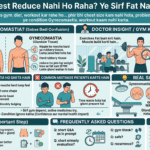
One of the biggest misconceptions about gynecomastia is that more exercise will solve it.
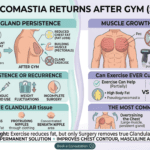
Exercise is excellent for overall health and can reduce body fat. However, exercise cannot reliably remove enlarged breast gland tissue.
This explains why many men become frustrated.
They lose weight, improve fitness, and gain muscle, yet the chest still appears enlarged.
If glandular tissue is the primary issue, additional workouts often do not create the improvement patients are hoping for.
This is why proper diagnosis is important before deciding on treatment.
Who Is a Good Candidate for Gynecomastia Surgery?
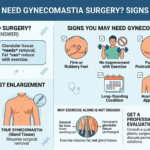
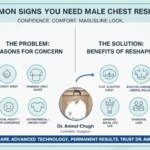
You may be a suitable candidate if:
- You have persistent chest enlargement.
- The condition has been stable for several months.
- You are physically healthy.
- You have realistic expectations.
- Weight loss has not corrected the problem.
- You are bothered by the appearance of your chest.
Many patients seeking male breast reduction surgery have already tried diet and exercise without achieving the desired result.
Who Should Avoid or Delay Surgery?
Surgery may not be appropriate for:
- Adolescents whose condition may still resolve naturally.
- Patients with uncontrolled medical conditions.
- Individuals with untreated hormonal disorders.
- Patients with unrealistic expectations.
- Active smokers unwilling to stop smoking before surgery.
A thorough evaluation is important to identify any underlying medical causes before proceeding with treatment.
What I Commonly See in My Practice
In my practice, many men tell me they have been hiding their chest for years.
Some avoid taking their shirt off even around close friends and family. Others have stopped going to the gym because they feel embarrassed despite being otherwise fit and healthy.
A common misconception is that the condition is always caused by being overweight. In reality, I frequently see lean and athletic men with significant glandular enlargement.
Many patients are relieved to learn that the issue is not a lack of effort on their part.
After examination, we often find that the primary problem is breast gland tissue that cannot be eliminated through exercise alone.
One of the most rewarding aspects of treatment is seeing patients regain confidence in situations they previously avoided.
What Is the Treatment for Gynecomastia?
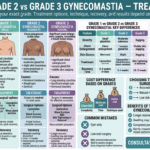
Treatment depends on the cause and severity of the condition.
Observation
Some adolescent cases improve naturally and may only require monitoring.
Medical Treatment
In selected cases involving hormonal abnormalities, medical management may be appropriate.
Gynecomastia Surgery
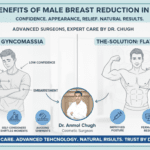
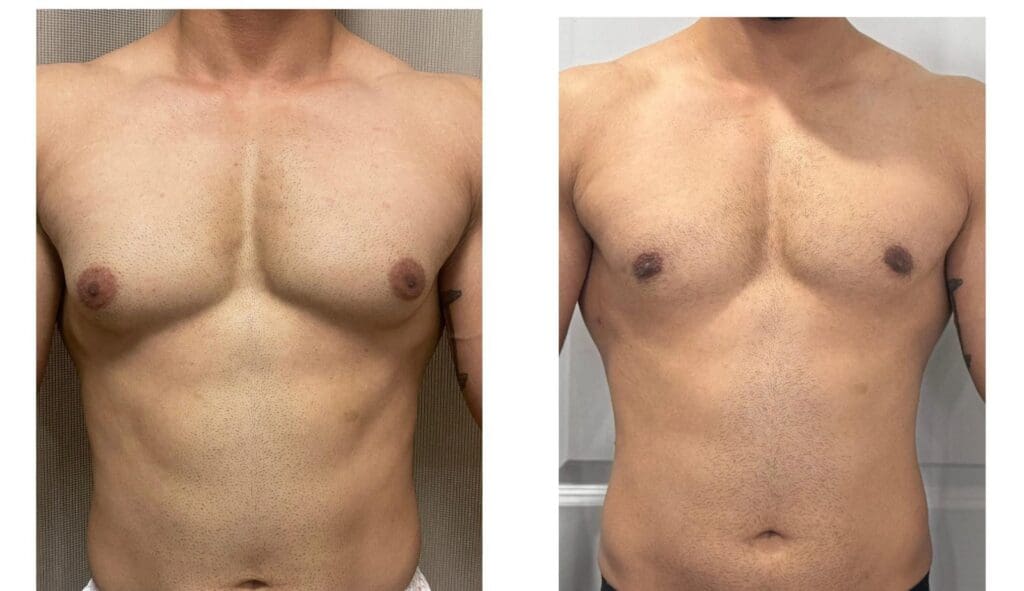
For persistent cases, male breast reduction surgery is often the most effective solution.
The procedure may involve:
- Removal of glandular tissue
- Liposuction
- Combination of gland excision and liposuction
- Skin tightening in severe cases
The exact technique depends on the patient’s anatomy.
What Happens During Gynecomastia Surgery?
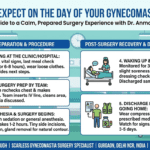
The procedure is usually performed under anesthesia.
During surgery:
- Small incisions are made.
- Excess glandular tissue is removed.
- Liposuction may be performed if needed.
- Chest contour is refined.
- Incisions are closed.
The goal is to create a flatter, more masculine chest contour while maintaining a natural appearance.
Common Patient Mistakes Before Surgery
- Assuming more exercise will remove glandular tissue.
- Trying multiple supplements or medications without proper evaluation.
- Ignoring possible hormonal causes.
- Seeking treatment without understanding whether the issue is fat, gland, or both.
- Continuing to smoke before surgery.
A proper diagnosis is essential because treatment varies significantly depending on the underlying cause.
Risks and Possible Complications
Every surgical procedure carries risks.
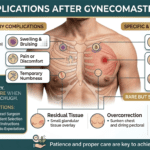
Potential complications include:
- Bleeding
- Infection
- Seroma
- Hematoma
- Temporary numbness
- Asymmetry
- Contour irregularities
- Scarring
- Changes in nipple sensation
- Need for revision surgery
Fortunately, significant complications are relatively uncommon when surgery is performed on appropriately selected patients.
Patients should always have a clear understanding of both benefits and risks before proceeding.
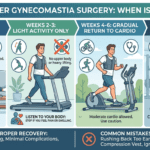
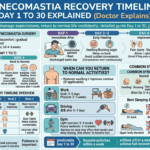
Recovery After Gynecomastia Surgery
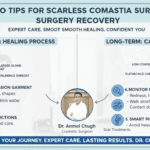
First Week
- Mild swelling and bruising are common.
- Compression garments are usually worn.
- Light walking is encouraged.
Two to Four Weeks
- Most patients return to work and normal daily activities.
- Swelling gradually improves.
Four to Six Weeks
- Exercise restrictions are gradually lifted.
- Chest contour becomes more apparent.
Three to Six Months
- Residual swelling continues to settle.
- Final results become increasingly visible.
Following postoperative instructions is important for achieving optimal outcomes.
Also read more about: Gynecomastia Recovery Timeline: Day 1 to 30 Explained
Important Facts Patients Should Know
- Up to 60–70% of adolescent boys may experience temporary gynecomastia.
- Many pubertal cases improve naturally within 1–3 years.
- Exercise cannot reliably remove glandular breast tissue.
- Weight loss may improve chest fat, but not necessarily true gynecomastia.
- Surgery is often the most effective treatment for persistent glandular enlargement.
- Smoking should be stopped before and after surgery to reduce healing-related complications.
Gynecomastia Surgery in Gurgaon and Delhi NCR
Many men seeking gynecomastia treatment in Gurgaon and Delhi NCR have spent years trying to improve their chest appearance through exercise alone.
A detailed consultation helps determine whether the concern is primarily glandular tissue, excess fat, skin excess, or a combination of factors.
Understanding the cause is essential because treatment should be tailored to the individual rather than applying the same approach to every patient.
Frequently Asked Questions
Is gynecomastia common?
Yes. It is one of the most common causes of male chest enlargement.
Can exercise cure gynecomastia?
Exercise can reduce fat but cannot reliably eliminate enlarged glandular tissue.
Is gynecomastia dangerous?
Most cases are benign, but persistent or unusual symptoms should be evaluated by a doctor.
Will weight loss fix the problem?
It may help if excess fat is contributing, but true glandular tissue often remains.
Is gynecomastia surgery painful?
Most patients experience manageable discomfort rather than severe pain.
Will there be visible scars?
Incisions are usually planned carefully to minimize visible scarring.
How long is recovery?
Most patients return to routine activities within a few weeks, although healing continues for several months.
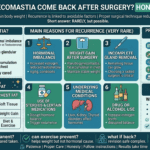
Can gynecomastia come back?
Recurrence is uncommon when glandular tissue is adequately removed and underlying causes are addressed.
Can teenagers undergo surgery?
Some can, but many adolescent cases improve naturally and may not require surgery.
Is the result permanent?
In most patients, results are long-lasting when underlying contributing factors remain controlled.
Conclusion
Gynecomastia is a common condition, but it remains one of the least discussed concerns affecting men. Many patients spend years feeling embarrassed or assuming that they simply need to exercise harder.
The reality is that male breast enlargement is often caused by glandular tissue that cannot be corrected through diet and exercise alone.
Understanding the cause of the condition is the key to choosing the right treatment.
If you are unsure whether your chest concern is caused by excess fat, enlarged glandular tissue, skin excess, or a combination of factors, a consultation can help determine the most appropriate treatment option for your goals.
References
- Braunstein GD. Gynecomastia: Etiology, Diagnosis, and Treatment. Endotext, NCBI Bookshelf.
- Johnson RE, Murad MH. Gynecomastia: Pathophysiology, Evaluation, and Management.
- American Society of Plastic Surgeons (ASPS). Male Breast Reduction Surgery Guide.
- Narula HS, Carlson HE. Gynecomastia. Endocrinology and Metabolism Clinics of North America.
- American Association of Clinical Endocrinology. Guidelines for Evaluation and Management of Gynecomastia.
Medically Reviewed By
Dr. Anmol ChughQualifications: MBBS, MS, MCh (Plastic Surgery)
Experience: 16+ Years in Plastic & Aesthetic Surgery
Review Date: 17 Jun 2026
This article has been medically reviewed for accuracy and patient safety.